







Best Eco Friendly Strollers Made With Non Toxic Materials

You’ll want a stroller made with certified non-toxic materials like GOTS organic cotton and recycled plastics to guarantee your baby’s safety and reduce environmental impact. Look for GREENGUARD Gold or OEKO-TEX certifications, which assure low chemical emissions and toxin-free fabrics. Leading brands like Nuna, Bumbleride, and UPPAbaby prioritize these standards while offering lightweight, durable frames. Choosing such eco-friendly strollers supports health-conscious, sustainable parenting—explore features and benefits to find the best fit for your family.
Table
- Main Points
- What Makes a Baby Stroller Sustainable
- Key Certifications for Non-Toxic and Eco-Friendly Strollers
- Top Eco-Friendly Materials Used in Sustainable Strollers
- Overview of Leading Brands Offering Non-Toxic Strollers
- Features to Look for in Eco-Friendly Baby Strollers
- Benefits of Choosing Sustainable Strollers for Your Family
- Frequently Asked Questions
- Final Thoughts
Main Points
- Top eco-friendly strollers use recycled plastics, GOTS-certified organic cotton, and aluminum frames for safety and sustainability.
- Brands like Nuna, Bumbleride, Baby Jogger, and UPPAbaby prioritize non-toxic, chemical-free materials and GREENGUARD Gold certification.
- Non-toxic strollers avoid harmful chemicals such as BPA, PVC, phthalates, and flame retardants for healthier baby environments.
- Certifications like OEKO-Tex Standard 100 and MADE SAFE® guarantee fabrics and components free from over 1,000 harmful substances.
- Versatile, lightweight designs with recyclable materials support long-term use and reduce environmental impact while ensuring child safety.
What Makes a Baby Stroller Sustainable
Although choosing a sustainable baby stroller might seem complex, understanding its core features makes it easier for you to make an informed decision.
A sustainable stroller uses high-quality, non-toxic materials such as recycled plastics and organic cotton, ensuring it’s free from harmful chemicals like BPA, PVC, and phthalates.
Eco-friendly strollers are designed to grow with your child, accommodating newborns through toddler stages, which reduces waste and the need for multiple purchases.
Their versatile designs minimize environmental impact by limiting production demands.
Additionally, these strollers comply with rigorous safety standards to guarantee low chemical emissions and overall safety for your child.
Selecting a stroller with these attributes supports both your child’s health and environmental responsibility, aligning with your commitment to serving others thoughtfully and sustainably.
Key Certifications for Non-Toxic and Eco-Friendly Strollers

Certifications serve as reliable indicators of a stroller's safety and environmental impact, helping you identify non-toxic and eco-friendly options with confidence. Choosing a stroller that is Greenguard Gold certified or OEKO-Tex Standard 100 certified guarantees low chemical emissions and freedom from harmful substances. GOTS-certified organic cotton assures textiles are produced without toxins and with ethical labor practices. Look for PFAS-free and MADE SAFE® labels, signifying absence of harmful chemicals and safe materials for children.
| Certification | Key Benefit | What It Guarantees |
|---|---|---|
| Greenguard Gold certified | Low VOC emissions | Safer indoor air quality |
| OEKO-Tex Standard 100 certified | Free from 1,000+ harmful chemicals | Non-toxic components |
| GOTS-certified organic cotton | Organic, ethical textile production | Chemical-free, sustainable fabric |
| MADE SAFE® | Non-toxic materials | Safe for babies and toddlers |
Top Eco-Friendly Materials Used in Sustainable Strollers
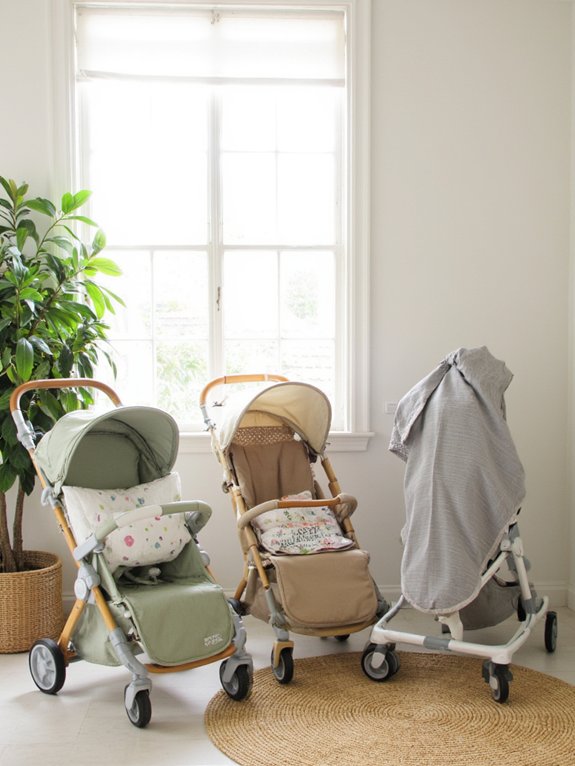
When selecting a sustainable stroller, understanding the eco-friendly materials used can help you make an informed choice that benefits both your child and the environment.
Eco-friendly strollers often incorporate non-toxic materials that prioritize safety and sustainability. Here are four top materials to take into account:
- Recycled plastic fabrics, often derived from upcycled water bottles, reduce landfill waste while providing durable water-resistant textiles.
- GOTS-certified organic cotton offers a chemical-free, hypoallergenic option for stroller fabrics, ideal for sensitive skin.
- Tencel, a sustainably sourced organic material, enhances comfort through moisture-wicking and thermal regulation.
- Aluminum frames combine lightweight strength with recyclability, minimizing environmental impact.
Overview of Leading Brands Offering Non-Toxic Strollers
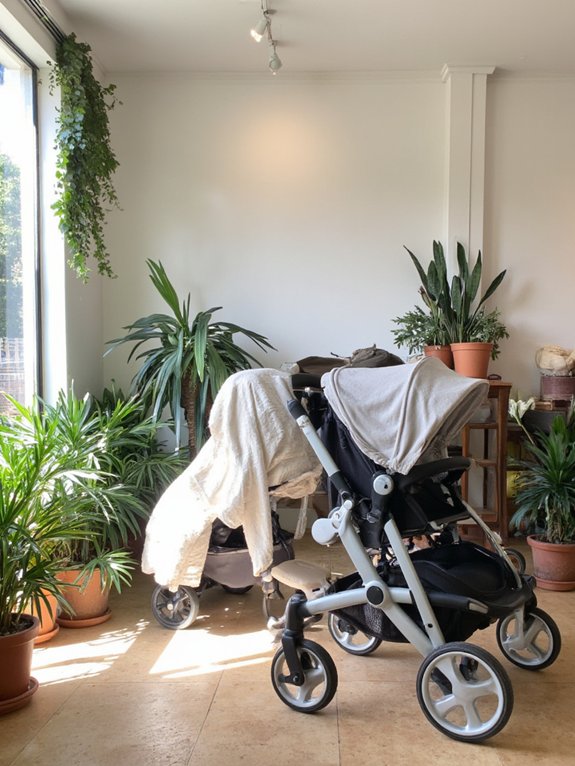
You’ll find leading stroller brands like Bumbleride, Nuna, and UPPAbaby prioritize non-toxic materials and strict safety certifications in their designs.
These brands use eco-friendly fabrics free from harmful chemicals and meet standards such as OEKO-TEX and GREENGUARD Gold.
Understanding their certification processes helps you make informed choices for your child's health and environmental impact.
Top Sustainable Stroller Brands
Although choosing a sustainable stroller may seem complex, several leading brands simplify your decision by prioritizing non-toxic materials and eco-friendly designs. When comparing eco-friendly strollers, features such as machine-washable covers and lightweight frames can enhance both safety and convenience for families.
When selecting among sustainable stroller brands, consider these top options:
- Baby Jogger emphasizes sustainability with adjustable designs accommodating children from newborn to toddler, reducing multiple purchases.
- Nuna products are GREENGUARD Gold certified, ensuring low chemical emissions, and use natural, certified organic fabrics.
- Bumbleride incorporates eco-friendly materials, including fabrics from 100% recycled water bottles, free from PVC and BPA.
- UPPAbaby avoids flame retardants, BPA, phthalates, and latex, using phthalate-free PVC for waterproofing components.
These brands commit to non-toxic materials and eco-friendly materials, aligning with your goal to provide safe, sustainable options for families.
Non-Toxic Material Usage
Leading sustainable stroller brands prioritize non-toxic materials to guarantee safety and environmental responsibility.
When selecting baby products, you’ll find Bumbleride uses OEKO-TEX certified fabrics from 100% recycled water bottles, eliminating harmful chemicals like PVC and BPA.
Nuna assures low chemical emissions with GREENGUARD Gold certification, employing natural fabrics free from flame retardants and PVC.
Zoe’s baby gear avoids flame retardants, BPA, and phthalates, using safe foam devoid of toxins.
Stokke’s waterproofing excludes formaldehyde and fluorine, reflecting strong eco-friendliness.
UPPAbaby designs rain shields and sealants with phthalate-free PVC, avoiding lead and flame retardants.
These brands commit to safe wash processes, maintaining materials free from harmful chemicals.
For parents seeking additional eco-friendly options, the sustainable pinewood construction found in some cribs—such as the Dream On Me Odelle—demonstrates how non-toxic finishes and responsibly sourced wood can further contribute to a healthy nursery environment.
By choosing strollers made with non-toxic materials, you actively promote your child’s health and support environmentally responsible baby gear.
Certification and Safety Standards
When selecting eco-friendly strollers, you benefit from brands that meet rigorous certification and safety standards to guarantee minimal chemical exposure.
Leading manufacturers prioritize non-toxic materials and avoid harmful substances, ensuring safer products for children. For example, many eco-friendly baby products, such as the Serta Perfect Start Mattress, are GREENGUARD Gold certified, demonstrating their commitment to low chemical emissions and a safer environment.
- Nuna and Bumbleride strollers are GREENGUARD Gold certified, confirming low chemical emissions and compliance with strict safety standards.
- Bumbleride also holds OEKO-TEX Standard 100 certification, validating that fabrics are free from hazardous substances.
- UPPAbaby and Chicco ClearTex exclude flame retardants, PVC, and phthalates, enhancing safety.
- Mockingbird and Stokke strollers avoid flame retardants and harmful waterproofing chemicals like formaldehyde, supporting a healthier environment.
Features to Look for in Eco-Friendly Baby Strollers
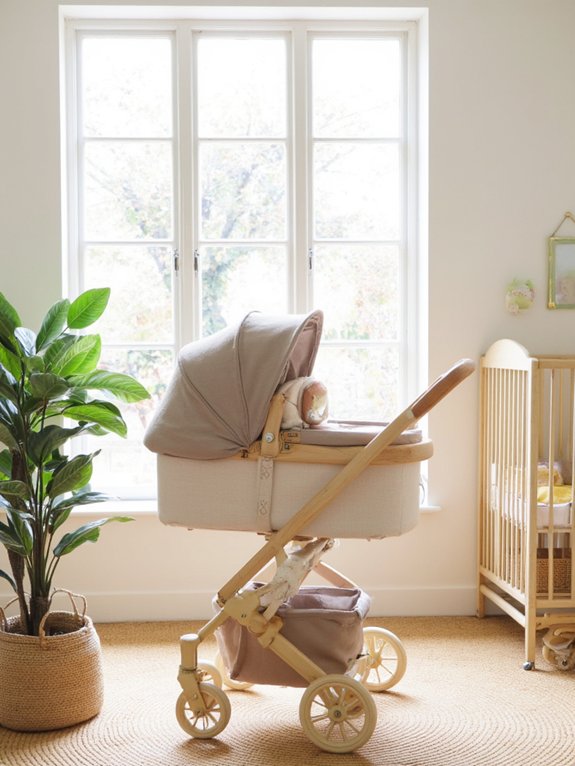
Selecting an eco-friendly baby stroller involves evaluating materials and certifications that confirm safety and sustainability. You should seek non-toxic materials like Tencel, GOTS-certified organic cotton, and recycled plastics. Ascertain the stroller is GREENGUARD Gold certified to minimize harmful chemical emissions. Opt for aluminum frames that are lightweight and recyclable. Avoid strollers containing harmful chemicals such as BPA, phthalates, and PVC. Prioritize water-repellent fabrics free from PFAS and PFC.
| Feature | Benefit |
|---|---|
| Non-toxic materials | Safe for baby, eco-friendly |
| GREENGUARD Gold | Reduced chemical emissions |
| Recycled plastics | Resource conservation |
| Aluminum frame | Lightweight, recyclable |
| PFAS-free fabrics | Moisture protection, non-toxic |
These features confirm your baby stroller supports health and environmental stewardship.
Benefits of Choosing Sustainable Strollers for Your Family
Choosing sustainable strollers offers your family significant health and environmental advantages. By opting for eco-friendly options made from non-toxic materials like organic cotton and recycled plastics, you reduce your child’s exposure to harmful chemical emissions.
Opt for sustainable strollers made from organic and recycled materials to safeguard your child’s health and the environment.
Here are key benefits you gain:
- Enhanced safety through GREENGUARD Gold certified products, ensuring low chemical emissions and strict health standards.
- Longevity and versatility, as sustainable strollers often adapt for multiple children, minimizing waste and repeated purchases. Many brands use designs similar to 4-in-1 convertible cribs to maximize long-term value and adaptability.
- Support for environmentally responsible brands committed to lowering carbon footprints in baby gear manufacturing.
- Practical designs that fit diverse lifestyles without compromising ecological integrity.
Choosing sustainable strollers not only protects your family’s health but also promotes a cleaner planet, reflecting your dedication to serving others responsibly.
Frequently Asked Questions
What Is the Best Non Toxic Stroller?
You’ll want to contemplate safety features, material durability, and weight capacity when choosing. Compare prices and folding mechanisms, then review customer feedback carefully to find a non-toxic stroller that balances performance with your budget and needs.
What Strollers Are Greenguard Certified?
If you want peace of mind, look for strollers with GREENGUARD certification. Brands like Nuna, Chicco, and Bumbleride combine eco-friendly stroller features, non-toxic materials, and sustainable stroller brands to minimize health impacts of toxins when choosing safe baby gear.
Is the UPPABABY Stroller Non-Toxic?
You’ll find UPPAbaby stroller features prioritize material safety, avoiding toxins like BPA and phthalates. User reviews highlight health benefits and reduced environmental impact, making it a strong choice compared to competitors for conscious caregivers.
Are Chicco Strollers Non-Toxic?
Wondering about Chicco stroller safety? You’ll find their material sourcing rigorously tested, with positive Chicco product reviews and customer feedback highlighting low environmental impact. Compared to competitors, Chicco strollers prioritize non-toxic, transparent construction for your child’s well-being.
Final Thoughts
Choosing an eco-friendly stroller isn’t just a purchase—it’s a commitment to your child’s health and the planet’s future. When you opt for non-toxic materials and sustainable designs, you’re weaving safety and responsibility into every stroll. Remember, a stroller is more than transportation; it’s a cradle of care. By selecting certified, eco-conscious options, you protect your little one from harmful chemicals while nurturing a greener world, one step at a time.
If you want to know other articles similar to Best Eco Friendly Strollers Made With Non Toxic Materials you can visit the Strollers category.
3 Best All Terrain Strollers for Hiking Trails
Best Umbrella Strollers for Urban City Life
Top 5 Strollers That Fit Infant Car Seats
How Petite Moms Can Find the Perfect Stroller
Best Strollers for Winter Weather Adventures
What Are the Best Strollers for Newborn and Toddler?
How to Fold a Stroller One-Handed Easily
How to Find Top Strollers Under $200
Why Are Reversible Luxury Strollers So Popular?
This is also interesting