


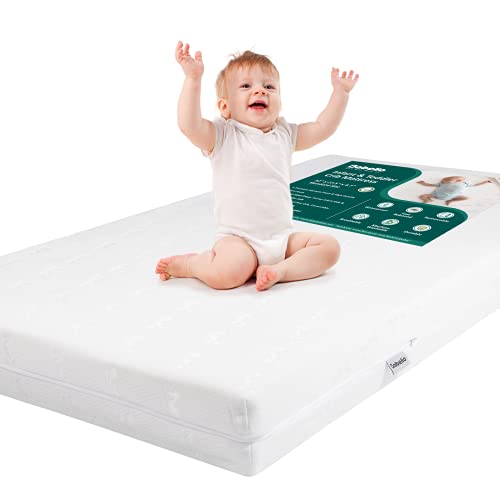


Why a Firm Crib Mattress Is Safest for Babies


You want a firm crib mattress because it provides the safest sleep environment for your baby. A firm surface keeps your baby’s head from sinking, reducing the risk of suffocation and Sudden Infant Death Syndrome (SIDS). It also guarantees proper spinal support and promotes better air circulation. Choosing a mattress that fits snugly within the crib and meets safety certifications enhances protection. Keep in mind, understanding firmness, materials, and fit will help you make the best choice for your little one.
Table
- Main Points
- The Role of Mattress Firmness in Infant Safety
- Recommended Firmness Levels for Baby Crib Mattresses
- How Firmness Prevents Suffocation and SIDS
- Ensuring a Snug Fit: Mattress Size and Crib Compatibility
- Materials That Support Firmness and Safety
- Organic and Certified Mattresses: Benefits for Babies
- Common Risks Associated With Soft Sleep Surfaces
- Testing Mattress Firmness at Home
- When to Replace Your Baby’s Crib Mattress
- Frequently Asked Questions
- Final Thoughts
Main Points
- Firm crib mattresses prevent head indentations, reducing suffocation and Sudden Infant Death Syndrome (SIDS) risks.
- A firmness rating between 8 and 10 ensures adequate support and quick rebound for infant safety.
- Proper mattress fit within the crib eliminates gaps, preventing entrapment and suffocation hazards.
- Firm surfaces maintain clear airways and spinal alignment, promoting safe sleep positions.
- Certified mattresses with high-density foam or innerspring materials meet safety and health standards.
The Role of Mattress Firmness in Infant Safety
While choosing a crib mattress might seem straightforward, understanding the importance of firmness is essential for your baby’s safety. A firm crib mattress prevents dangerous indentations that could trap your infant’s head, helping reduce the risk of suffocation and Sudden Infant Death Syndrome. The American Academy of Pediatrics emphasizes selecting a mattress with a firmness rating between 8 and 10, ensuring a proper fit within the crib to maintain a safe sleep environment. Dual-sided options with a firm infant side can offer both safety now and comfort as your child grows. Over time, firmness can diminish, so regularly checking for consistent support is vital. Opting for a crib mattress made from organic materials that meets safety standards further protects your baby’s health. By prioritizing firmness and proper fit, you’re actively ensuring infant safety and supporting your little one’s healthy development during critical growth stages.
Recommended Firmness Levels for Baby Crib Mattresses

You’ll want to choose a crib mattress with a firmness level between 8 and 10, as recommended by experts to keep your baby safe.
To test firmness, press down on the mattress— it should quickly bounce back without molding to your hand.
Ensuring this level of support helps protect your baby’s developing spine and reduces suffocation risks.
Ideal Firmness Range
Because your baby’s safety depends heavily on their sleep environment, choosing a crib mattress with the right firmness is essential.
The American Academy of Pediatrics (AAP) recommends a firmness level between 8 and 10 on the mattress firmness scale to guarantee infant safety.
Look for a mattress with an Indentation Load Deflection (ILD) of 36 or higher, which ensures a firm surface that supports your baby’s developing body.
Consumer Reports echoes this by advising you to select the firmest mattress available, as it greatly reduces the risk of SIDS and suffocation.
Verify the crib mattress fits snugly without gaps larger than two fingers, meeting all safety standards.
This combination of firmness and fit creates the safest sleep environment for your precious little one.
Firmness Testing Methods
Understanding how to test the firmness of a crib mattress helps you make certain it meets the recommended safety levels set by the American Academy of Pediatrics.
The AAP recommends a firmness level between 8 and 10 on the mattress firmness scale, with an Indentation Load Deflection (ILD) of 36 or higher to provide proper support for your infant’s weight.
Use firmness testing methods like pressing down on the mattress surface; a quick rebound with little to no indentation signals adequate firmness. Many parents also appreciate the dual-sided firmness feature found in premium crib mattresses, which ensures both safety for infants and comfort as your child grows.
This is essential to reduce the risk of suffocation by preventing your baby from sinking and rebreathing exhaled air.
Regularly performing hand and squeeze tests guarantees your crib mattress maintains safety and support as your baby grows.
How Firmness Prevents Suffocation and SIDS

You want to choose a firm crib mattress because it prevents your baby’s head from sinking in, reducing the risk of suffocation and rebreathing exhaled air.
A firm surface supports your baby’s safe sleep position and keeps their airway clear at all times.
Many crib mattresses, such as those with breathe-thru technology, further enhance safety by allowing for better airflow and reducing suffocation risks.
Firmness Reduces Indentations
Firmness plays an essential role in preventing indentations that could trap your baby’s head and restrict airflow, greatly lowering the risk of suffocation and Sudden Infant Death Syndrome (SIDS).
A firm crib mattress guarantees a flat surface that supports your infant’s developing spine while maintaining proper airflow during baby sleep. Unlike soft surfaces, which can conform to your baby’s head and increase suffocation risks, a firm mattress quickly snaps back when pressed, preventing dangerous indentations. Many premium crib mattresses are made from hypoallergenic, breathable materials that further enhance safety and comfort for sensitive sleepers.
The firmness of the mattress keeps infants from sinking in, reducing the chance of restricted breathing. Following the American Academy of Pediatrics’ recommendation for a mattress firmness rating between 8 and 10 helps you provide a safe sleep environment, minimizing suffocation hazards and promoting healthy, restful sleep for your baby.
Prevents Rebreathing Risks
Preventing indentations on a crib mattress not only supports your baby’s spine but also plays an essential role in reducing rebreathing risks.
A firm mattress prevents your infant’s head from sinking, maintaining proper spinal alignment and an open airway. This firmness minimizes suffocation hazards by promoting better air circulation around your baby’s face, reducing the buildup of carbon dioxide. In addition, mattresses like the Newton Baby Crib Mattress use breathe-thru technology to further enhance airflow and reduce the risk of suffocation.
Soft mattresses can trap exhaled breath, increasing the risk of rebreathing, which is linked to Sudden Infant Death Syndrome (SIDS). Ensuring the mattress meets safety standards—such as a quick rebound after pressure—confirms it’s firm enough to protect your baby’s health.
By choosing a firm mattress, you actively safeguard your infant’s breathing during sleep, providing a safe sleeping position that supports their overall well-being.
Supports Safe Sleep Position
When you choose a firm crib mattress, you create a stable, flat surface that keeps your baby from sinking and reduces suffocation risks.
The American Academy of Pediatrics (AAP) recommends a firmness level between 8 and 10 to maintain an open airway, ensuring your baby stays in a safe sleep position.
A proper mattress supports your infant without conforming to their shape, which lowers the risk of Sudden Infant Death Syndrome (SIDS).
Soft bedding increases suffocation risk by allowing the baby’s head to become trapped or face down.
Additionally, a firm crib mattress fits snugly to minimize gaps between the mattress and crib sides, preventing dangerous entrapment.
Choosing the right mattress is essential for your baby’s safety and comfort during sleep. Many cribs, like the Graco Benton 5-in-1 Convertible Crib, are designed to work best with a firm, snug-fitting mattress to maximize safe sleep practices.
Ensuring a Snug Fit: Mattress Size and Crib Compatibility

A properly fitting crib mattress is essential for your baby’s safety and comfort. To reduce suffocation risks, verify the mattress size matches your crib, providing a firm surface with a snug fit—no gaps larger than two fingers.
A standard crib mattress, about 52” x 28” and 4-6” thick, typically meets crib compatibility requirements. For peace of mind, consider a mattress that is certified for safety with GREENGUARD Gold and CertiPUR-US, as these certifications ensure both non-toxic materials and proper fit for standard cribs. Always test by placing the mattress in the crib; it shouldn’t shift or move easily.
Choosing a mattress certified by the JPMA and the Consumer Product Safety Commission guarantees compliance with infant safety standards. Regularly inspect and adjust mattress height as your baby grows to prevent falls.
Prioritizing these safety standards helps you create a secure sleep environment, supporting your commitment to your baby’s wellbeing.
Materials That Support Firmness and Safety

Choosing the right mattress size is only part of creating a safe sleep space; the materials inside play a key role in providing the firmness and support your baby needs.
A firm crib mattress made from high-density foam or innerspring systems offers the essential firmness support to protect your baby’s developing spine and reduce suffocation risk. Many top options, such as those with dual-sided design, provide both firmness for infants and softer comfort for toddlers, ensuring long-term usability and adaptability.
Opting for organic materials like organic cotton and natural latex can further enhance safety by minimizing chemical emissions.
Choosing organic cotton and natural latex reduces chemical exposure, promoting a safer sleep environment for your baby.
Look for certifications such as CertiPUR-US, which guarantee compliance with strict safety standards and guarantee low chemical emissions.
Maintaining firmness under your baby’s weight helps prevent hazards linked to softness, including Infant Death Syndrome.
By choosing materials that uphold firmness and safety, you create a healthier environment that nurtures your infant’s well-being.
Organic and Certified Mattresses: Benefits for Babies
Because your baby’s health and comfort depend heavily on their sleep environment, opting for organic and certified mattresses can make a significant difference.
Organic crib mattresses, made from natural organic materials like cotton and wool, offer a firm mattress surface that meets strict safety standards. Certified by organizations such as GOTS and GREENGUARD Gold, these mattresses reduce risk by minimizing chemical exposure and eliminating harmful flame retardants. Many organic crib mattresses are also fully washable, which helps parents maintain a hygienic sleep environment with ease.
You’ll also find they’re hypoallergenic, helping reduce allergens that can irritate sensitive skin or trigger respiratory issues. Choosing an organic mattress supports healthier sleep by creating a safer, cleaner environment for your baby’s critical development.
By prioritizing these options, you not only protect your little one but also contribute to a healthier planet for future generations.
Common Risks Associated With Soft Sleep Surfaces
When you place your baby on soft sleep surfaces, you increase the risk of suffocation and other hazards.
Soft surfaces can cause your baby to sink in, leading to rebreathing of exhaled breath and airway obstruction. This creates a dangerous environment that elevates the risk of Sudden Infant Death Syndrome (SIDS). The BABELIO Breathable Crib Mattress features a firm, supportive surface that helps prevent your baby from sinking in, aligning with safety guidelines and reducing the risks associated with soft mattresses.
The American Academy of Pediatrics (AAP) strongly advises against using soft bedding, including blankets and plush toys, which also introduce choking hazards.
Adult beds and couches are especially unsafe for infant sleeping environments.
To provide truly safe sleep, choose a firm mattress specifically designed as a crib mattress. A firm mattress supports your baby’s body without conforming to the head or face, reducing suffocation risks and promoting healthier, safer sleep every night.
Testing Mattress Firmness at Home
You can easily test your crib mattress’s firmness at home with a few simple techniques.
Start by pressing your hand firmly into the mattress; a good firm mattress will show quick recovery, snapping back without conforming.
Next, try the squeeze test by compressing the sides—if it’s hard to press, the mattress provides better support.
For safety features, use the two-finger test to check the crib fit; gaps larger than two fingers can cause dangerous trapping.
Also, verify the mattress’s Indentation Load Deflection (ILD) rating is 36 or higher, ensuring it’s firm enough for your baby.
These steps in testing firmness help you confidently select a safe crib mattress that protects and serves your little one’s well-being.
When to Replace Your Baby’s Crib Mattress
After testing your crib mattress for firmness and fit, it’s equally important to know when it’s time to replace it.
Testing your crib mattress for firmness and fit is crucial, but knowing when to replace it is just as important.
As your child grows, regularly inspect the mattress through a firmness test and monitor weight changes.
Replace the crib mattress if you notice:
- Visible signs like sagging, lumps, or exposed materials that compromise safety
- Failure to meet current safety standards or if it no longer passes inspection
- Significant softening making it unsafe as your baby gains weight
- Warranty expiration, signaling potential outdated safety compliance
Keeping your baby safe means staying vigilant.
When your mattress no longer provides firm, supportive sleep, don’t hesitate to replace it.
Your careful attention guarantees your child rests securely on a mattress meeting the latest safety standards.
Frequently Asked Questions
Why Is a Firm Mattress Better for Your Baby?
You’ll guarantee your baby’s sleep environment supports developmental needs by choosing mattress firmness that maintains proper sleep position. Following parental guidelines, a firm mattress enhances infant safety by providing breathing space and secure crib safety with quality mattress materials.
Why Does a Firm Mattress Prevent SIDS?
You’ll find SIDS prevention strategies align with mattress firmness benefits, ensuring baby sleep safety by reducing soft bedding risks and supporting sleep position guidelines. Prioritize crib safety standards and parental education importance for infant respiratory health and safe sleep environments.
Should a Baby Crib Mattress Be Firm?
You should choose a firm crib mattress to guarantee safe sleep and support infant health. Consider mattress materials, size, sleep position, and overall sleep environment to balance crib safety with baby comfort and healthy sleeping patterns.
What Is the Safest Type of Mattress for a Baby?
You might think comfort means softness, but for baby sleep, a firm mattress with safe materials guarantees infant safety, supports proper sleep position, aligns with crib guidelines, and reduces SIDS risks—key parenting tips for a secure sleep environment.
Final Thoughts
You want nothing but the best for your baby’s safety, and choosing a firm crib mattress is a timeless decision—like a mother’s lullaby passed down through generations. A firm mattress reduces the risk of suffocation and SIDS by providing a stable, snug surface. Always guarantee the mattress fits your crib perfectly and replace it when worn. By prioritizing firmness and quality materials, you’re giving your little one the safest start possible, just as countless parents have done before you.
If you want to know other articles similar to Why a Firm Crib Mattress Is Safest for Babies you can visit the Crib Mattresses category.
7 Best Crib Mattresses for Small Nursery Spaces

5 Best Portable Crib Mattresses for Travel

7 Top Greenguard Certified Crib Mattresses Tips

Best Crib Mattresses With Washable Covers

Best Dual Sided Crib Mattresses for Toddlers

7 Tips for Choosing a Crib Mattress for Reflux

Top Benefits of Bamboo Fiber Crib Mattresses

What Is the Best Hypoallergenic Crib Mattress?

What Are Affordable Non-Toxic Crib Mattresses?
This is also interesting