


Top 3 Tips for Adjustable Recline Baby Swings

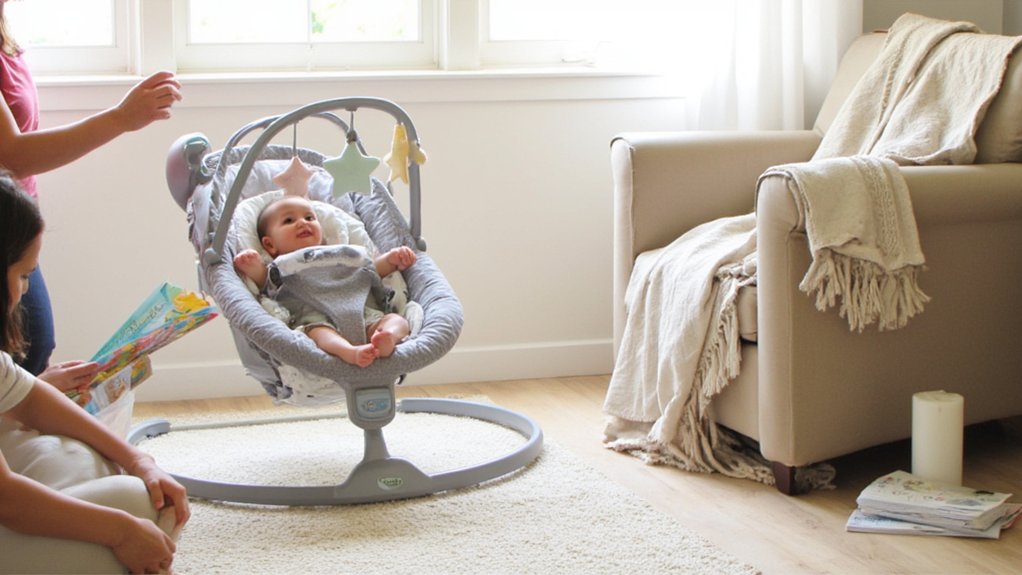
When using an adjustable recline baby swing, set it to the most reclined position for newborns to support their head and neck safely. As your baby grows, gradually adjust the recline to a more upright position to match their development and comfort. Always monitor how long your baby stays in the swing and check that the harness fits snugly to prevent slipping. For a safer, more comfortable experience, keep these tips in mind and explore how best to use your swing for each growth stage.
Table
Main Points
- Use the most reclined position for newborns to ensure proper head and neck support and reduce positional asphyxia risks.
- Adjust recline positions as baby grows, starting nearly flat for infants under four months, then more upright around six months.
- Securely fasten and regularly adjust the five-point harness to keep baby safe and prevent slipping or falling.
- Limit swing sessions to about 30 minutes to prevent developmental delays and monitor baby’s comfort and harness fit.
- Always supervise baby while in the swing and follow manufacturer guidelines for weight, age, and recline adjustments.
Ensuring Proper Support and Safety for Newborns
When you use an adjustable recline baby swing for your newborn, be certain to set the seat to the most reclined position to support their developing head and neck properly.
The American Academy of Pediatrics advises positioning newborns nearly flat to reduce risks like positional asphyxia and guarantee safe breathing. Many electric baby swings offer built-in safety features such as a five-point harness and a secure frame to further enhance newborn protection.
Always follow the swing’s weight guidelines, as most models suit newborns only up to about 20-25 pounds.
To keep your baby safe, securely fasten the five-point harness, which prevents slipping or falling, and adjust it as your baby grows.
Never leave your baby unsupervised in the swing, especially during sleep, to minimize the risk of Sudden Infant Death Syndrome.
By following these safety precautions, you can provide proper head and neck support while protecting your newborn in adjustable recline baby swings.
Adjusting Recline Positions as Your Baby Grows
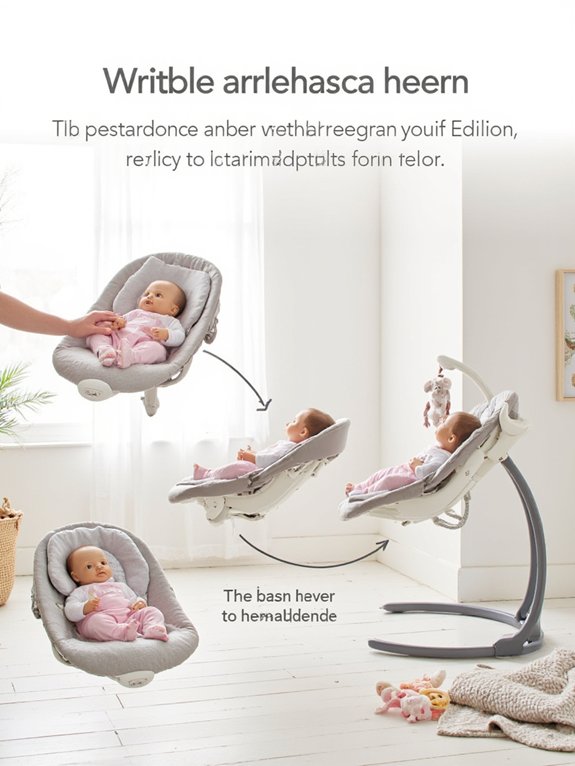
As your baby grows and gains neck strength, you’ll need to adjust the recline positions on the baby swing to match their developmental stage.
For infants under four months, a flatter position provides essential head and neck support, reducing safety risks like positional asphyxia. Many modern swings, such as those with convertible safety harnesses, further enhance security and adaptability as your baby develops.
Most swings offer adjustable recline positions, letting you shift gradually as your baby’s ability to sit unassisted improves around six months.
Always follow the manufacturer’s guidelines based on your baby’s age and weight to guarantee proper comfort and safety.
Remember, a more reclined angle can help soothe fussy babies, but too steep an incline may pose hazards.
By regularly adapting the recline to your baby’s developmental stages, you can provide both safety and comfort throughout their growth.
Monitoring Usage Duration and Harness Fit Regularly
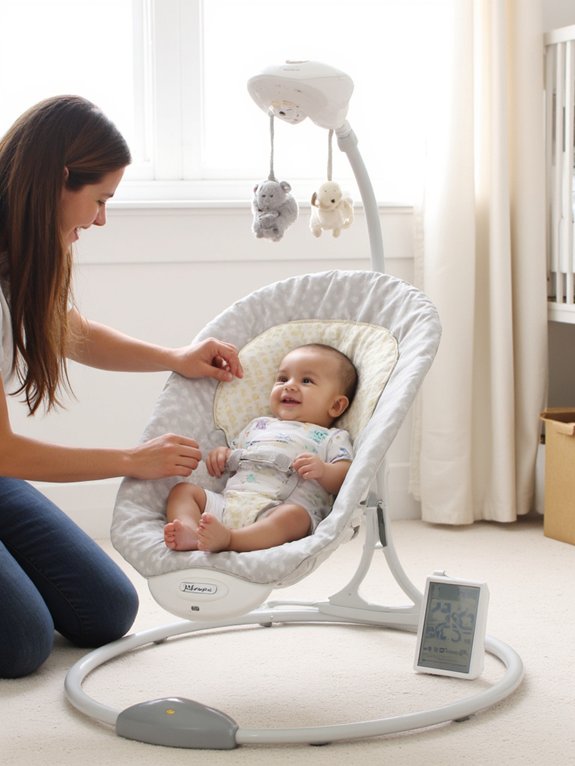
Adjusting the recline position to suit your baby's growth is important, but it's equally important to keep a close eye on how long your baby spends in the swing and how well the harness fits.
Regular monitoring of usage duration helps prevent developmental delays; the AAP suggests limiting swing time to 30 minutes per session for older infants. Many baby swings—like certain lightweight designs—make daily monitoring easier for parents with infants and toddlers.
Always check the harness fit to guarantee it’s snug yet comfortable, adjusting as your baby grows to maintain safety.
Follow the manufacturer’s instructions closely, including weight guidelines, and discontinue use once limits are exceeded.
Supervise your baby consistently, verifying that the adjustable recline matches their developmental stage for proper support.
This vigilant approach to monitoring usage duration and harness fit guarantees your baby’s safety and comfort in baby swings.
Frequently Asked Questions
What Are the Tips for Baby Swings?
You should prioritize swing safety with secure harnesses, choose swing features and materials that suit your baby, consider swing portability and sizes, maintain your swing regularly, select suitable swing styles and toys, guarantee safe swing placement, and limit swing duration.
Can My Baby Sleep in a Reclined Swing?
You might think swings are magic sleep zones, but sleep safety demands caution. Limit swing duration, use adjustable features for baby comfort, follow pediatric advice, and prioritize firm sleep surfaces. Explore swing alternatives and soothing techniques instead.
What Is the Correct Position for a Baby Swing?
You should set your baby’s swing to the ideal recline, considering baby weight and swing type for comfort and safety. Use positioning aids and adjust swing features regularly, limiting swing duration to maintain swing safety and baby comfort.
Do Pediatricians Recommend Baby Swings?
Pediatricians recommend cautious swing use, emphasizing swing safety and limited swing duration to protect developmental milestones. Prioritize baby comfort, monitor sleep patterns, explore swing features and alternatives, and consider parent experiences when choosing the best brands.
Final Thoughts
Remember, your baby’s comfort and safety are the gentle sails guiding your journey with an adjustable recline baby swing. Always guarantee proper support and secure harness fit to keep your little one snug and safe. As your baby grows, adjust the recline thoughtfully, like tuning a delicate instrument. And don’t forget to monitor usage duration to avoid overuse. By staying attentive and cautious, you’ll create a safe, soothing space where your baby can gently drift and grow.
If you want to know other articles similar to Top 3 Tips for Adjustable Recline Baby Swings you can visit the Smart Baby Swings & Bouncers category.
Best Smart Baby Swings of 2024 Reviewed
Best Smart Baby Swings for Twins: Top 7 Picks
Why Are Quiet Motor Smart Baby Bouncers Best?
How to Use a Smart Baby Bouncer With Music

Why Are These Smart Swings Safest for Infants?
How to Use Portable Smart Baby Bouncers for Travel
Top 10 Tips for Automatic Rocking Baby Swings

10 Best Baby Swings With Built-In Nightlights

3 Best Smart Baby Swings for Newborns
This is also interesting