




Why Choose a Hypoallergenic Air Purifier for Newborns?

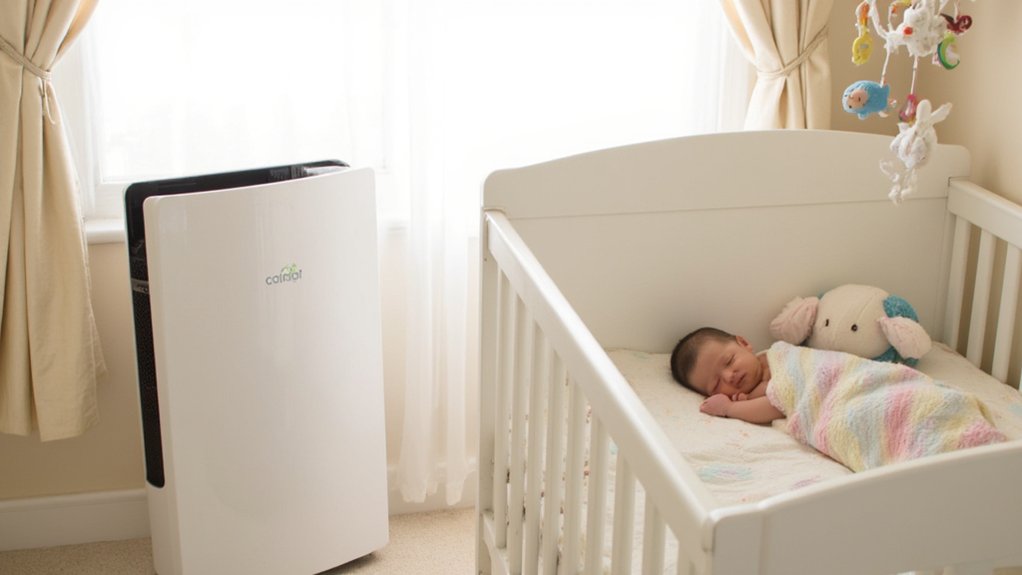
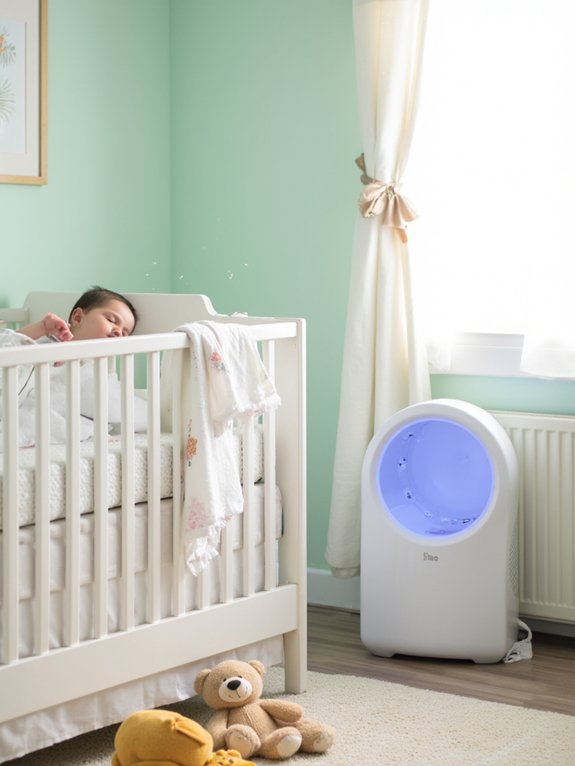
You want your newborn to breathe the cleanest air possible, and choosing a hypoallergenic air purifier helps you do just that. These purifiers target allergens like dust mites, pet dander, and pollen, safeguarding your baby’s delicate lungs from irritants. With features like True HEPA filters, quiet operation, and child-safe designs, they create a healthier, safer nursery environment. Using one can improve your baby’s sleep quality and reduce respiratory risks—explore how these benefits come together to protect your little one.
Table
- Main Points
- Understanding Hypoallergenic Air Purifiers for Newborns
- Key Benefits for Infant Respiratory Health
- Features to Look for in Nursery Air Purifiers
- How Hypoallergenic Purifiers Improve Sleep Quality
- Safety Considerations for Use Around Babies
- Maintaining Optimal Air Quality in the Baby’s Room
- Frequently Asked Questions
- Final Thoughts
Main Points
- Hypoallergenic air purifiers protect newborns by efficiently capturing allergens like dust mites, pet dander, and pollen.
- True HEPA filters trap pollutants as small as 0.3 microns, ensuring cleaner air for sensitive infant respiratory systems.
- These purifiers reduce indoor air pollution, promoting healthier breathing patterns and minimizing respiratory infections in newborns.
- Ultra-quiet operation and sleep modes maintain a peaceful nursery environment without disturbing infant sleep.
- Safety features like child locks and ozone-free operation safeguard delicate lungs and prevent accidental adjustments.
Understanding Hypoallergenic Air Purifiers for Newborns
While you may think any air purifier will do, hypoallergenic air purifiers are specifically engineered to protect your newborn's delicate respiratory system by efficiently capturing common allergens like dust mites, pet dander, and pollen.
These devices use a True HEPA filter, which traps tiny allergens and pollutants as small as 0.3 microns, drastically reducing indoor air pollution in your baby’s nursery. Many of the most effective models feature ultra-quiet operation that is ideal for bedrooms and nurseries, ensuring your baby’s sleep won't be disrupted while maintaining clean air.
True HEPA filters capture allergens and pollutants as small as 0.3 microns, ensuring cleaner air for your baby’s nursery.
Many models also include activated carbon filters to eliminate odors and harmful volatile organic compounds, creating a safer breathing environment.
By choosing a hypoallergenic air purifier with child safety features and quiet operation, you guarantee peace of mind while serving your infant’s health needs.
This thoughtful approach helps you create a nurturing space free from airborne irritants.
Key Benefits for Infant Respiratory Health

Choosing a hypoallergenic air purifier tailored for newborns does more than just filter the air—it actively supports your infant’s respiratory health.
Hypoallergenic air purifiers equipped with HEPA filters capture 99.97% of airborne pollutants as small as 0.3 microns, considerably reducing allergens like dust mites and pollen that often trigger respiratory issues.
Since babies are especially vulnerable to poor air quality, minimizing these irritants helps lower risks of asthma and bronchitis.
By ensuring clean air in your nursery, you promote healthier breathing patterns and reduce respiratory infections, supporting your newborn’s overall well-being.
Additionally, cleaner air fosters better sleep quality, essential for growth and development.
Using hypoallergenic air purifiers consistently creates a safer, healthier environment where your infant can thrive.
Features to Look for in Nursery Air Purifiers
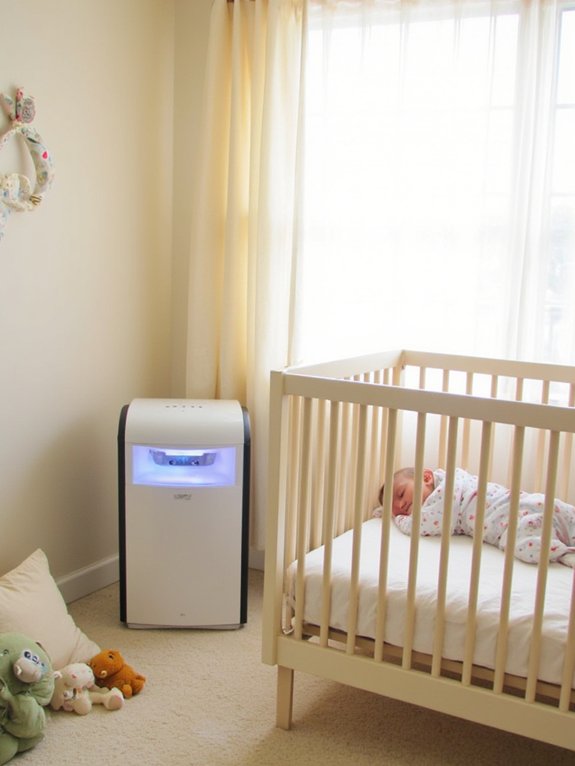
When choosing a nursery air purifier, you’ll want to prioritize essential filtration types like True HEPA and activated carbon filters to effectively remove allergens and odors.
Make sure the unit operates quietly, ideally below 30 decibels, so it won’t disturb your newborn’s sleep.
Additionally, safety features such as secure casing and child-proof controls are vital to keep your baby protected.
Essential Filtration Types
Three essential filtration features can make a significant difference in maintaining clean air for your newborn’s nursery.
First, True HEPA filters are vital—they capture 99.97% of airborne particles as small as 0.3 microns, eliminating allergens like dust mites, pet dander, and pollen. Many top-rated nursery air purifiers operate at ultra-low noise levels, ensuring your baby’s sleep isn’t disturbed while still providing powerful filtration.
Second, an activated carbon filter tackles odors and volatile organic compounds (VOCs), reducing indoor pollution and creating a fresher environment.
Finally, a multi-stage filtration system that combines a pre-filter with True HEPA and activated carbon filters guarantees thorough removal of pollutants.
Choosing an air purifier with these filtration types means you’re actively protecting your baby from harmful particles and improving overall air quality.
This thoughtful approach helps you provide a safe, healthy nursery where your newborn can thrive.
Noise Level Considerations
How quiet should an air purifier be to keep your newborn’s sleep undisturbed? Aim for models operating between 20-30 decibels, ensuring the noise level won’t disrupt your baby’s rest.
Choose an air purifier with a quiet operation and a “sleep mode” feature that lowers fan speed and noise at night. Some units even offer white noise options, which can mask household sounds and promote a soothing atmosphere.
Avoid purifiers exceeding 50 decibels, as louder machines risk waking your infant. By selecting a low-noise air purifier, you create a peaceful nursery environment where your newborn can sleep soundly and safely.
Prioritizing noise level considerations helps you serve your little one’s comfort and well-being with confidence and care.
Safety Features Needed
Beyond maintaining a quiet environment, you’ll want to prioritize safety features that protect your newborn and guarantee the purifier functions effectively. Key safety features include child safety locks to prevent accidental tampering, zero harmful ozone emission to safeguard delicate lungs, and filter replacement indicators to verify timely maintenance. These elements work together to create a safe, healthy nursery atmosphere. For optimal results, look for models that utilize a True HEPA filter, which captures up to 99.97% of airborne particles and supports a cleaner nursery environment. Here’s a quick overview:
| Safety Feature | Purpose | Benefit for Newborns |
|---|---|---|
| Child Safety Locks | Prevents accidental adjustments | Ensures safe, consistent operation |
| Zero Harmful Ozone | Avoids respiratory irritants | Protects infant lung development |
| Filter Replacement Indicator | Alerts when to change filters | Maintains ideal air quality |
Choosing these safety features means you’re truly serving your newborn’s well-being.
How Hypoallergenic Purifiers Improve Sleep Quality
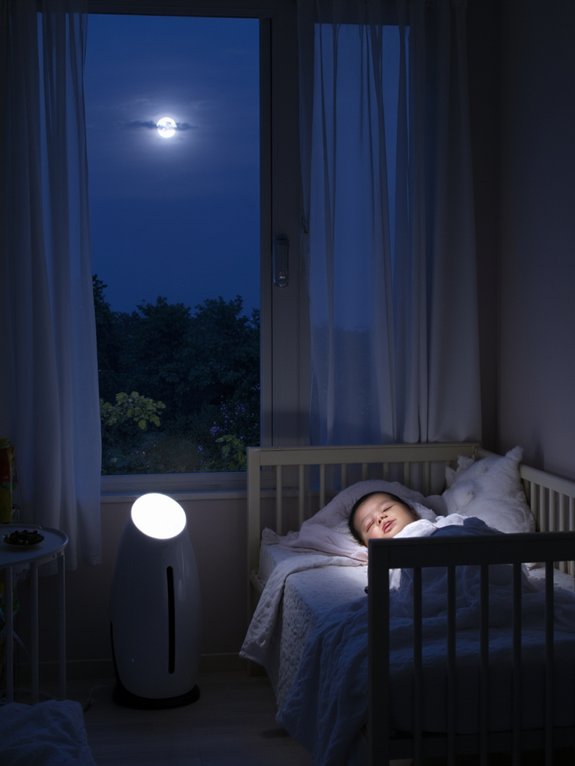
You’ll notice that hypoallergenic air purifiers create an allergen-free sleep environment by filtering out irritants that disrupt your newborn’s rest.
Their quiet operation minimizes noise, helping your baby stay asleep without sudden disturbances.
Together, these benefits promote a more peaceful and restorative night for your little one.
Noise Reduction Benefits
Although newborns are sensitive to noise disturbances, hypoallergenic air purifiers help create a peaceful environment that supports restful sleep. Their noise reduction features, including soothing sound options, mask disruptive noises, allowing your baby to fall asleep easily and stay asleep longer. These purifiers operate quietly, minimizing sudden sounds that might startle your infant. Plus, improved air quality reduces respiratory irritation, further promoting uninterrupted sleep. Many top models, like the LEVOIT Core300-P, offer near-silent operation at 24 dB in Sleep Mode, ensuring your baby's sleep is undisturbed even during the night.
| Feature | Benefit | Impact on Newborn's Sleep |
|---|---|---|
| Noise Reduction | Masks disruptive sounds | Supports deeper sleep |
| Soothing Sound | Mimics natural white noise | Calms and comforts baby |
| Quiet Operation | Limits sudden disturbances | Prevents sleep interruptions |
| Improved Air Quality | Reduces allergens | Minimizes respiratory irritation |
Choosing a hypoallergenic air purifier means prioritizing your newborn’s healthy, restful sleep.
Allergen-Free Sleep Environment
When you choose a hypoallergenic air purifier for your newborn’s room, you actively reduce airborne allergens like dust mites, pollen, and pet dander, creating a safer, cleaner sleep environment.
Hypoallergenic air purifiers equipped with HEPA filters capture up to 99.97% of these tiny particles, ensuring your baby breathes cleaner air. This reduction in allergens helps minimize respiratory irritations, which can otherwise cause nighttime coughing and disrupt your newborn’s rest. Models like the LEVOIT Core Mini-P are designed for quiet operation, making them especially suitable for bedrooms and nurseries.
By maintaining an allergen-free sleep environment, you support longer, more restful sleep cycles essential for your baby’s growth and development. Additionally, hypoallergenic purifiers operate quietly, so they don’t disturb your infant’s sleep.
Choosing one is a proactive step toward safeguarding your newborn’s health and comfort every night.
Safety Considerations for Use Around Babies
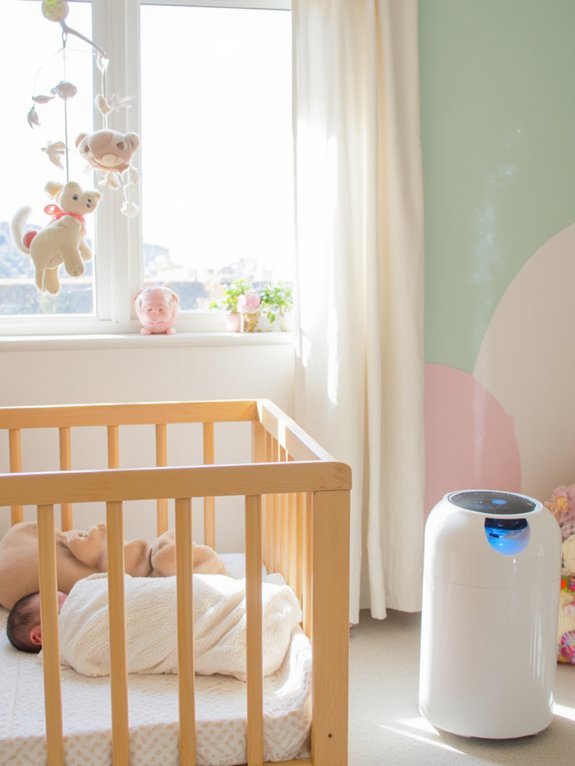
Since newborns have delicate respiratory systems, choosing a hypoallergenic air purifier with safe features is essential for their well-being. You should prioritize models with True HEPA filters that capture 99.97% of harmful particles without producing ozone, which can irritate tiny lungs. Look for child safety features like locks to prevent accidental tampering, ensuring your baby’s environment stays secure. Many modern purifiers, such as those with ultra-quiet operation, also help maintain a peaceful nursery environment without disturbing your baby’s sleep.
| Feature | Importance for Newborns |
|---|---|
| True HEPA Filters | Removes allergens effectively |
| Ozone-Free Operation | Prevents respiratory irritation |
| Child Safety Features | Keeps purifier tamper-proof |
| Quiet Operation | Supports undisturbed sleep |
Selecting a purifier with these safeguards helps you serve your baby’s health with confidence and care.
Maintaining Optimal Air Quality in the Baby’s Room
Ensuring your baby's room has consistently clean air goes beyond selecting the right purifier—it requires maintaining ideal air quality at all times.
Using a hypoallergenic air purifier with a HEPA filter traps tiny allergens like dust mites, pet dander, and pollen, essential for protecting your newborn’s developing respiratory system. For best results, choose a purifier certified for energy-efficient performance to ensure both safety and cost-effectiveness in your baby's room.
A hypoallergenic HEPA air purifier captures tiny allergens, safeguarding your newborn’s sensitive respiratory health.
You can monitor air quality in real-time with modern purifiers, helping you keep pollutant levels low and reduce the risk of respiratory issues such as asthma.
Regular use also cuts odors from diaper changes, creating a fresher environment.
Choose a purifier with quiet operation and a soft night light to promote peaceful sleep, ensuring your baby breathes safer air and rests comfortably.
Prioritizing these steps supports your baby’s health and well-being every day.
Frequently Asked Questions
Is an Air Purifier Good for a Newborn Baby?
Yes, you should use an air purifier to improve air quality, protect your newborn's health, reduce indoor allergens, and help prevent asthma. It creates a safer environment, supporting your baby’s developing respiratory system effectively.
Are Hypoallergenic Air Filters Worth It?
Of course, ignoring air quality is the best way to guarantee allergy and respiratory issues thrive. But if you care about baby safety, hypoallergenic air filters are worth it—they actively prevent allergies and protect respiratory health.
Do Air Purifiers Help Newborns With Congestion?
You’ll find air purifiers improve air quality, offering congestion relief and supporting infant health. They reduce allergens, aiding allergy prevention, so your newborn breathes easier and stays more comfortable in a cleaner, safer environment.
Is It Better to Have a Humidifier or Air Purifier for a Baby?
You’ll want both: humidifier benefits soothe dry skin and nasal passages, while air purifier features improve indoor air quality by removing allergens. Together, they support your baby’s health, ensuring a comfortable, safe environment.
Final Thoughts
Choosing a hypoallergenic air purifier for your newborn is like planting a protective garden of clean air around them. It shields delicate lungs from unseen threats, nurturing restful sleep and healthy growth. With the right purifier, you’re not just cleaning the air—you’re crafting a sanctuary where your baby can breathe easy and thrive. Trust this crucial step; it’s an investment in your child’s well-being that speaks volumes without saying a word.
 10 Tips for Choosing Recycled Eco-Friendly Diaper Bags
 What Air Purifier Is Best for Baby Room With Pets?
If you want to know other articles similar to Why Choose a Hypoallergenic Air Purifier for Newborns? you can visit the Air Purifiers & Humidifiers category.
3 Best Air Purifiers for Baby Room Dust
How to Choose a Baby Room Air Purifier
Why Choose a Compact Air Purifier for Nursery?
Best Portable Air Purifiers for Baby Strollers
7 Tips for Choosing Baby Asthma Air Purifiers
7 Best Air Purifiers for Baby Nurseries
5 Tips for Choosing Baby Allergy Air Purifiers

Why Choose an Air Purifier With Night Light?
5 Tips for Choosing the Best Air Purifier for Newborns
This is also interesting