


![VITEVER [16 Pack] 4 oz Small Containers with Lids, Reusable](https://m.media-amazon.com/images/I/41fnLIEevxL._SL500_.jpg)







How to Use a Baby Food Maker for Purees

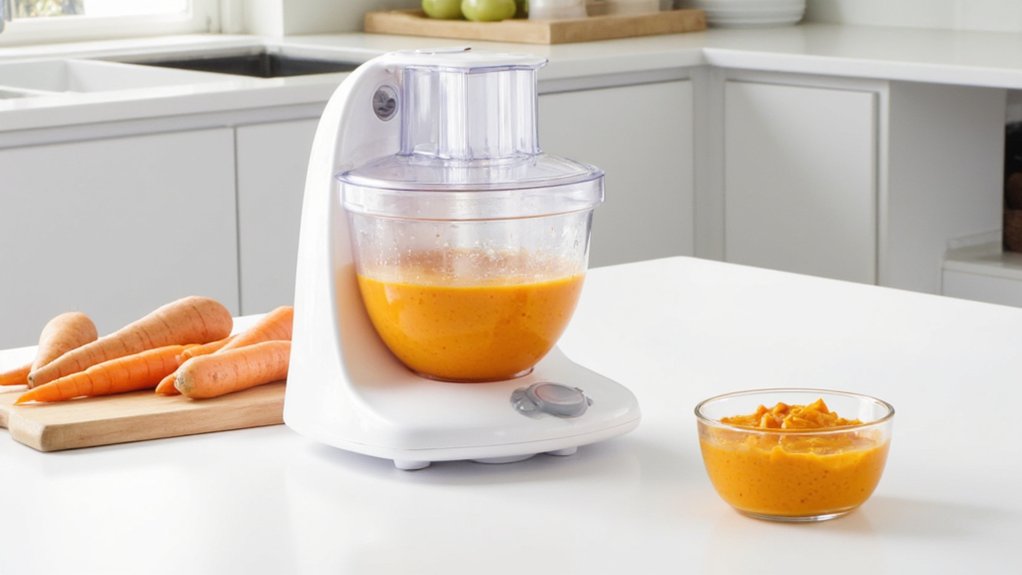
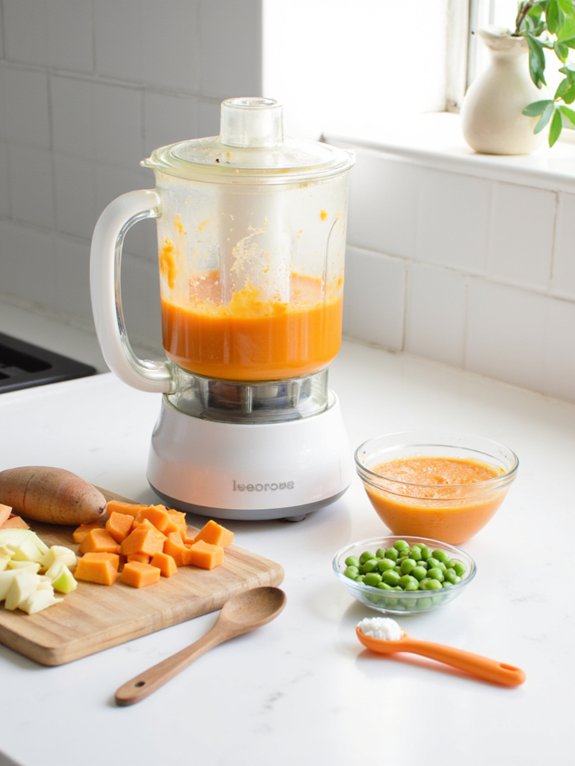
To use a baby food maker for purees, start by washing and chopping fruits or veggies into small pieces. Steam them in the machine, ensuring you add the right water level for soft cooking. Once steamed, blend in short bursts until the texture suits your baby’s stage, adding liquid gradually if needed. Store leftovers safely in airtight containers in the fridge or freezer. Experimenting with combos keeps meals exciting and nutritious. There’s plenty more to explore to perfect your baby’s meals.
Table
- Main Points
- Choosing the Right Baby Food Maker
- Preparing Ingredients for Purees
- Steaming Fruits and Vegetables
- Blending and Achieving the Perfect Texture
- Adjusting Consistency With Liquids
- Safe Storage and Refrigeration Tips
- Creative Puree Combinations to Try
- Frequently Asked Questions
- Final Thoughts
Main Points
- Wash, peel, and cut fruits or vegetables into small pieces for even cooking before placing them in the baby food maker’s steam basket.
- Add the correct water level for steaming, then steam ingredients until soft, usually about 20 minutes, indicated by the machine’s beep.
- Transfer steamed ingredients to the blending bowl without exceeding the max fill line for safe and effective pureeing.
- Blend ingredients in short bursts, scraping down sides and adding liquid gradually to achieve the desired smooth texture.
- Store purees in airtight containers, refrigerate for up to 48 hours, or freeze in portions for longer storage and safe feeding.
Choosing the Right Baby Food Maker
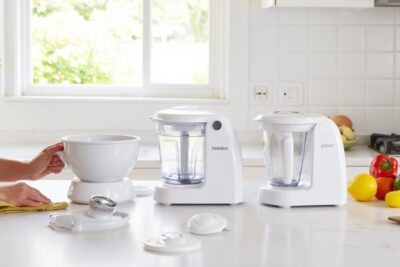
When choosing the right baby food maker, focus on models that combine steaming and pureeing functions to save you time and reduce cleanup.
You’ll appreciate baby food makers that let you make homemade baby food quickly, ensuring your little one enjoys fresh, nutritious meals.
Look for features like adjustable water levels for steaming various ingredients perfectly, so you achieve the desired consistency every time. With BPA-free materials, you can trust that the food you prepare is safe for your baby.
One-handed operation is a plus, letting you multitask while preparing food.
Quick preparation times, ideally under 20 minutes, help you stay efficient during busy days.
Finally, pick a baby food maker that's easy to clean and maintain, encouraging you to make homemade baby food regularly.
These thoughtful features support your goal of serving wholesome meals with ease.
Preparing Ingredients for Purees
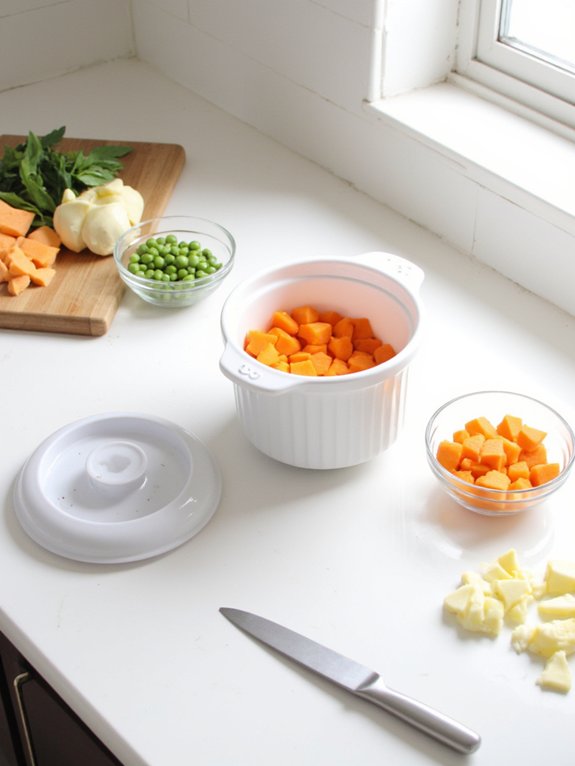
Selecting a baby food maker with both steaming and pureeing functions sets you up for success in preparing homemade meals.
When preparing ingredients for purees, start by thoroughly washing and peeling fruits and veggies to remove any dirt or pesticides. Cut them into small, uniform pieces to guarantee even cooking and a smooth texture. For added peace of mind, choose a model made from BPA-free materials to ensure safety and health for your baby.
Using your baby food maker’s steam basket, place the prepared pieces and fill the water reservoir according to the food type. After steaming until soft, transfer the ingredients to the blending bowl with a spatula.
Blend in short bursts, adding water, breast milk, or formula to adjust consistency. By following these steps, you’ll make your own baby food that’s fresh, nutritious, and perfectly textured for your little one’s needs.
Steaming Fruits and Vegetables
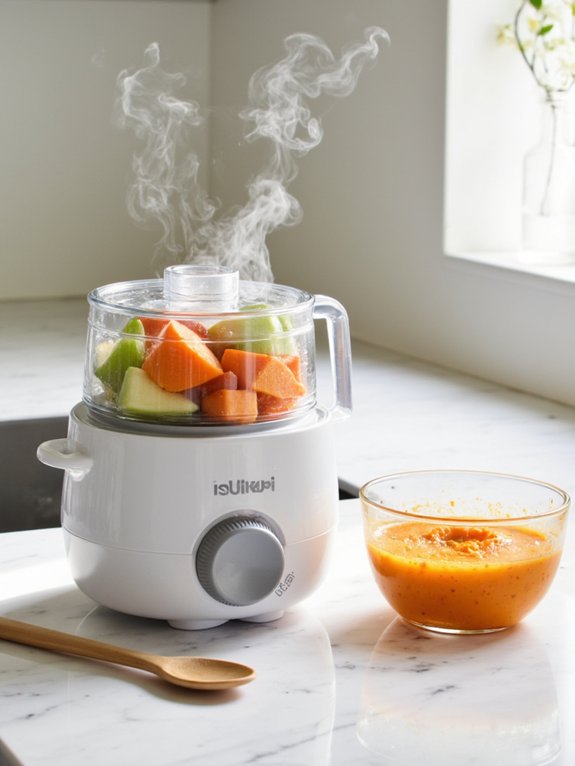
When steaming fruits and vegetables, you’ll want to select the correct water level based on the ingredient—for example, level 1 for apples and level 3 for root vegetables.
The steam cycle usually takes about 20 minutes, and you’ll hear a slow beep when it’s done, indicating the food is soft enough.
Paying attention to these details guarantees your baby’s purees have the right texture and nutrients.
Many baby food makers feature integrated safety alerts that notify you if the water level is low or if there’s an issue, helping ensure safe and consistent meal prep every time.
Choosing Water Levels
Setting the right water level is essential for steaming fruits and vegetables to the perfect softness in your baby food maker. Proper water levels guarantee even steaming, resulting in the ideal texture for your puree while preserving nutrients. Use the water level indicator to guide you based on the ingredient’s density and type. For best results, 360-degree steam circulation technology ensures that nutrients and flavors are retained during the steaming process.
| Ingredient Type | Water Level | Steaming Result |
|---|---|---|
| Soft Fruits (e.g., apples) | 1 | Tender, preserves flavor |
| Root Vegetables | 2 or 3 | Soft, easy to blend |
| Poultry/Meat/Fish | 3 | Thoroughly cooked |
Timing the Steam Cycle
Timing the steam cycle in your baby food maker is crucial for achieving perfectly soft fruits and vegetables ready for blending.
Typically, the steam cycle takes less than 20 minutes, and you'll hear a slow beeping noise signaling completion. A flashing light on the steam button confirms that your ingredients are steamed and ready to process. The steam cooking method used in many baby food makers, like the BEABA Babycook Neo, helps preserve more vitamins and minerals compared to traditional boiling.
Use a spatula to transfer everything to the blending bowl to maintain a consistent texture. If you want a thinner consistency, simply add water during blending.
Remember, selecting the correct water level before starting the steam cycle makes all the difference—apples require level 1, root vegetables need levels 2 or 3.
Mastering this timing guarantees your purees are smooth and nutritious for your little one.
Blending and Achieving the Perfect Texture
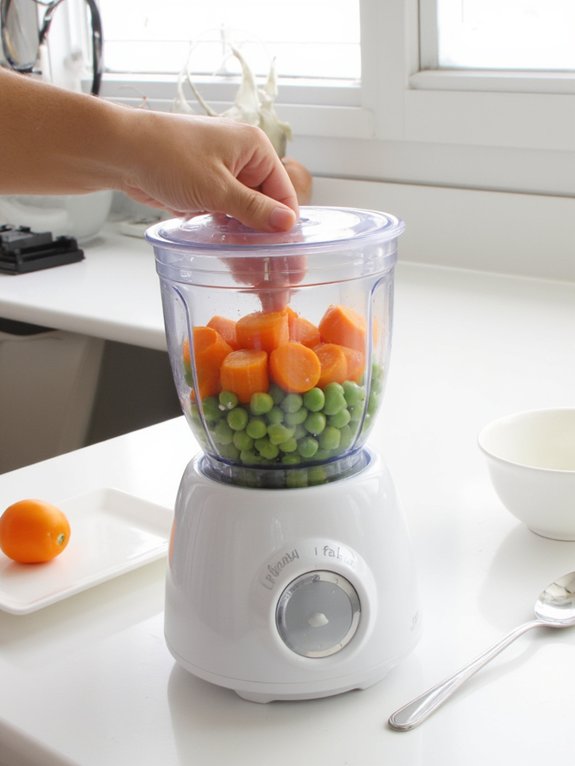
Start by placing steamed or cooked ingredients into the baby food maker’s blending bowl, making certain you don’t exceed the maximum fill line to guarantee smooth blending.
Use the blender in short bursts, pausing to scrape down the sides for an even texture. This helps you make baby food that’s consistent and safe for your little one. Many baby food makers, like those with gentle cooking methods, help retain vital nutrients while blending.
To perfect the texture, keep these points in mind:
- Blend gradually, checking texture frequently to suit your baby’s stage.
- Avoid overfilling to prevent uneven mixing.
- Incorporate adding liquid sparingly, only when necessary, to help achieve the desired smoothness.
Adjusting Consistency With Liquids
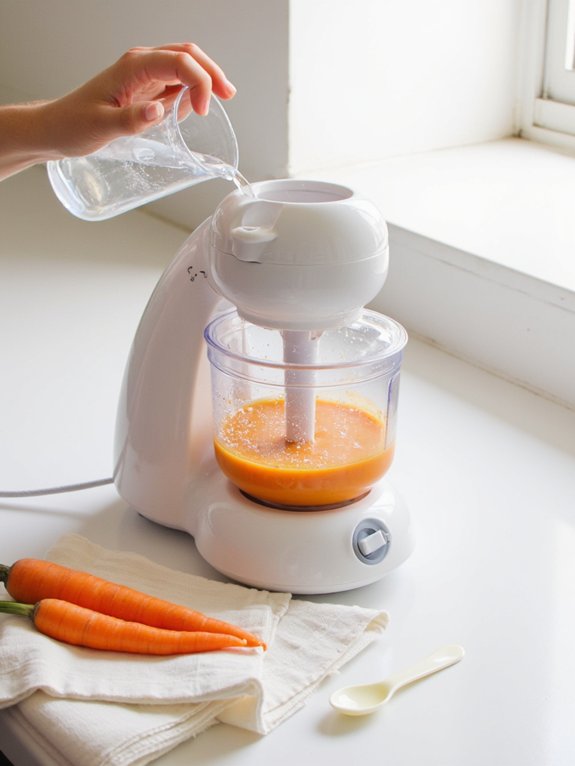
After blending your ingredients to a smooth consistency, you’ll want to adjust the thickness to suit your baby’s needs. Start by gradually adding small amounts of liquids like reserved cooking water, formula, or breast milk while blending. This careful adjusting consistency helps you achieve the perfect texture—whether your baby needs a thinner puree for easier swallowing or a thicker one as they develop. Add liquid in short increments, blending and checking frequently to avoid over-thinning. Breast milk is a gentle, nutritious option that also enhances flavor. Keep in mind, your baby food maker’s manual often offers specific liquid ratio guidance depending on the ingredients. By tailoring the puree’s consistency, you support your baby’s feeding stage and make mealtime both safe and enjoyable. Many modern baby food makers, such as the Phydge, feature spill-proof design that helps keep your kitchen clean and reduces the risk of cross-contamination during meal preparation.
Safe Storage and Refrigeration Tips
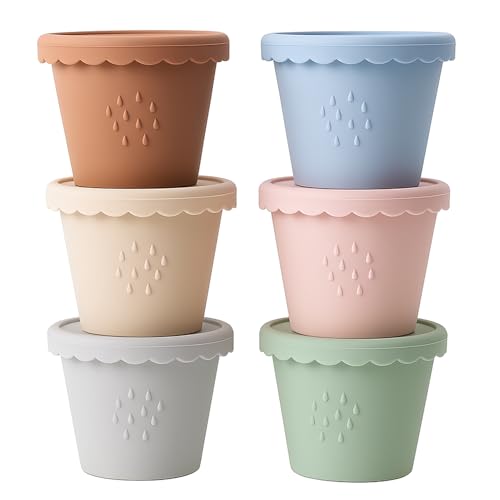
When storing your homemade baby food, use airtight containers to keep purees fresh for 24 to 48 hours in the fridge.
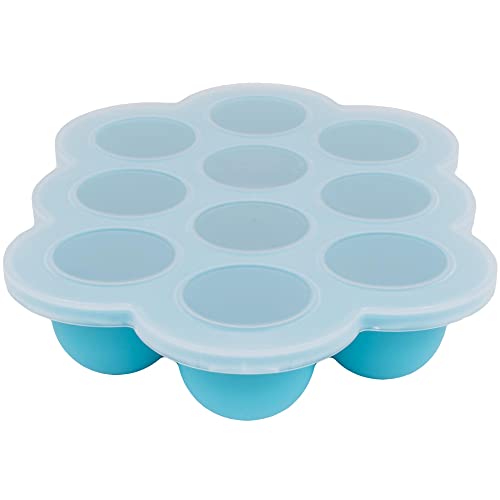
For longer storage, freeze portions in ice cube trays and transfer them to labeled bags or containers.
Always thaw safely and reheat gently to protect your baby’s health.
Refrigeration Time Limits
Although homemade baby food purees offer nutritious benefits, you need to store them properly to keep your baby safe.
When it comes to refrigeration time limits, homemade baby food can generally stay fresh for 24-48 hours, depending on the ingredients. Using BPA-free materials for your storage containers can help ensure your baby's food stays safe and uncontaminated.
To help you manage this effectively, follow these key tips:
- Label and date each container to track freshness easily.
- Store purees in the refrigerator promptly after preparation.
- Discard any baby food if you’re unsure about its freshness to avoid risks.
Airtight Container Use
Proper storage plays a big role in keeping your homemade baby food fresh and safe. Always use airtight containers to preserve the puree’s flavor and prevent contamination. After each use, make certain containers are sealed tightly before refrigerating. Refrigerate purees for no more than 24-48 hours to maintain safety. If you want to freeze baby food for longer storage, use airtight containers or ice cube trays, then transfer cubes to freezer bags for convenience. Don’t forget to label and date containers before storing so you can easily monitor freshness and avoid serving expired food. If you’re ever unsure about the quality, it’s best to discard the puree to protect your little one’s health. Proper container use guarantees safe, nutritious meals every time.
Freezing and Thawing Methods
Freezing and thawing baby food properly can save you time and reduce waste while ensuring your little one enjoys safe, nutritious meals.
Use ice cube trays to freeze purees in 1-ounce portions, making thawing just the right amount simple and convenient.
When thawing, choose one of these safe methods:
- Place frozen cubes in the refrigerator overnight for gentle thawing.
- Use a microwave on low power, stirring occasionally to avoid hot spots.
- Submerge the sealed container in warm water for a quicker thaw.
Label containers with dates, and store purees in airtight containers in the fridge for 24-48 hours or freeze for 1-3 months.
Always reheat leftovers until lukewarm and discard uneaten food promptly to keep your baby safe.
Creative Puree Combinations to Try
Trying five creative puree combinations can make mealtime exciting for both you and your baby. When you make baby food, experimenting with flavors guarantees your little one enjoys a variety of nutrients.
Start with sweet potatoes and apples for a naturally sweet blend rich in vitamins A and C. Next, mix spinach and banana to boost iron and potassium intake.
Combine sweet potatoes with apples for sweetness and vitamins, then spinach with banana for iron and potassium.
For a revitalizing twist, blend peas with mint, adding protein and fiber. Carrots combined with ginger introduce a gentle spice and beta-carotene benefits.
Finally, avocados paired with pears create a creamy puree packed with healthy fats and vitamins E and C. These creative puree combinations not only nourish but also help your baby develop a taste for diverse foods early on.
Frequently Asked Questions
How to Use a Baby Puree Machine?
You’ll love your baby puree machine’s features—steam, blend, and adjust puree consistency easily. After use, clean all parts promptly to keep it hygienic and ready. This care guarantees safe, tasty meals for your little one.
Can I Use a Food Processor to Puree Baby Food?
Wondering how to achieve smooth baby food textures? You’ll love food processor benefits—they handle big batches and offer homemade puree techniques that guarantee creamy, nutritious meals. Just blend, scrape, and adjust consistency with cooking liquid for perfect results.
What Is the 2 Day Rule for Baby Food?
You should follow the 2 day rule for baby food storage to guarantee safe feeding. Consume homemade nutrition within 24-48 hours, freeze extras, and always label containers to protect your baby’s health and wellbeing.
How to Make Your Own Pureed Baby Food?
Like a chef crafting a signature dish, you’ll blend homemade flavors using organic ingredients to maximize nutritional benefits. Steam, puree, and store thoughtfully, ensuring each spoonful nourishes your little one with love and care.
Final Thoughts
Using your baby food maker, you’ll transform fresh fruits and veggies into smooth, vibrant purees that glow with natural goodness. As steam rises gently and blades whirl softly, you craft nourishing meals tailored just for your little one. With each creamy spoonful, you’re not only feeding them—you’re nurturing their growth and curiosity. Remember, patience and care turn simple ingredients into delightful, healthy bites that brighten your baby’s day and your parenting journey.
If you want to know other articles similar to How to Use a Baby Food Maker for Purees you can visit the Baby Food Makers category.
Best Baby Food Makers for Batch Cooking
Best Baby Food Makers With Steaming Function
How to Choose an Easy-Clean Baby Food Maker
7 Quietest Baby Food Makers for Apartments
Best Baby Food Makers for Small Kitchens
7 Tips for Using a Portable Baby Food Maker

How to Use a Baby Food Maker With Glass Bowl

What Are the Safest Baby Food Processors 2024?

5 Tips for Using Baby Food Maker & Warmer
This is also interesting