


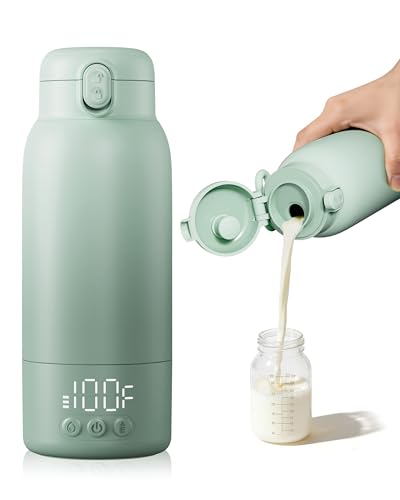




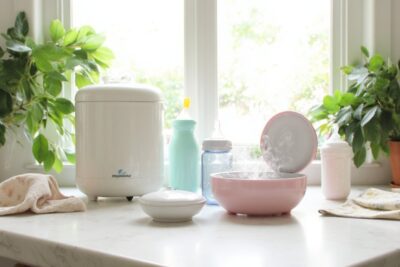
Best Bottle Warmers for Breast Milk Only


You want a bottle warmer that gently and evenly warms breast milk, preserving its precious nutrients and preventing hot spots that can burn your baby. Look for one with waterless technology for safe, mold-free heating and fast, precise temperature control around 98.6°F (37°C). Models like Baby Brezza Safe and Smart guarantee gentle warming with auto shut-off for peace of mind. If you keep going, you’ll find expert tips and top-rated warmers tailored just for your needs.
Table
- Main Points
- Why Choose a Bottle Warmer Specifically for Breast Milk
- Key Features to Look for in Breast Milk Bottle Warmers
- How Waterless Technology Benefits Breast Milk Warming
- Top Bottle Warmers That Preserve Breast Milk Nutrients
- Warming Times and Temperature Accuracy for Breast Milk
- Safe Handling Practices When Using Bottle Warmers
- Comparing Warm Water Bath vs. Steam Heating Methods
- Portability and Convenience for On-the-Go Warming
- Cleaning and Maintenance Tips for Breast Milk Warmers
- Common Mistakes When Warming Breast Milk and How to Avoid Them
- User Experiences and Ratings of Popular Breast Milk Warmers
- How to Optimize Breast Milk Storage and Warming Together
- Expert Recommendations for Selecting the Best Breast Milk Warmer
- Frequently Asked Questions
- Final Thoughts
Main Points
- Choose warmers with gentle, even heating like Baby Brezza Safe to preserve breast milk nutrients and prevent overheating.
- Opt for waterless technology models to reduce mold risk and maintain milk’s nutritional quality safely.
- Select warmers compatible with various bottle brands to ensure flexibility in feeding routines.
- Prioritize devices with user-friendly controls and auto shut-off for safety and ease of use.
- Consider fast heating warmers that balance speed and gentle warming, such as Baby Brezza Safe and Smart.
Why Choose a Bottle Warmer Specifically for Breast Milk
When you warm breast milk, it’s crucial to preserve its delicate nutrients and avoid overheating, which is why using a bottle warmer designed specifically for breast milk makes a significant difference.
Preserving breast milk’s nutrients requires gentle warming, making specialized bottle warmers essential.
These bottle warmers use gentle heating methods or waterless technology to prevent temperatures from exceeding 104°F, safeguarding critical nutrients. You’ll benefit from consistent warming that evenly heats breast milk, reducing the risk of hot spots and ensuring safety. Many models are compatible with all bottle brands, making them flexible for various feeding routines.
Many models incorporate gentle rocking to maintain uniform temperature, making feeding safer and more comfortable for your baby. Plus, they’re designed with ease of use in mind, featuring intuitive controls and auto-shutoff for added safety during late-night feedings.
Choosing a specialized bottle warmer helps you serve breast milk at the ideal temperature with confidence and care.
Key Features to Look for in Breast Milk Bottle Warmers

Because preserving breast milk's nutrients is essential, you’ll want to choose a bottle warmer with features tailored to gentle and consistent heating.
Look for bottle warmers that heat milk evenly, avoiding hot spots that can degrade valuable nutrients. Models with easy-to-use interfaces—like tap-touch buttons and LCD countdowns—simplify late-night feedings.
Prioritize warmers compatible with various bottles to match your feeding routine seamlessly. Fast heating capabilities guarantee breast milk reaches the ideal 98.6°F quickly without overheating, protecting its integrity.
Waterless technology is also key; it minimizes mold risk and maintains nutrient quality by delivering gentle, controlled warmth.
Selecting a bottle warmer that combines these features helps you serve your little one safely and efficiently while honoring the precious benefits of breast milk.
How Waterless Technology Benefits Breast Milk Warming

When you use a waterless bottle warmer, you protect your baby’s breast milk by preserving its essential nutrients through gentle, even heating.
This hygienic method eliminates bacteria and scale buildup, giving you a cleaner, safer warming process.
Plus, precise temperature control guarantees the milk stays at the ideal warmth, keeping your little one comfortable and healthy.
Nutrient Preservation Benefits
Although many warming methods risk overheating breast milk, waterless technology guarantees your milk stays below the critical 104°F (40°C) threshold, preserving its essential nutrients. This gentle warming method prevents the loss of crucial components, ensuring your baby receives breast milk rich in nutrients and anti-infective properties. By using hot air and a gentle rocking motion, waterless technology warms milk evenly, eliminating hot spots that can degrade its quality. Without water tanks, the process reduces contamination risks, maintaining superior hygiene and safeguarding breast milk’s integrity. Choosing a waterless warmer means you’re providing the best care, preserving the delicate balance of nutrients and protective factors in breast milk, so your little one benefits fully from every feeding.
Hygienic Heating Process
If you want to guarantee your baby’s breast milk is warmed safely and hygienically, waterless technology offers a superior solution.
This method uses hot air instead of water, eliminating risks like mold, mineral buildup, and bacterial growth common in traditional warmers.
You’ll appreciate the hygienic warming process that provides consistent warmth without hot spots, ensuring breast milk heats evenly.
By preventing overheating, it protects against nutrient loss, keeping your baby’s milk as nourishing as possible.
The gentle rocking motion further balances temperature distribution, enhancing safety and effectiveness.
Plus, waterless models are easy to clean and maintain, requiring no descaling.
Choosing a waterless bottle warmer means you’re prioritizing both your baby’s health and your peace of mind in every feeding.
Consistent Temperature Control
Because waterless technology uses hot air instead of water, it delivers consistent and even warming without the risk of hot spots that can damage breast milk nutrients.
This method guarantees consistent warmth throughout the bottle, preserving essential nutrients crucial for your baby’s health.
With precise temperature control, it prevents overheating, maintaining breast milk safety by keeping it near the ideal 98.6°F (37°C).
The gentle rocking motion further minimizes temperature differences within the bottle, enhancing nutrient preservation and overall milk quality.
Plus, without a water tank, you avoid mold and bacterial risks, simplifying maintenance.
Choosing a waterless bottle warmer means you’re confidently providing safe, evenly warmed milk, supporting your baby’s well-being with every feeding.
Top Bottle Warmers That Preserve Breast Milk Nutrients
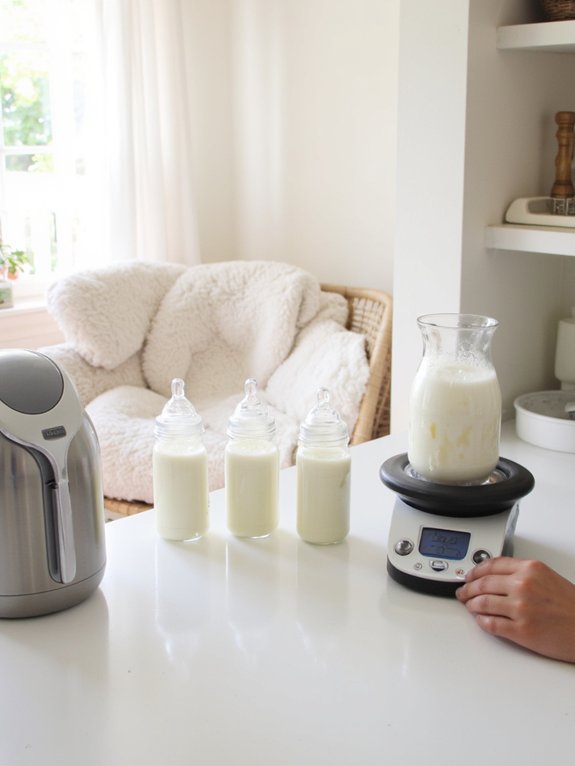
When you warm breast milk, choosing a bottle warmer that carefully controls temperature makes all the difference in preserving its essential nutrients.
Bottle warmers like the Baby Brezza Safe use AirSwirl technology to gently and evenly warm milk to 98.6°F, preventing overheating that can destroy crucial enzymes.
You want a device that offers:
- Precise temperature control to protect delicate nutrients
- Auto shut-off for safety and peace of mind
- Even warming that avoids hot spots and nutrient loss
- User-friendly operation to support your feeding routine
Warming Times and Temperature Accuracy for Breast Milk
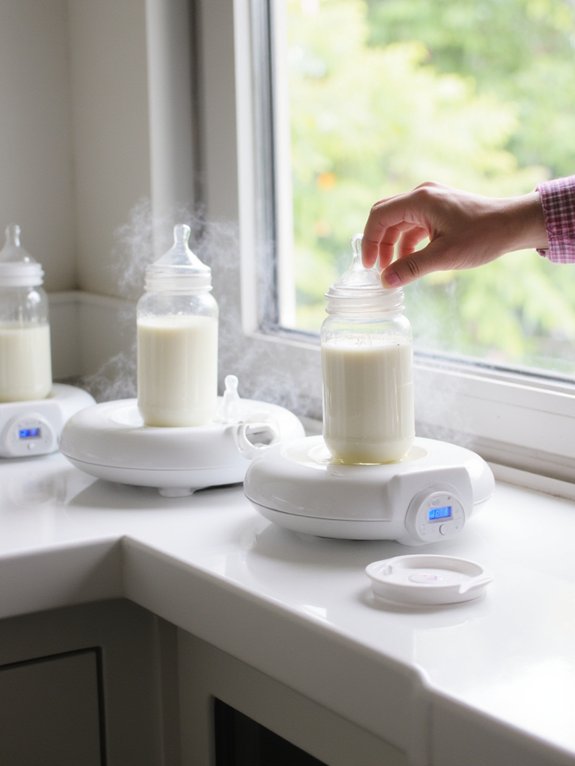
You want your breast milk warmed to about 98.6°F to keep its nutrients intact, but many warmers vary in how quickly and accurately they reach that temperature.
Some models take as little as 5.5 minutes to reach a safe, consistent warmth, while others might take longer or risk overheating.
Understanding these differences helps you choose a bottle warmer that protects your baby's milk quality every time.
Optimal Warming Temperatures
How warm is too warm when it comes to breast milk? You want to keep it at ideal warming temperatures—around 98.6°F (37°C) or less—to protect precious nutrients. Heating breast milk beyond 104°F risks nutrient loss, and just 10 minutes at 113°F causes up to 10% enzyme degradation. Consistency in warming is key; uneven heat creates hot spots that can burn your baby’s mouth.
To serve your little one safely, focus on:
- Maintaining temperatures close to body heat, around 98.6°F
- Avoiding overheating above 104°F to prevent nutrient loss
- Selecting warmers that heat uniformly to eliminate hot spots
- Using reliable devices that warm a 4-ounce bottle in about 6 minutes
Careful temperature control guarantees every feed nourishes as nature intended.
Heating Duration Comparisons
Keeping breast milk at the right temperature is just part of the equation; knowing exactly how long it takes to reach that temperature helps you feed your baby efficiently and safely.
Different bottle warmers vary in warming time and heat accuracy. For instance, the First Years Gentle Warmth heats breast milk in about 3 to 4.5 minutes using a warm water bath, but requires careful water measurement to avoid overheating.
The Baby Brezza Safe and Smart warms milk to 80°F in just 5.5 minutes with consistent temperature control, making it great for both fresh and frozen breast milk.
Meanwhile, the Chicco Digital Bottle Warmer takes around 8 to 11 minutes to reach ideal heat without risking overheating.
Choosing the right bottle warmer guarantees your baby receives milk at the perfect temperature every time.
Temperature Consistency Challenges
Several bottle warmers struggle to maintain consistent temperatures, which poses a real challenge when warming breast milk safely.
Overheating breast milk can cause nutrient loss, starting above 104°F (40°C), with serious degradation past 113°F (45°C). The ideal warming temperatures hover around 98.6°F (37°C), preserving breast milk’s rich nutrients. Many modern warmers, such as the Grownsy 8-in-1 Fast Milk Warmer, use smart temperature control to help reduce the risk of overheating and preserve nutrients.
Choosing the right bottle warmers means balancing warming times with temperature consistency. You want a warmer that warms quickly but never risks overheating.
Consider these challenges when selecting a warmer for breast milk:
- Unpredictable warming times that risk uneven heating
- Temperature fluctuations causing overheating and nutrient loss
- Models failing to hit ideal warming temperatures reliably
- The stress of monitoring bottles to avoid overheating
Safe Handling Practices When Using Bottle Warmers
When you warm breast milk using a bottle warmer, it’s essential to handle it carefully to preserve its nutrients and guarantee your baby’s safety. Always swirl the milk to eliminate hot spots, then test the temperature on your inner wrist—it should be near 98.6°F (37°C). Avoid microwaves, as they cause uneven heating and nutrient loss. Choose bottle warmers with an auto-shut-off feature to prevent overheating, which degrades breast milk above 104°F (40°C). Follow your warmer’s instructions closely to maintain safe temperatures during heating.
| Practice | Reason |
|---|---|
| Swirl milk before feeding | Prevent burns from hot spots |
| Check temperature | Verify milk is around 98.6°F (37°C) |
| Avoid microwaves | Prevent nutrient destruction and hot spots |
| Use auto-shut-off | Stop overheating and nutrient loss |
| Follow instructions | Maintain safe heating and quality |
Comparing Warm Water Bath vs. Steam Heating Methods
Choosing the right heating method for your bottle warmer can greatly impact the quality and safety of breast milk.
Warm water bath warmers offer gentle heating, maintaining ideal temperatures around 98.6°F, which preserves nutrients and prevents overheating. In contrast, steam heating can cause hot spots, reaching temperatures above 120°F, risking nutrient degradation and loss of crucial enzymes.
When selecting the best bottle warmers, consider these factors:
- Warm water bath guarantees even heating without scalding risks
- Prevents significant nutrient degradation by avoiding high temperatures
- Requires less maintenance, avoiding mineral buildup and frequent refilling
- Steam heating demands careful monitoring to prevent overheating
Portability and Convenience for On-the-Go Warming
How do you keep breast milk at the perfect temperature while you're out and about?
Portable bottle warmers offer unmatched convenience for on-the-go feeding. Compact designs like the Kiinde Kozii Voyage fit easily into diaper bags, letting you warm milk quickly without hassle.
USB-rechargeable designs guarantee you’re never tethered to a power outlet, so you can warm bottles anywhere.
The Baby Brezza Safe & Smart adds Bluetooth control, allowing you to monitor and adjust warming remotely—ideal when you’re busy caring for your little one.
These features make portable warmers essential tools, empowering you to serve your baby’s needs efficiently and confidently, no matter where your day takes you.
Cleaning and Maintenance Tips for Breast Milk Warmers
Since breast milk warmers play an important role in feeding your baby safely, keeping them clean and well-maintained is crucial.
Proper cleaning and maintenance guarantee hygiene and peak performance, protecting your little one from harmful bacteria. Regular cleaning is especially important for avoiding pressure issues and maintaining the warmer's effectiveness.
Follow these key tips:
- Wipe the interior and exterior with a damp cloth regularly; never submerge the unit in water.
- Clean every 2-3 days to avoid milk residue build-up, especially with frequent use.
- Descale every 2-4 months using a water and distilled white vinegar solution to maintain efficiency.
- Always consult the manufacturer guidelines for model-specific cleaning and maintenance instructions.
Common Mistakes When Warming Breast Milk and How to Avoid Them
Keeping your breast milk warmer clean is just one part of ensuring safe feeding.
One of the most common mistakes is overheating milk, which damages essential nutrients and enzymes above 104°F. To avoid overheating, always check the temperature every time you heat your baby’s milk—test it on your wrist for safety and comfort.
Avoid overheating breast milk above 104°F to preserve nutrients—always test temperature on your wrist before feeding.
Never use a microwave, as it heats breast milk and formula unevenly, risking hot spots and nutrient loss. Also, don’t refreeze warmed milk; it can promote bacterial growth.
Choosing a bottle warmer with waterless technology offers a good value by evenly warming milk without the risks of steam or boiling water.
By steering clear of these errors, you protect your baby’s health and make feeding time safer and more effective.
User Experiences and Ratings of Popular Breast Milk Warmers
Wondering which breast milk warmer truly meets parents’ needs? User feedback reveals the best bottle warmers excel in consistent heating, manageable warming time, and ease of cleaning.
Here’s what you can expect:
- Baby Brezza Safe & Smart offers ultra-consistent temperature with a quick 5.5-minute warming time and smart app connectivity.
- Chicco Digital Bottle Warmer & Sterilizer guarantees even heating in about 8 minutes, praised for reliability and simplicity.
- First Years Gentle Warmth uses a warm water bath for steady heating and is easy to clean, though mastering its heating process takes practice.
- Kiinde Kozii Bottle Warmer efficiently warms to 98°F with circulating water but demands meticulous cleaning.
Choosing the right bottle warmer means balancing speed, user-friendly features, and a gentle warming process to protect breast milk’s quality.
How to Optimize Breast Milk Storage and Warming Together
Although storing and warming breast milk are distinct steps, optimizing them together guarantees your baby receives the most nutritious and safe feeding possible. To store breast milk, use clean, BPA-free containers labeled with dates, and rotate oldest milk first. For warming, avoid overheating above 104°F to preserve nutrients, using a bottle warmer with even heat distribution. Swirl gently after warming and test the temperature on your wrist. Using a large water reservoir in your bottle warmer allows for multiple cycles without frequent refilling, making your feeding routine more efficient.
| Step | Key Action | Reason |
|---|---|---|
| Store | Label & refrigerate/freeze | Maintain freshness & nutrients |
| Warm | Use bottle warmer, avoid overheating | Preserve nutrient integrity |
| Prepare Feed | Swirl & test temperature | Guarantee even warmth & safety |
Following these practices helps you serve your baby with the best breast milk every time.
Expert Recommendations for Selecting the Best Breast Milk Warmer
Selecting the right breast milk warmer can make a significant difference in preserving your milk’s nutrients and ensuring safe, convenient feedings.
When choosing baby bottle warmers, focus on features that protect your breast milk’s quality while fitting seamlessly into your routine.
Experts recommend:
- Waterless technology for safe, mold-free heating that preserves nutrients
- Gentle heating with even warmth to avoid hot spots
- A user-friendly interface, like tap-touch buttons and clear displays, for ease during nighttime feedings
- Compatibility with various bottles and easy-to-clean designs to simplify maintenance
Frequently Asked Questions
Which Bottle Warmer Is Safe for Breast Milk?
You’ll want a bottle warmer with precise temperature control features to guarantee safe warming methods that preserve breast milk nutrients. Check bottle warmer reviews for quick warming options and follow user safety tips to maintain breast milk storage quality.
Can Breast Milk Stay in a Bottle Warmer?
You shouldn’t leave breast milk in a bottle warmer for more than 30 minutes to guarantee bottle warmer safety and preserve breast milk nutrition. Always follow best practices for warming breast milk and use recommended warming methods and bottle warmer types.
What Bottle Warmer Won't Overheat Milk?
You want fast heating options but worry about overheating? Choose warmers with precise temperature control features, user-friendly designs, safety certifications, and energy efficiency. Portable bottle warmers with great customer reviews guarantee your milk stays perfectly warm and safe.
How to Heat up Breastmilk Without a Bottle Warmer?
You can use warm water to heat breast milk safely—immerse the container, avoiding microwaves due to risks. Always consider container types, milk storage, room temperature, and follow safety tips to protect your baby’s nutrition and health.
Final Thoughts
Choosing the right bottle warmer for breast milk is like finding a trusted guardian for your baby’s nourishment. You want precision, gentle warmth, and nutrient preservation wrapped into one device. By avoiding common warming pitfalls and embracing waterless technology, you’re not just heating milk—you’re safeguarding your little one’s health. Trust expert insights and user experiences to guide your choice, ensuring every feed feels like a warm hug, nurturing both baby and peace of mind.
If you want to know other articles similar to Best Bottle Warmers for Breast Milk Only you can visit the Bottle Sterilizers & Warmers category.
Top Eco-Friendly Baby Bottle Sterilizer Choices
10 Best Bottle Sterilizers for Newborns 2024
Best Sterilizers Compatible With Dr Brown Bottles
Best Sterilizers for Glass Baby Bottles
5 Best Fastest Bottle Warmers for Night Feeds
3 Tips to Find Budget Bottle Sterilizers for Twins
10 Best Bottle Sterilizers for Daycare Use
Top 5 Bottle Warmers With Auto Shut-Off
Top 3 UV Light Bottle Sterilizers for Babies
This is also interesting