
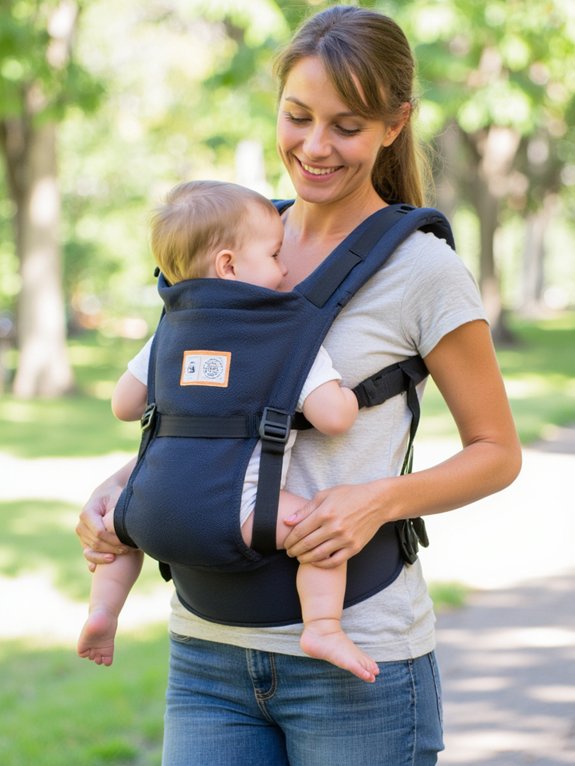


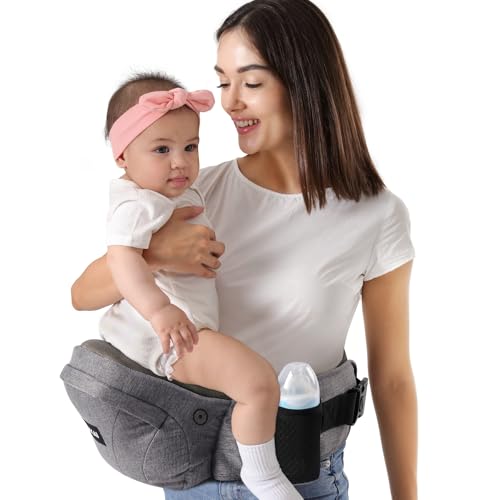

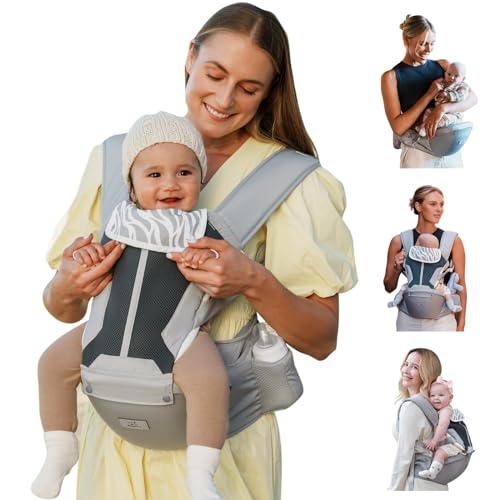
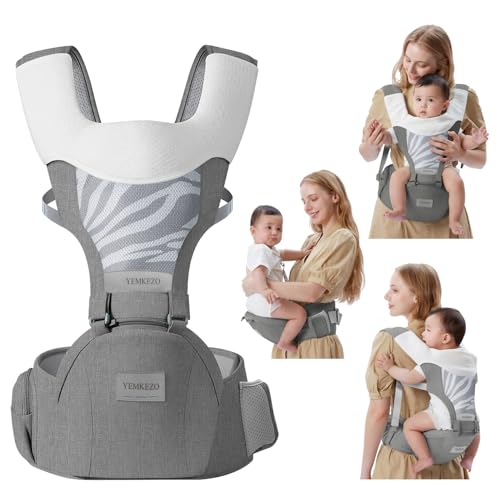


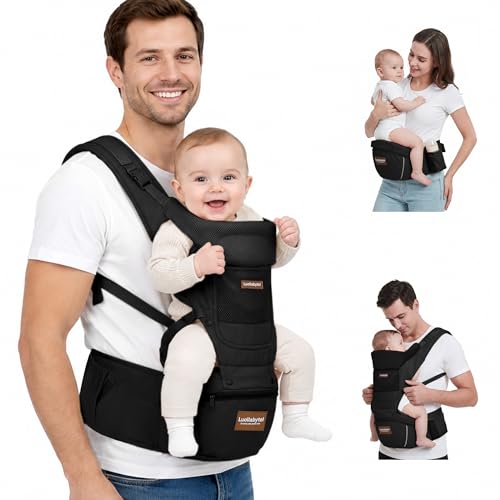




How to Use Baby Carriers With Hip Seat

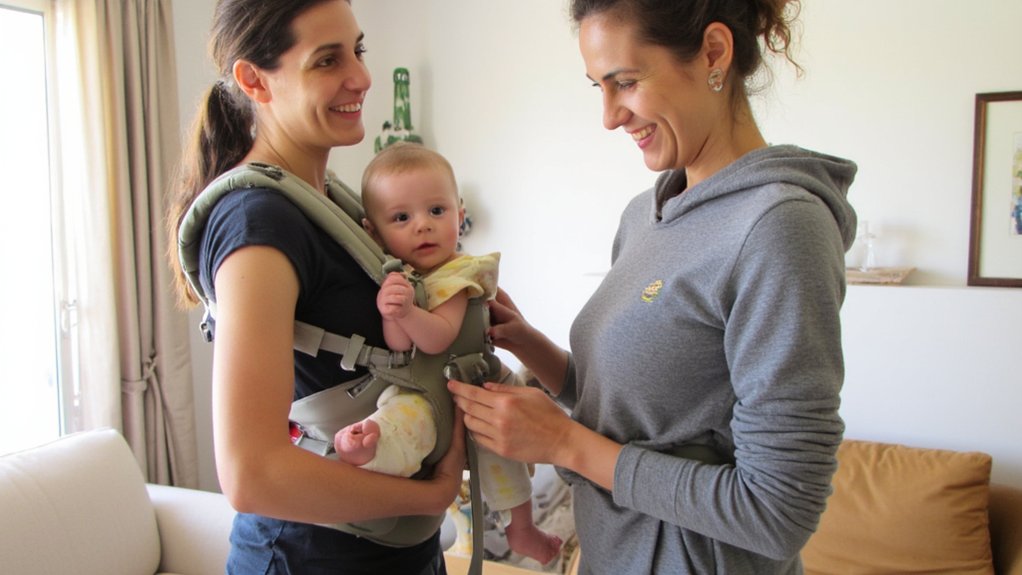
To use a baby carrier with a hip seat, first adjust the seat height for comfortable support. Secure your baby with their legs straddling the seat, knees slightly higher than the bottom, promoting healthy hip alignment. Fasten safety straps snugly to keep them secure. Make sure the carrier distributes weight evenly to ease your back strain. Check all buckles and straps for safety before moving. Want to explore tips on choosing the best carrier and boosting your baby’s growth?
Table
- Main Points
- Benefits of Using a Hip Seat Baby Carrier
- Choosing the Right Hip Seat Carrier for Your Baby
- Step-by-Step Guide to Wearing a Hip Seat Carrier
- Positioning Your Baby Safely in the Hip Seat
- Supporting Healthy Hip Development With Hip Carriers
- Emotional Advantages of Babywearing Outdoors
- Enhancing Baby’s Cognitive Growth Through Nature Exploration
- Comparing Hip Seat Carriers With Other Baby Carrier Types
- Safety Tips for Using Hip Seat Baby Carriers on the Go
- Frequently Asked Questions
- Final Thoughts
Main Points
- Adjust the hip seat to a comfortable height ensuring ergonomic support and proper weight distribution.
- Secure baby with legs straddling the seat in an "M" position and fasten safety straps snugly.
- Position baby with back supported and head aligned close to the caregiver’s chest for comfort and safety.
- Confirm baby is at least 6 months old and can sit independently before using the hip seat carrier.
- Regularly inspect the carrier’s straps, buckles, and hip seat for any damage before each use.
Benefits of Using a Hip Seat Baby Carrier
A hip seat baby carrier offers a practical solution for parents and caregivers by evenly distributing your baby's weight across your hips, which greatly reduces back strain during extended use.
This design provides a structured seating area that supports your little one in the ergonomic "M" position, promoting healthy hip development as recommended by pediatricians.
You’ll appreciate how quickly you can switch carrying positions, making it easier to engage in daily tasks without discomfort.
Ideal for babies over six months keen to explore, the hip seat carrier also enhances your balance and mobility, helping you navigate different terrains confidently during outdoor activities.
By choosing this carrier, you’re supporting both your baby’s comfort and your own, ensuring a smoother, more enjoyable caregiving experience.
Choosing the Right Hip Seat Carrier for Your Baby
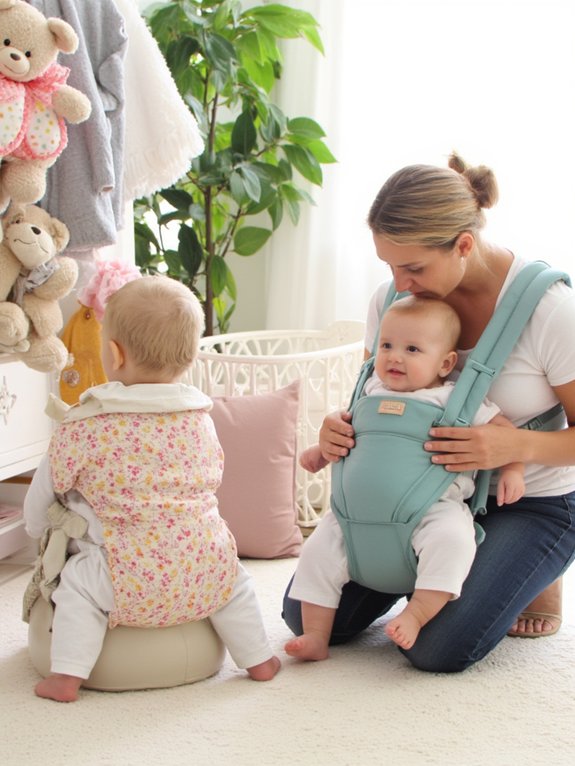
When selecting the right hip seat carrier for your baby, you'll want to prioritize ergonomic support that promotes healthy hip development and guarantees comfort for both of you.
Look for a hip seat carrier with adjustable straps and a wide seat base to guarantee a secure fit as your baby grows and to accommodate your body shape. For extra comfort on long outings, consider carriers that offer lumbar support and adjustable straps as described in the LÍLLÉbaby Complete Carrier.
Check the weight limit—many carriers support up to 40 pounds, perfect for toddlers too.
Safety is key: choose one with sturdy buckles, non-slip materials, and clear positioning guidelines.
Additional features like storage pockets and weather protection can make outings easier and more comfortable.
By thoughtfully choosing a hip seat carrier, you’re guaranteeing both safety and convenience, allowing you to serve your baby with confidence and care.
Step-by-Step Guide to Wearing a Hip Seat Carrier
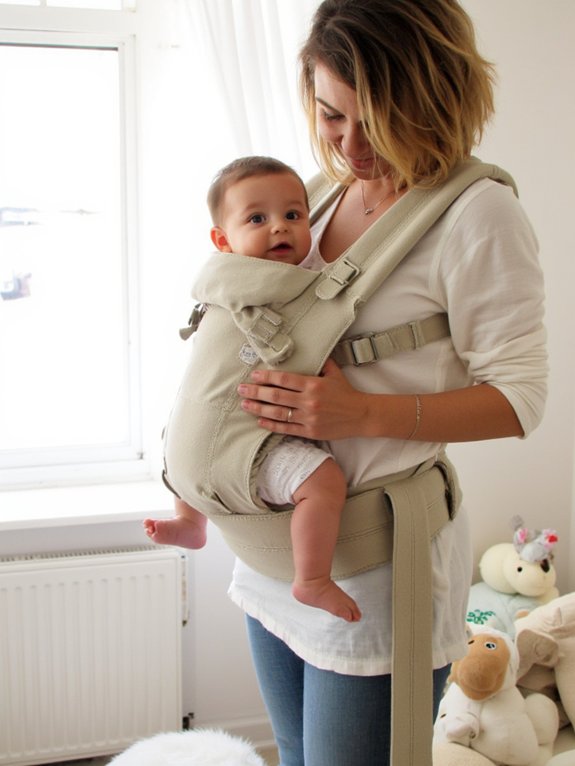
Start by adjusting the hip seat to a comfortable height on your hip to guarantee proper support.
Next, position your baby securely with their legs straddling the seat, keeping their hips in an ergonomic stance.
Finally, fasten the safety straps snugly to keep your baby safe and comfortable throughout your outing.
Preparing the Hip Seat
To prepare the hip seat carrier effectively, begin by adjusting it so it fits snugly around your waist, creating a stable base for your baby. This guarantees comfort and safety as you carry your little one. Next, position the hip seat so it supports your baby's hips ergonomically, with their legs straddling the sides. For added peace of mind, look for a hip seat carrier with ergonomic design that supports both your baby's development and your comfort.
| Step | Key Detail |
|---|---|
| Adjust Waistband | Snug fit for stability |
| Position Baby | Legs straddling, hips supported |
| Check Comfort | Even weight distribution, balance |
Remember to check that the seat feels balanced and secure before moving. This preparation helps you serve your baby’s needs with confidence and care.
Securing Baby Safely
Securing your baby safely in a hip seat carrier involves several essential steps to confirm comfort and support.
Follow these to guarantee your little one is secure while you carry your diaper bag:
- Adjust the hip seat to fit snugly against your hip, promoting balance and support.
- Position your baby with their legs straddling the seat and knees higher than their bottom to encourage healthy hip development.
- Fasten the safety straps firmly but comfortably, verifying your baby is held securely without restricting movement. For added confidence, look for adjustable carrying positions that help you adapt the fit as your baby grows and ensure maximum comfort.
- Support your baby’s back and keep their head above the carrier’s edge for visibility and natural spinal curvature.
Always double-check the fit before each use.
These steps help you serve your baby safely and confidently.
Positioning Your Baby Safely in the Hip Seat
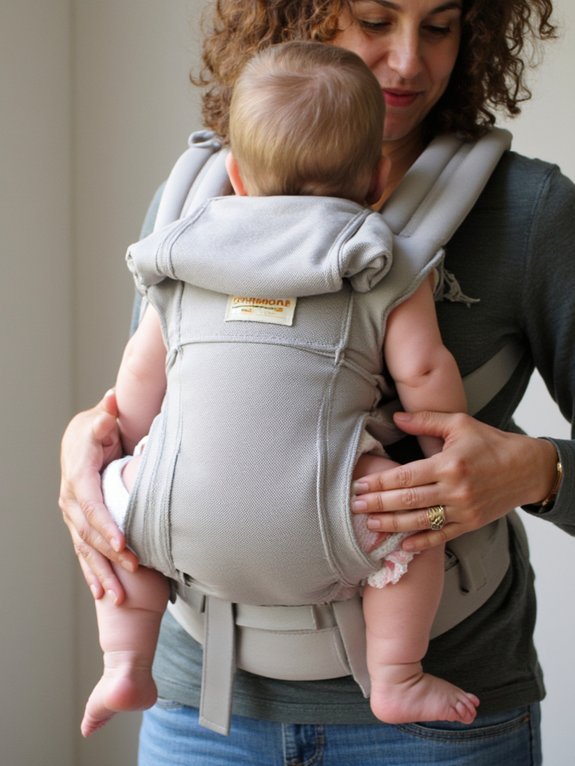
Before placing your baby in the hip seat, make sure they're at least 6 months old and can sit up on their own.
Position them so their legs straddle the seat with knees higher than their bottom to support healthy hips.
Always fasten the safety straps snugly to keep your baby secure and comfortable.
Secure Baby Placement
When you place your baby in the hip seat, make certain their legs wrap around the seat in a natural "M" shape, supporting healthy hip development.
Secure baby placement is essential for both safety and comfort. To guarantee this:
- Support your baby’s back and keep their head aligned with your chest.
- Use the safety straps to firmly secure your baby, preventing any slipping.
- Maintain a firm grip and gently lower your baby into the seat to avoid startling them.
- Regularly check the hip seat for wear or damage before each use.
Proper Hip Alignment
Anyone using a hip seat carrier should confirm their baby's hips are positioned in the natural "M" shape, with knees slightly higher than the bottom, to support healthy hip development and reduce the risk of hip dysplasia. Achieving proper hip alignment means adjusting the seat to evenly support your baby's weight and keeping their legs comfortably spread. Position your baby upright with back support and confirm their head remains above the carrier’s edge. Regularly check straps to prevent slumping or sliding. Lift your baby facing you for a secure hold. Many modern hip seat carriers feature ergonomic designs that ensure your baby's hips and spine are supported in every stage of growth.
| Step | Action | Benefit |
|---|---|---|
| 1 | Position in "M" shape | Promotes hip health |
| 2 | Adjust hip seat | Even weight distribution |
| 3 | Support back & head | Comfort and visibility |
| 4 | Check straps | Prevents slipping |
| 5 | Lift facing you | Secure, proper placement |
Supporting Healthy Hip Development With Hip Carriers
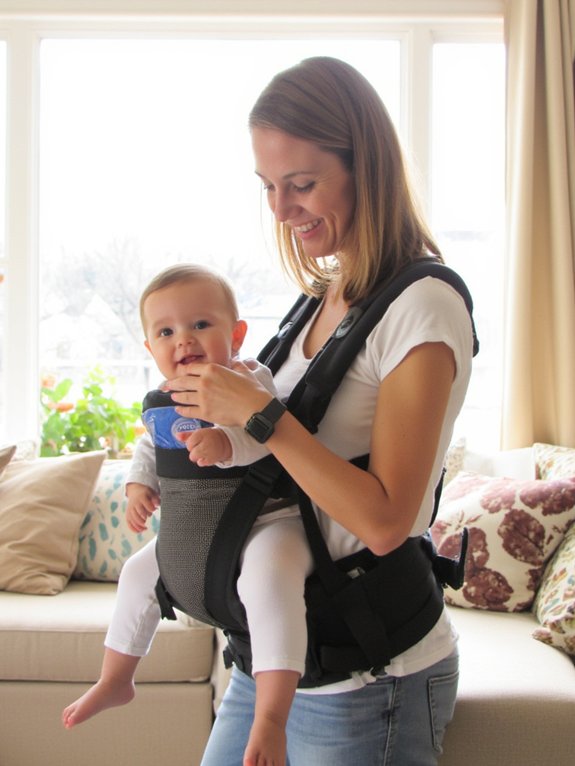
Because hip carriers support your baby's natural sitting position, they play an essential role in promoting healthy hip development.
Using a hip seat guarantees your baby’s legs are spread in the ergonomic "M" position, reducing the risk of hip dysplasia.
Here’s how hip carriers with a hip seat contribute to healthy hips:
- Provide a stable base that aligns with infant hip health guidelines.
- Distribute your baby’s weight evenly, easing strain on your back.
- Encourage muscle strength and coordination through ideal leg positioning.
- Support mobility and independence as your baby grows.
Emotional Advantages of Babywearing Outdoors
Babywearing outdoors offers powerful emotional benefits by strengthening the bond between you and your baby through close contact and shared experiences in nature.
Using baby carriers with a hip seat keeps your little one close, which helps reduce stress for both of you, promoting a deep sense of security and comfort.
As you explore outside, your baby experiences diverse sensory input, supporting their emotional well-being.
Meanwhile, fresh air and sunlight boost your mood by increasing serotonin and vitamin D levels.
This natural environment often soothes fussy babies, making outings more enjoyable.
By choosing baby carriers designed for outdoor use, you create nurturing moments that enhance your emotional connection and support both your and your baby’s overall mental health during these precious shared adventures.
Enhancing Baby’s Cognitive Growth Through Nature Exploration
When you take your little one outdoors, you open the door to rich sensory experiences that markedly boost their cognitive growth.
Nature offers a dynamic learning environment that supports your baby’s developing brain. Here’s how you can enhance your little one’s cognitive skills through nature exploration:
- Encourage observation of varied sights and sounds to stimulate curiosity and problem-solving.
- Introduce different textures and colors to promote visual and tactile learning, aiding fine motor skills.
- Foster memory and attention by helping your little one differentiate between natural stimuli.
- Provide regular outdoor opportunities for exploration to build overall cognitive growth.
Using a baby carrier with a hip seat keeps your little one close and comfortable, making these enriching experiences easier and safer.
Comparing Hip Seat Carriers With Other Baby Carrier Types
Although many parents rely on traditional carriers, choosing a hip seat carrier can greatly enhance comfort and flexibility during outings.
Hip seat carriers distribute your baby’s weight evenly across your hips and back, reducing strain compared to standard carriers that demand full body support. They allow quick shifts between hip, front, or back carrying, offering more freedom of movement for both you and your child. Many hip seat carriers are designed with ergonomic support features that help relieve pressure during extended use.
Unlike compact strollers or car seats, hip seat carriers encourage healthy hip development while letting older infants explore their surroundings safely.
When you consider the variety of strollers and car seat options, adding a hip seat carrier provides a practical, ergonomic alternative that complements your baby gear, making it easier to serve your child’s needs during active days out.
Safety Tips for Using Hip Seat Baby Carriers on the Go
Ensuring your hip seat carrier is securely fastened and properly adjusted is key to keeping your baby safe and comfortable on the go.
Securely fastening and properly adjusting your hip seat carrier is essential for your baby's safety and comfort on the move.
Make sure you follow these safety tips:
- Make sure the hip seat is firmly attached and adjusted to prevent slipping or shifting during movement.
- Make sure the carrier supports your baby's current weight within its specified limits.
- Make sure your baby’s legs are positioned in an "M" shape to encourage healthy hip development.
- Make sure to regularly inspect straps and buckles for wear or damage before each use.
Frequently Asked Questions
How to Use Baby Carrier With Hip Seat for Newborn?
You’ll want to follow safety guidelines carefully: position the hip seat high, secure your newborn with straps, use a soft-structured carrier or insert for head support, and always check manufacturer instructions to verify proper, safe use.
Can You Use a Baby Carrier if Baby Has Hip Dysplasia?
If your baby has hip dysplasia, you can use a carrier only after consulting a pediatrician. Choose ergonomic carriers that support the "M" position, adjust properly, and monitor comfort to protect their hips safely.
When Can a Baby Use a Hip Seat Carrier?
Imagine Emma starting hip seat use at 6 months, enjoying hip seat benefits like comfort and support. You can safely begin once your baby sits unassisted, promoting healthy hip development and easing your carrying duties.
What Are the Disadvantages of a Hip Seat Carrier?
You might face comfort issues with hip seat carriers, like back strain or limited support for young babies. They can be bulky, less versatile, and pricier, so weigh these factors to guarantee your and your baby’s comfort.
Final Thoughts
Using a hip seat baby carrier can feel like having an extra pair of hands—making your day easier while keeping your baby close and secure. By choosing the right carrier and following safety tips, you’re supporting healthy hip development and giving your little one emotional and cognitive benefits through outdoor exploration. Remember, proper positioning is key to comfort and safety. With these simple steps, you’ll confidently enjoy bonding moments wherever you go.
If you want to know other articles similar to How to Use Baby Carriers With Hip Seat you can visit the Baby Carriers category.
Best Baby Carriers for C-Section Moms
What Are the Best Soft Structured Baby Carriers?

10 Best Affordable Baby Carriers Under $50

Best Baby Carriers for Breastfeeding On the Go

How to Choose the Best Baby Carrier for Back Support

Best Baby Carriers for Preemies and Small Babies

What Baby Carrier Fits Dads With Broad Shoulders?

5 Best Baby Carriers for Toddlers Over 30 Pounds

Why Choose Lightweight Baby Carriers for Travel?
This is also interesting