












How to Install Baby Gates Without Damaging Walls


To install baby gates without damaging your walls, opt for pressure-mounted gates that use adjustable spindles to fit snugly without drilling. Place wall saver protectors between the gate and wall to prevent dents and evenly distribute pressure. Mark wall spots carefully and guarantee the gate frame sits flush against surfaces for security. Regular checks keep fittings tight and stable. If your space has irregular banisters or stairs, there are tailored solutions to maintain safety and prevent damage you'll find helpful here.
Table
- Main Points
- Choosing the Right Baby Gate for Your Home
- Benefits of Pressure-Mounted Baby Gates
- Using Wall Saver Protectors to Prevent Damage
- Step-by-Step Guide to Installing Pressure-Fit Gates
- Tips for Securing Screw-Fit Stair Gates Without Wall Damage
- Protecting Walls From Gate Tension and Scratches
- Adapting Baby Gates for Irregular Banister Shapes
- Safety Considerations When Installing Baby Gates
- Maintaining and Inspecting Baby Gates for Longevity
- Removing Baby Gates Without Leaving Marks
- Frequently Asked Questions
- Final Thoughts
Main Points
- Choose pressure-mounted baby gates that secure with adjustable spindles, avoiding the need for drilling or wall damage.
- Use wall saver protectors to distribute pressure evenly and prevent dents or scratches on walls.
- Mark wall locations carefully and apply firm pressure on spindles for a secure, damage-free fit.
- Regularly inspect and tighten gate components to maintain stability without causing wall wear.
- Opt for removable gates with one-handed operation for easy relocation without harming surfaces.
Choosing the Right Baby Gate for Your Home
When choosing the right baby gate for your home, start by deciding on the installation method that fits your space.
Pressure mounted fit baby gates work best for doorways and flat surfaces, offering a secure hold without damaging walls. If you're dealing with angled or rounded banisters, look for adjustable gates or those with adapters to guarantee a perfect fit.
Always verify that the gate meets safety standards like the European Safety Standard EN1930:2011 to assure your child’s protection. For added confidence, consider choosing a gate with a pressure-mounted design to minimize wall damage during installation.
Choose a model with one-handed operation for ease when your hands are full.
Reading user reviews can help you select a durable, functional gate that performs well in busy homes with children or pets.
This thoughtful approach guarantees you install a reliable, safe barrier tailored to your needs.
Benefits of Pressure-Mounted Baby Gates
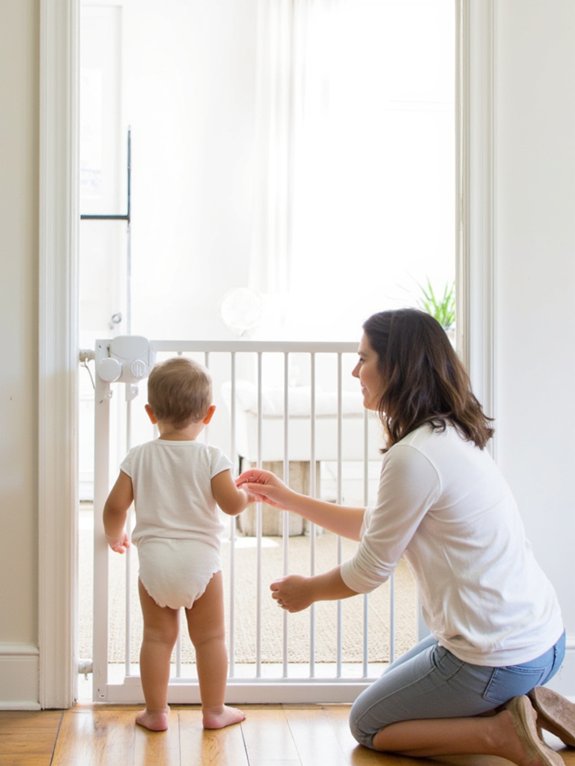
Although installing a baby gate can sometimes feel intimidating, pressure-mounted gates offer a straightforward solution that requires no drilling, making them perfect if you want to protect your walls and maintain flexibility.
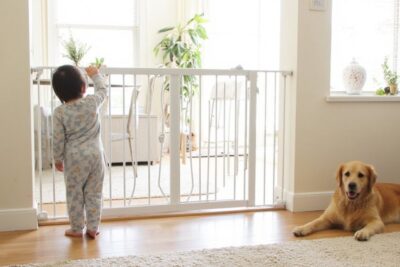
A pressure fit baby gate guarantees easy installation by using adjustable spindles that press firmly against doorframes or walls, distributing tension evenly to prevent dents or scratches. Many models, like the Cumbor 29.7-46 Baby Gate, feature an automatic closing feature that reduces the risk of leaving the gate open, providing extra peace of mind.
You’ll appreciate how lightweight and easy to operate these gates are, especially when juggling multiple tasks.
Because they’re removable, you can relocate them as needed without damaging surfaces. This flexibility is invaluable for those serving families in rental homes or frequently changing layouts.
Easily move pressure-mounted gates without harming walls—perfect for renters or changing home setups.
Choosing a pressure-mounted gate means you’re prioritizing both child safety and the integrity of your living space with minimal effort.
Using Wall Saver Protectors to Prevent Damage
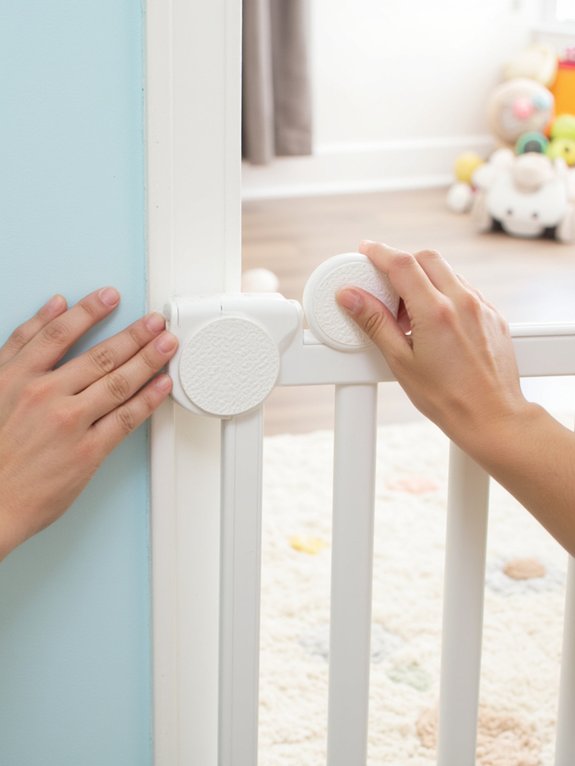
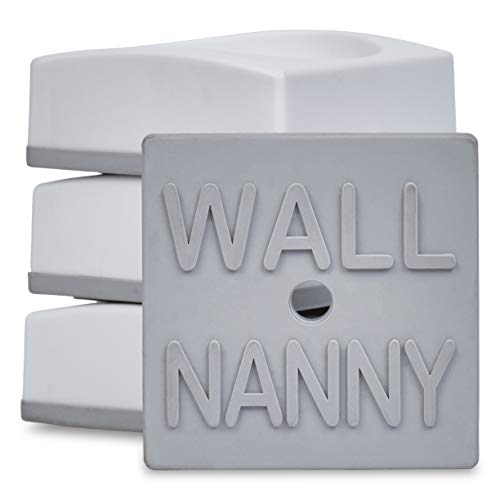
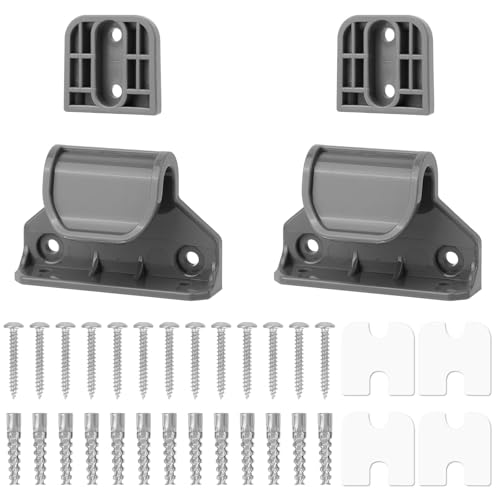
You’ll want to use Wall Saver Protectors to prevent dents and scratches from your pressure-mounted baby gate.
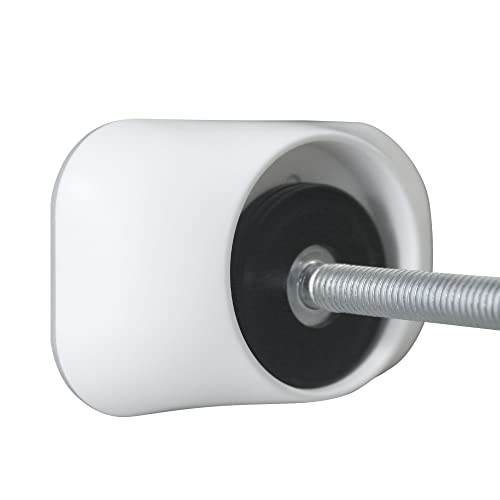
These protectors install quickly without tools or adhesives, distributing pressure evenly across your wall.
Let’s walk through the simple steps to set them up for maximum stability and damage prevention.
Wall Saver Benefits
Three key benefits make Wall Saver Baby Gate Wall Protectors essential for anyone using pressure-mounted gates: they prevent wall damage, improve gate stability, and install effortlessly. The wall saver protects your walls by evenly distributing the pressure exerted by the gate, preventing dents, scratches, and marks caused by concentrated tension. Made from durable ABS plastic and TRR, these protectors enhance gate stability, ensuring your safety gate remains firmly in place, even in high-traffic areas. Because they require no tools, screws, or adhesives, you can install them quickly and without risking wall damage. Compatible with various gate types and ideal for doorways, hallways, and staircases, wall savers provide reliable protection and peace of mind, making them a smart investment for anyone caring for a safe, damage-free environment.
Easy Installation Steps
Installing your baby gate with Wall Saver Baby Gate Wall Protectors takes just a few straightforward steps and no special tools.
This method lets you install a baby gate without drilling, preserving your walls perfectly. To secure the gate and protect your home, follow these steps: The use of pressure-mounted design helps avoid permanent alterations to your walls while ensuring a secure fit.
- Position the Wall Saver pads on the wall where the gate’s pressure mounts will rest, ensuring the oversized pads cover the contact points.
- Place your pressure-mounted baby gate against the Wall Savers, then tighten the gate’s tension knobs until it feels firmly secure.
- Test the gate’s stability by gently pushing to confirm it’s locked in place without shifting or causing wall damage.
These steps safeguard your walls from dents and scratches while keeping your baby gate secure and dependable.
Step-by-Step Guide to Installing Pressure-Fit Gates
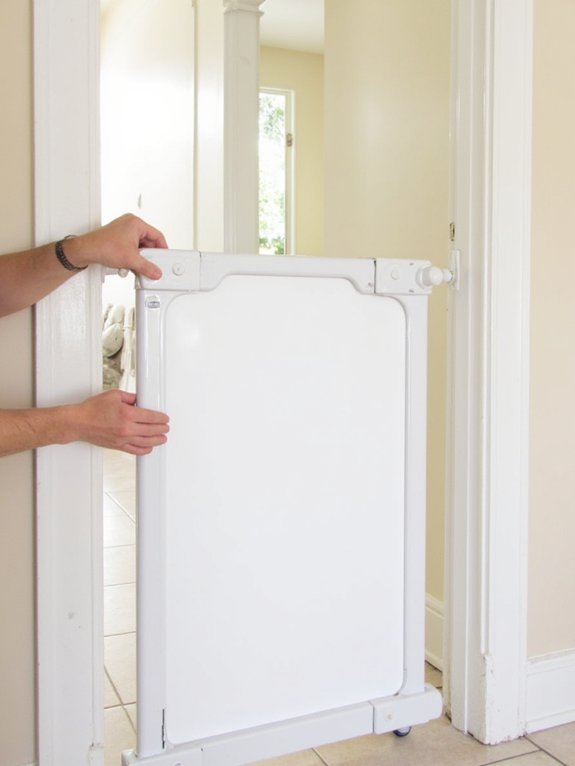
Before you start, carefully review the installation instructions specific to your pressure-fit baby gate model to understand how to secure it without tools or drilling.
First, mark the wall where the wall cups align using a pencil for precise placement.
Position the gate between the walls or door frame, then apply firm pressure on the four spindles—two at the top and two at the bottom—to lock the gate securely in place.
Make certain the frame sits flush against the walls, leaving no gaps.
Check that the space between the floor and gate base is no larger than three inches to guarantee safety.
Finally, inspect your pressure-fit safety gates monthly, tightening any loose components to maintain reliable protection without wall damage.
Tips for Securing Screw-Fit Stair Gates Without Wall Damage
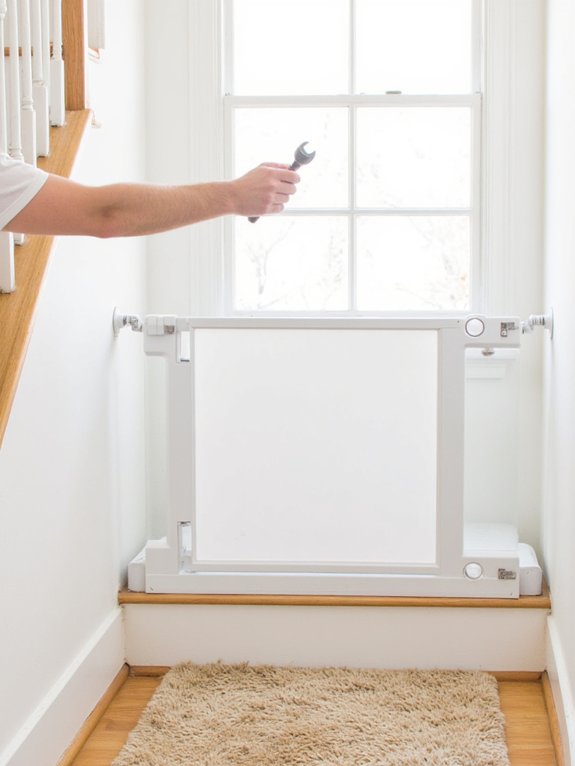
To secure your screw-fit stair gate without damaging walls, start by using paper templates to mark drill points accurately and choose fittings suited to your wall type.
Consider wall anchors for added support on drywall and avoid over-tightening screws to prevent cracks.
If wall damage is a concern, explore alternative mounting options like pressure-fit gates or hardware-free solutions.
Wall Protection Techniques
Although securing screw-fit stair gates firmly is essential for safety, it’s equally important to protect your walls from damage during installation.
Focusing on wall protection guarantees your installations remain both secure and clean. Here’s how you can achieve this:
- Use paper templates to mark drill points accurately, preventing misaligned holes that weaken walls.
- Install wall protectors like the Wall Saver Baby Gate Wall Protector to evenly distribute tension, avoiding dents or scratches.
- Pre-drill holes and select anchors suitable for your wall type to minimize cracking and guarantee a firm, damage-free fit.
Alternative Mounting Options
Securing screw-fit stair gates without damaging your walls requires careful planning and the right techniques. To avoid wall harm, use paper templates for precise drilling, wall anchors suited for your surface, and spacers to fit skirting boards. If your gate is extra tall or mounted near a banister post, these methods guarantee stability without compromising wall integrity. Always unscrew fittings gently when removing the gate and fill holes afterward. Regularly check for looseness to maintain safety.
| Technique | Benefit |
|---|---|
| Paper Templates | Accurate drill marks, clean install |
| Wall Anchors | Extra support, prevents damage |
| Gate Spacers | Fits skirting, avoids gaps |
| Careful Unscrewing | Preserves wall condition |
| Regular Inspections | Guarantees secure, damage-free mount |
Protecting Walls From Gate Tension and Scratches
Three key strategies can protect your walls from the tension and scratches caused by baby gates. First, use wall protectors like the Wall Saver Baby Gate Wall Protector, which have oversized pads to distribute pressure evenly, preventing dents and chipped paint. Second, opt for pressure-mounted gates compatible with these wall protectors; this combination enhances stability while minimizing wall damage. Third, install wall protectors quickly and tool-free—no screws or adhesives—to avoid further wall surface harm. Additionally, regularly check the protectors and surrounding wall area for wear, replacing or adjusting them as needed. For extra cushioning, consider adding foam padding around mounting points. By applying these steps, you guarantee your walls stay pristine while keeping your little ones safe. Choosing a gate made from durable, non-toxic polypropylene also helps ensure long-term protection for both your child and your home’s surfaces.
Adapting Baby Gates for Irregular Banister Shapes
When dealing with irregular banister shapes, start by carefully measuring all curves and angles to guarantee an accurate fit.
Customize your gate supports using adjustable brackets or foam padding to accommodate unique dimensions without damaging surfaces.
For added security, use heavy-duty zip ties to fasten the gate firmly while preserving the integrity of your banister.
Measuring Irregular Banisters
Although irregular banisters present unique challenges, you can guarantee a proper baby gate fit by taking precise measurements at multiple points, accounting for any curves or angles. When measuring irregular banisters, accuracy is key to ascertain the gate fits securely without damaging the structure. Follow these steps for measuring irregular banisters:
- Use a flexible measuring tape to capture width and height at several points along the banister’s length.
- Note any curves, angles, or uneven surfaces that might affect gate placement.
- Record these dimensions carefully to guide selection or modification of the gate for a snug fit. For added assurance, consider selecting a gate with adjustable tension knobs to accommodate uneven surfaces and prevent wall damage.
Customizing Gate Supports
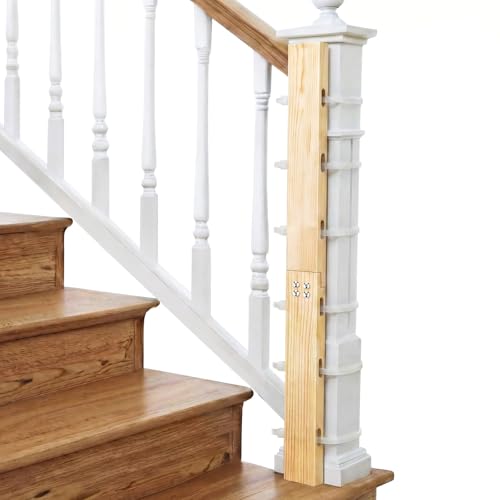
Since irregular banisters often don't provide a uniform surface for mounting, you'll need to customize gate supports to secure a fit. Start by cutting 2 x 4 wood pieces to match the widest section of the banister. Attach these supports using heavy-duty zip ties with foam padding to protect surfaces. Alternatively, consider using wall-mounted Command strips for a damage-free option. Always prioritize stability and compliance with safety standards when customizing gate supports.
| Step | Recommendation |
|---|---|
| Measure Banister Width | Cut 2 x 4 wood to match |
| Attach Supports | Use heavy-duty zip ties with foam |
| Alternative Mounting | Use Command strips on wall |
| Safety Check | Confirm gate stability and safety |
Securing With Zip Ties
Securing baby gates on irregularly shaped banisters requires a precise approach that combines strength and safety.
To adapt effectively, follow these steps using zip ties:
- Cut 2 x 4 wood pieces to match the banister’s widest section, then paint them for a polished look.
- Attach the wood pieces firmly with four heavy-duty zip ties—two at the top and two at the bottom—rated for at least 175 pounds to guarantee reliable support.
- Sand down any sharp zip tie edges to prevent injuries and maintain a child-safe environment.
This method secures the gate without damaging your banister and allows you to easily remove the gate whenever needed. For added peace of mind, the dual locking mechanism found in some retractable gates can further enhance safety when used with this zip tie method.
By using zip ties, you provide a secure, non-invasive solution ideal for households prioritizing safety and convenience.
Safety Considerations When Installing Baby Gates
When installing baby gates, you must prioritize safety to protect your child effectively.
Use pressure-mounted gates for doorways and the bottom of stairs, ensuring the gap between the floor and gate base stays under three inches to prevent slipping. For added protection, consider gates with double locking mechanisms to further reduce the risk of accidental openings.
At the top of stairs, opt for screw-fit gates to maximize safety and prevent falls.
Always follow the manufacturer’s installation instructions and verify the gate meets safety standards like EN1930:2011.
Consider adding wall savers or protective pads with pressure-mounted gates to distribute tension and safeguard your walls.
Regularly check the gate’s condition, tightening any loose fittings to maintain security.
By focusing on these safety considerations, you’ll create a secure environment that serves your child’s needs without damaging your home.
Maintaining and Inspecting Baby Gates for Longevity
Although installing your baby gate correctly is essential, maintaining and inspecting it regularly confirms it continues to provide reliable safety.
You should commit to a monthly routine where you:
- Check all fixings for tightness to prevent hazards from loose parts.
- Inspect the gate for cracks or damage and replace it if compromised.
- Measure the gap between the floor and gate base to confirm it doesn't exceed three inches, using stair gate spacers if necessary.
Removing Baby Gates Without Leaving Marks
If you want to remove your baby gate without leaving marks, start by gently unscrewing the pressure-mounted spindles at the corners to release tension and lift the gate straight off.
For gates secured with adhesive pads, carefully loosen them using a screwdriver, avoiding any force that might peel paint or leave residue.
When dealing with screw-fit gates, remove hinge-side caps to access screws, then unscrew carefully to prevent wall damage.
After removing the gate, fill any screw holes with wall putty and touch up paint to restore the wall’s appearance.
To minimize marks during future removals, consider installing wall savers or protective pads.
Following these steps guarantees you’re removing baby gates cleanly, preserving your walls and maintaining a polished, damage-free environment.
Frequently Asked Questions
Can You Install a Baby Gate Without Drilling Into the Wall?
You can install baby gates without drilling by choosing alternative mounting methods like pressure-mounted options. These use tension to hold gates securely, protecting walls while providing safe, adjustable barriers for your child’s safety and your home’s integrity.
Do Baby Gates Damage Walls?
You might notice some “character marks” on walls from baby gate materials, but with smart wall protection tips—like using wall savers and choosing gentle pressure mounts—you can safeguard surfaces while keeping your little ones safe and happy.
Do Baby Gates Need to Be Screwed In?
You don't always need to screw in baby gates; pressure-mounted gate types offer damage-free installation. However, for enhanced safety features, especially atop stairs, screw-in gates provide the most secure fit, ensuring your child's protection.
Do I Need Wall Cups for Baby Gate?
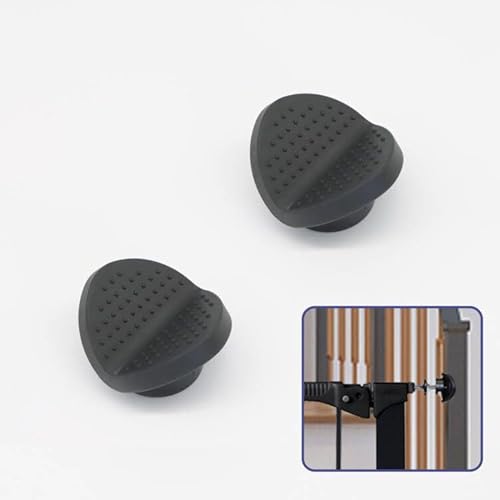
Imagine installing a baby gate like knights securing a castle gate. For pressure-mounted baby gate types, you’ll need wall cups to protect walls and guarantee stability. Follow installation tips carefully to keep your home safe and intact.
Final Thoughts
Installing baby gates without damaging your walls is easier than you think. Imagine a snug, secure barrier that fits perfectly without a single dent or scratch. By choosing pressure-mounted gates, using wall saver protectors, and following careful installation steps, you protect your home’s beauty while keeping your little one safe. With regular checks and thoughtful removal, your walls stay pristine, and your baby gate stands strong—combining safety with peace of mind.
If you want to know other articles similar to How to Install Baby Gates Without Damaging Walls you can visit the Baby Gates & Safety Systems category.
Best Baby Safety Gates for Pets and Babies
10 Baby Proofing Tips for Open Floor Plans
What Are the Most Stylish Baby Gates?
3 Best Wooden Baby Gates With Walk-Through Doors

10 Best Baby Gates for Outdoor Decks

What Baby Gates Work for Irregular Shaped Spaces?

Best Extra Long Baby Gates for Playrooms

Best Extra Tall Baby Gates for Toddlers

Why Choose a Baby Gate With Cat Door?
This is also interesting