








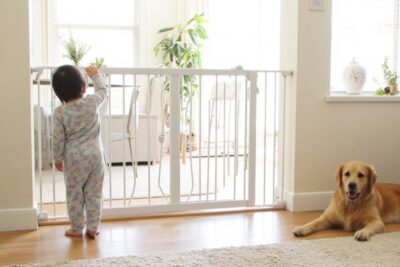
Best Extra Tall Baby Gates for Toddlers

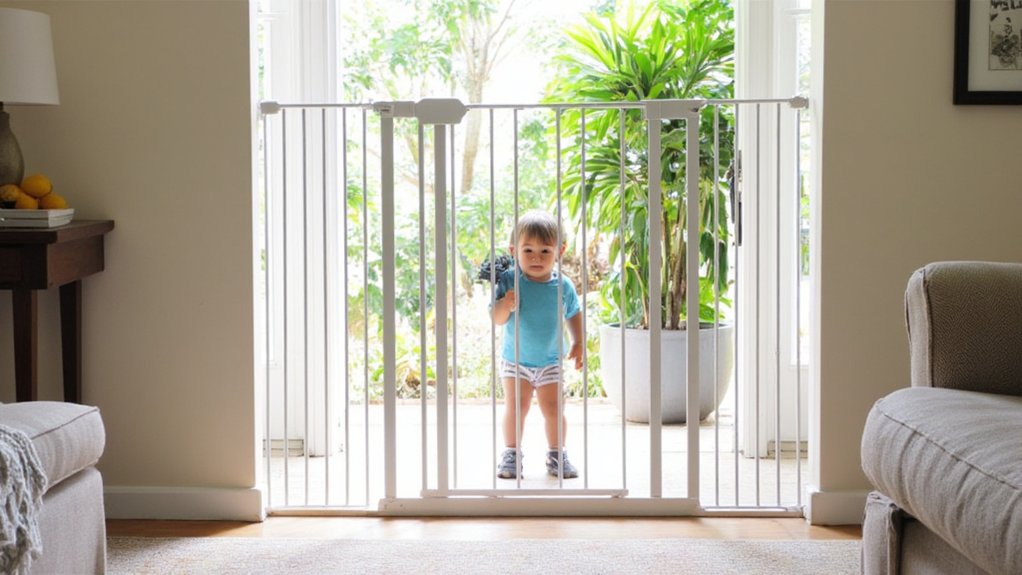
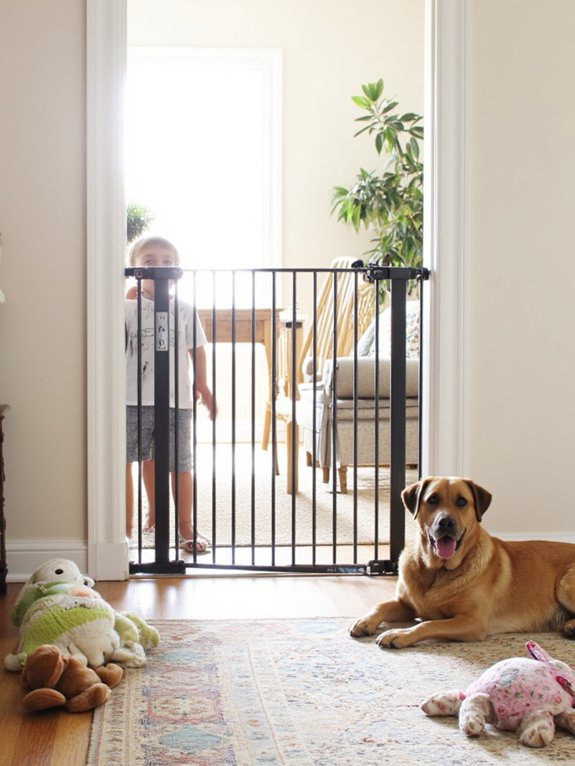
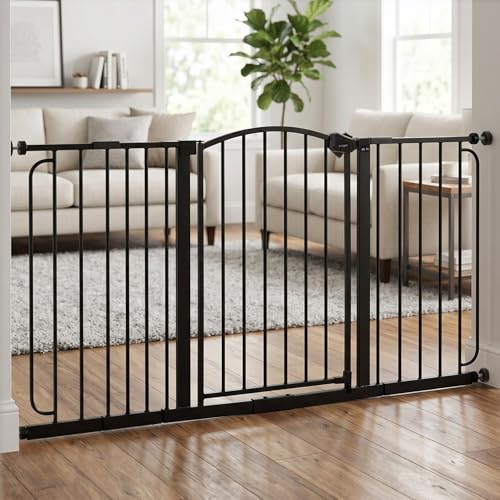
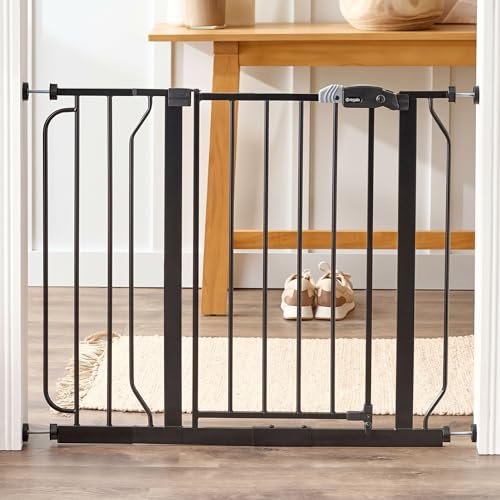
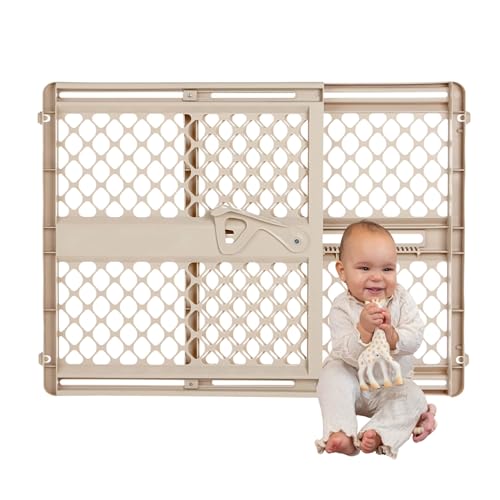
You need an extra tall baby gate—at least 36 inches high—to keep your toddler safely contained and prevent climbing. Look for features like auto-close mechanisms and walk-thru designs for ease of use. Decide between pressure-mounted gates for easy installation or hardware-mounted ones for stronger stability, especially near stairs. Always check for safety certifications like JPMA and ASTM. Choosing the right gate and installation method is essential for your child’s safety and your peace of mind. More details can help you make the best choice.
Table
- Main Points
- Importance of Extra Tall Baby Gates for Toddler Safety
- Key Features to Look for in Extra Tall Baby Gates
- Top Rated Extra Tall Baby Gates on the Market
- Installation Options and Considerations for Baby Gates
- Comparing Pressure-Mounted vs. Hardware-Mounted Gates
- Benefits of Auto-Close and Walk-Through Designs
- How to Measure Doorways and Stairways for Proper Fit
- Age Recommendations and Growth Considerations
- Safety Certifications and Industry Standards to Know
- Tips for Maintaining and Cleaning Baby Gates
- Frequently Asked Questions
- Final Thoughts
Main Points
- Choose gates at least 36 inches tall to effectively prevent toddlers from climbing and accessing unsafe areas.
- Opt for hardware-mounted gates near stairs for superior stability and safety.
- Look for auto-close and one-handed operation features for convenience and secure closure.
- Verify JPMA certification and ASTM compliance to ensure the gate meets safety and durability standards.
- Regularly inspect and maintain gates, tightening hardware and cleaning to maintain safety and functionality.
Importance of Extra Tall Baby Gates for Toddler Safety
Because toddlers are naturally curious and increasingly mobile, extra tall baby gates play an essential role in keeping them safe by preventing access to hazardous areas like staircases.
Installing an extra tall baby gate at the top of stairs is vital for child safety, as it stops toddlers from getting near dangerous drop-offs and reduces the risk of falls and injuries.
An extra tall baby gate at stair tops is crucial to prevent falls and keep toddlers safe.
These gates, typically 36 inches or taller, are designed specifically to deter climbing, providing an effective barrier as your child grows more adventurous.
You’ll appreciate that many models are easy to install and offer convenient features like one-handed operation and auto-close mechanisms, allowing you to maintain safety without hassle.
Prioritizing this safety measure helps protect toddlers and offers peace of mind in your home.
Key Features to Look for in Extra Tall Baby Gates
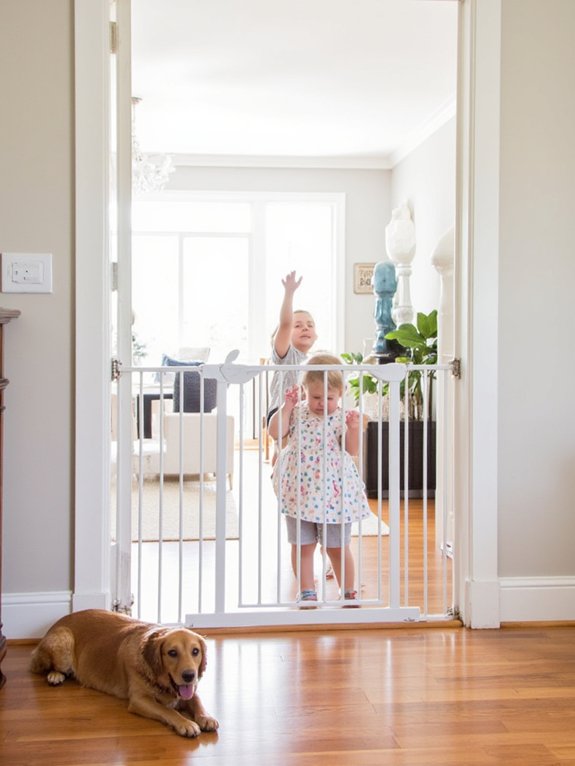
When choosing an extra tall baby gate, you’ll want to focus on features that enhance both safety and convenience.
Prioritize gates at least 36 inches high to prevent climbing, especially for toddlers aged 6 to 36 months.
Consider a safety gate with an auto-close mechanism to guarantee secure closure every time.
If ease matters, opt for pressure mounted designs—they offer easy install and removal without damaging walls.
However, if stability near stairs is critical, hardware-mounted models provide superior support.
A walk thru baby gate design lets you pass easily while keeping children contained, promoting practical daily use.
Finally, confirm the gate fits your opening precisely, as sizes vary; proper fit is essential for effectiveness and safety when serving your loved ones.
Top Rated Extra Tall Baby Gates on the Market
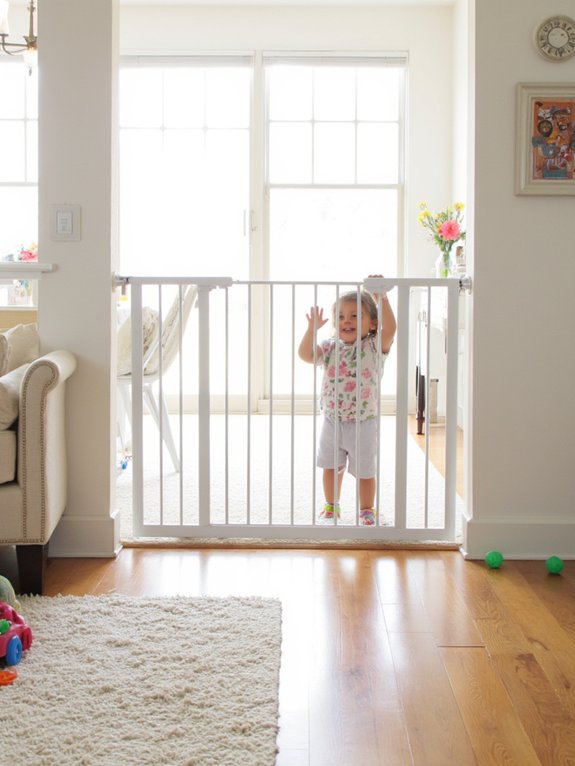
If you want reliable protection for your toddler, choosing from the top rated extra tall baby gates on the market guarantees safety without sacrificing convenience. These gates offer features like easy to install setups, wide openings for accessibility, and auto close mechanisms for enhanced security. Here’s a quick overview to help you select the best fit for your home.
| Baby Gate Model | Height (inches) | Key Features |
|---|---|---|
| Baby Safety Gate | 36 | Safety, Easy to Install |
| Regalo Easy Step® Extra Tall | 30+ | Walk-Thru, Wide Opening |
| BENTISM 30 Extra Tall | 30 | Auto Close, Wide Opening |
| Fairy Baby Retractable | 49 | Extra Tall, Wall Mounted |
Choosing an extra tall baby gate with these features assures dependable safety and ease of use for your toddler’s protection.
Installation Options and Considerations for Baby Gates
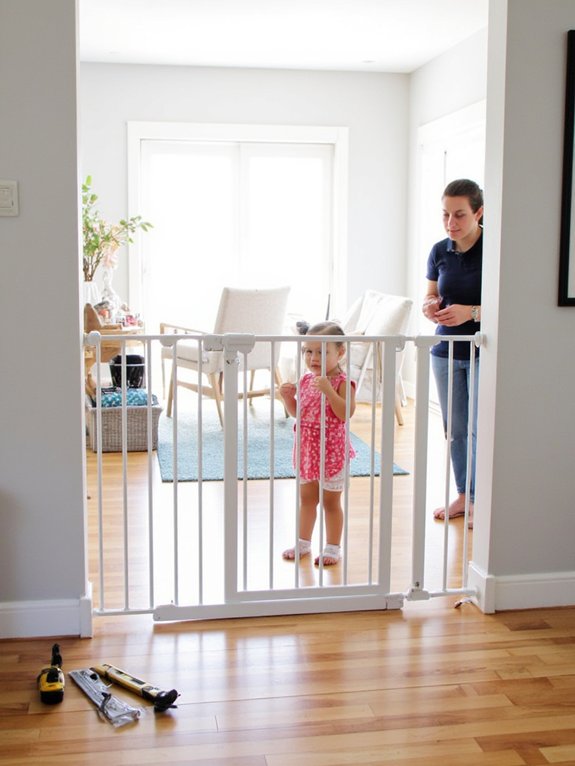
When choosing an extra tall baby gate, you’ll need to decide between hardware-mounted and pressure-mounted options, each offering different levels of stability and ease of installation.
Hardware mounts provide the strongest security, especially for stairways, but require tools and may damage walls.
Pressure-mounted gates are simpler to install and ideal for temporary setups, though they may not suit all wall types or banisters.
Hardware Vs Pressure
Selecting the right installation method for your extra tall baby gate depends largely on where and how you plan to use it. Hardware-mounted gates offer superior stability and security, perfect for high-traffic areas or staircases. Pressure-mounted gates, on the other hand, suit temporary setups and doorways due to their easy installation.
Consider these key points when choosing between installation types:
- Hardware-mounted gates require drilling but provide unmatched durability and stability.
- Pressure-mounted gates need no tools and are ideal for flexible, temporary use.
- Child-proofing experts favor hardware-mounted gates for areas where toddlers might climb.
- Pressure-mounted gates may not withstand strong force, so avoid them in risky zones.
Choose wisely to guarantee your child’s safety and your peace of mind.
Wall and Banister Mount
Choosing between hardware-mounted and pressure-mounted gates leads naturally to contemplating wall and banister mounting options for extra tall baby gates.
Wall and banister mounting offers superior stability, making it ideal for securing gates at stair tops where security is critical. Many gates, such as the Cumbor 29.7-46 Baby Gate, feature double-lock safety release mechanisms for enhanced toddler protection.
You’ll need to carefully review installation requirements, as hardware-mounted gates must accommodate specific widths influenced by baseboards and banister posts.
To enhance versatility, consider universal banister-mount kits, which adapt gates like the Baby Safety Gate and Regalo Easy Step® to various stairway layouts.
Properly installed, these gates meet safety standards from organizations like ASTM, guaranteeing you of their reliability.
Opting for wall and banister mounting guarantees you provide a secure, stable barrier that protects toddlers effectively in high-risk areas.
Comparing Pressure-Mounted vs. Hardware-Mounted Gates
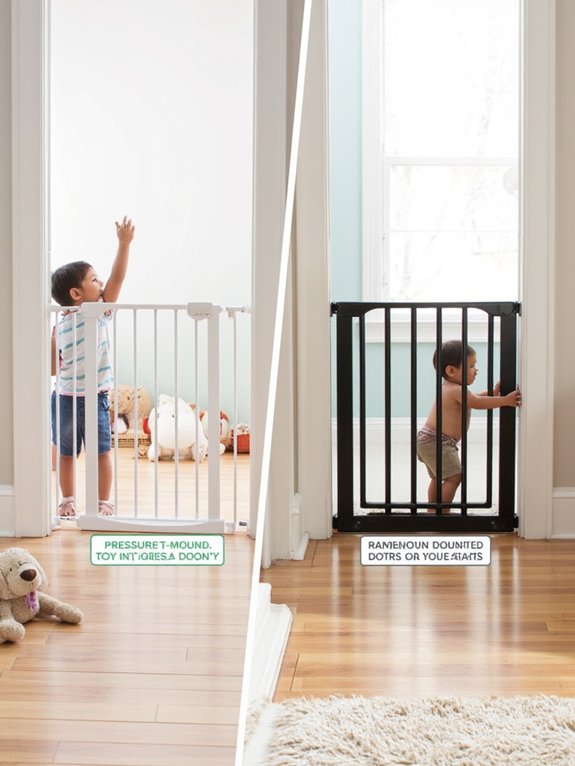
When choosing between pressure-mounted and hardware-mounted gates, you’ll want to evaluate how each installs and how secure they are.
Pressure-mounted gates are easier to set up and remove without damaging walls, but hardware-mounted gates offer greater stability, especially in high-risk areas like stairways.
Understanding these differences helps you pick the safest option for your toddler’s environment.
Installation Methods Explained
Two common installation methods for extra tall baby gates—pressure-mounted and hardware-mounted—offer distinct advantages and considerations.
When choosing the right installation method, keep these points in mind:
- Pressure-mounted gates install quickly without tools, ideal for temporary setups or rentals.
- Hardware-mounted gates require drilling, ensuring a secure installation especially critical for safety at the top of stairs. Gates like the 200.1 Retractable Baby Gate even offer drill-free options, protecting wall surfaces while maintaining structural integrity.
- Pressure-mounted gates may damage walls and aren’t best for heavy use or homes with large pets.
- Hardware-mounted gates demand precise measurements but provide reliable stability, preferred by child-proofing professionals.
Understanding these installation methods helps you serve families seeking both convenience and safety, ensuring you recommend the best fit for their specific needs.
Safety and Stability Differences
Although pressure-mounted baby gates offer quick installation without wall damage, they may not provide the stability you need for active toddlers or stairway safety.
Pressure-mounted gates can shift or become unstable under force, posing risks for child safety, especially with energetic little ones. The Safety 1st Easy Install Walk-Thru Baby Gate, for example, features a pressure-mounted design that secures spaces without damaging walls but may not be ideal for areas requiring maximum stability.
In contrast, hardware-mounted gates anchor directly into the wall, delivering superior stability and enhanced safety.
Their robust locking mechanisms withstand repeated use and resist pushing or leaning, making them ideal for staircases.
The ASTM recommends hardware-mounted gates for stairway protection due to these safety advantages.
While pressure-mounted gates suit temporary setups, hardware-mounted gates provide a reliable, long-term solution focused on stability and child safety.
Choosing the right gate means prioritizing secure installation and dependable locking mechanisms to protect your toddler effectively.
Benefits of Auto-Close and Walk-Through Designs
Because safety and convenience are top priorities, choosing baby gates with auto-close and walk-through designs can greatly improve your daily routine.
These features work together to keep toddlers safe while offering you practical ease of use. Consider these benefits:
- Auto-close guarantees the gate securely shuts behind you, preventing accidental openings that compromise safety.
- Walk-through design allows you to pass through without lifting or removing the gate, adding convenience in busy areas.
- Slow-close mechanisms reduce noise, minimizing disturbances for napping toddlers.
- Combining both designs lets you manage your caregiving tasks efficiently while maintaining a secure environment.
How to Measure Doorways and Stairways for Proper Fit
Accurately measuring your doorways and stairways is essential to confirm your baby gate fits securely and functions properly.
Start by measuring the width of the openings at multiple points to account for uneven frames or baseboards. For stairways, measure both the width at the top and the height to confirm extra tall gates provide a proper fit, typically at least 36 inches high. Take into account pressure-mounted gates as they offer easy installation and portability for various doorway and stairway widths.
Measure openings at several points and check stairway height to ensure a secure, proper baby gate fit.
Consider the mounting type, as hardware-mounted gates need solid wall space on both sides of the opening. If you choose adjustable gates, verify your measurements fall within the manufacturer’s minimum and maximum width specifications.
Taking precise measurements and understanding your stairways and doorway characteristics will help you select a gate that safely protects toddlers and fits your home’s unique layout.
Age Recommendations and Growth Considerations
Once you’ve measured your doorways and stairways for the right gate fit, consider your child’s age and growth when choosing extra tall baby gates.
These gates cater to toddlers aged 6 to 36 months, as climbing skills rapidly develop during these critical stages.
Keep these points in mind:
- Follow age recommendations; for example, the Regalo Easy Step® suits 6-24 months.
- Assess your toddler’s height and ability to climb regularly.
- Use extra tall baby gates, typically 36 inches or more, especially at stair tops.
- Choose models like BENTISM 30 for active toddlers and pets to enhance safety.
Safety Certifications and Industry Standards to Know
When choosing an extra tall baby gate, you’ll want to look for key safety certifications like the JPMA seal, which guarantees it meets strict safety criteria.
Make certain the gate complies with ASTM standards, confirming it has passed thorough durability and safety tests.
Checking these certifications helps you trust the gate’s reliability and protects your toddler effectively.
Key Safety Certifications
Although choosing an extra tall baby gate might seem straightforward, you should always prioritize safety certifications to guarantee reliable protection for your toddler. Ascertaining your gate is certified by the Juvenile Products Manufacturers Association (JPMA) means it meets rigorous baby safety standards. Additionally, compliance with the American Society for Testing and Materials (ASTM) confirms the gate has undergone thorough testing and materials evaluation. When selecting extra tall baby gates, keep these key points in mind:
- Look for JPMA certification to ascertain trusted safety standards.
- Verify ASTM compliance, which covers durability and secure design.
- Confirm the gate height meets or exceeds 36 inches to prevent climbing.
- Check manufacturer testing documentation for reliability under typical child use.
Prioritizing these certifications ascertains the safest environment for toddlers in your care.
Industry Testing Standards
Since your toddler’s safety depends heavily on the gate’s reliability, you should only choose baby gates certified by recognized industry standards.
The Juvenile Products Manufacturers Association (JPMA) guarantees gates meet strict safety standards, including rigorous testing of structural integrity and locking mechanisms.
The American Society for Testing and Materials (ASTM) further defines these safety standards to assure durability and child protection.
For stairways, hardware-mounted gates are strongly recommended because they offer superior stability and security, minimizing fall risks.
Always look for certification labels on gates—they confirm the product has passed essential safety tests tailored to specific age groups and environments.
By selecting gates that comply with these industry testing standards, you’re prioritizing your toddler’s well-being and providing a safer home environment.
Tips for Maintaining and Cleaning Baby Gates
To keep your extra tall baby gate functioning safely and effectively, you should regularly inspect its hardware and mounting, tightening any loose screws or fittings. Proper maintenance guarantees the gate remains easy to use and secure after being installed and tested. Regularly referring to the warranty and safety instructions provided by the manufacturer can help ensure you are following best practices for upkeep.
Follow these tips:
- Clean the gate frequently with a soft cloth and mild soap solution to avoid wear and damage from harsh chemicals.
- Inspect for cracks, loose components, or other signs of wear and replace parts as needed to maintain safety. Replacement parts like hinges and spindle rods are often available to extend the life of your gate.
- Wipe down high-traffic areas often to prevent dirt, bacteria, and allergens from accumulating.
- Store removable parts like extension panels or padding safely when not in use to keep them clean and ready.
Regular care will help your gate stay reliable and safe for your toddler.
Frequently Asked Questions
Does a 4 Year Old Need a Baby Gate?
You should assess your 4-year-old’s maturity and toddler safety needs carefully. Gate effectiveness varies, so consider parenting tips and gate alternatives while childproofing homes to balance toddler independence with safety in your unique environment.
How Tall Should a Toddler Gate Be?
When it comes to toddler safety, don’t cut corners—choose gates at least 36 inches tall. Consider gate materials, installation tips, and child proofing features carefully to guarantee secure height considerations and effective child protection.
Do Baby Gates Work for 2 Year Olds?
You’ll find baby gate effectiveness depends on proper gate installation advice and choosing the right gate styles for your child’s age. Use toddler safety tips and childproofing strategies to balance toddler independence concerns and secure spaces effectively.
How Do You Extend the Height of a Baby Gate?
Did you know taller gates reduce toddler climbing risks by 30%? Use gate extensions or adjustable heights, consider material options and design styles, follow installation tips carefully, and prioritize safety features to keep your little one secure.
Final Thoughts
Choosing the right extra tall baby gate is essential for keeping your toddler safe—did you know that over 2.4 million children under five are treated for fall injuries each year? With that in mind, prioritize sturdy gates with proper installation to prevent accidents. Always measure your space carefully and check safety certifications. By staying informed and cautious, you’ll create a secure environment that grows with your child, giving you peace of mind every step of the way.
 How to Choose the Best Double Stroller for Newborns and Toddlers
 Top Benefits of Bamboo Fiber Crib Mattresses
If you want to know other articles similar to Best Extra Tall Baby Gates for Toddlers you can visit the Baby Gates & Safety Systems category.
Best Baby Safety Gates for Pets and Babies

10 Baby Proofing Tips for Open Floor Plans
What Are the Most Stylish Baby Gates?

3 Best Wooden Baby Gates With Walk-Through Doors

10 Best Baby Gates for Outdoor Decks

What Baby Gates Work for Irregular Shaped Spaces?

Best Extra Long Baby Gates for Playrooms

Why Choose a Baby Gate With Cat Door?

How to Install a Pressure Mounted Baby Gate for Stairs
This is also interesting