









How to Choose Top-Rated Baby Safety Gates

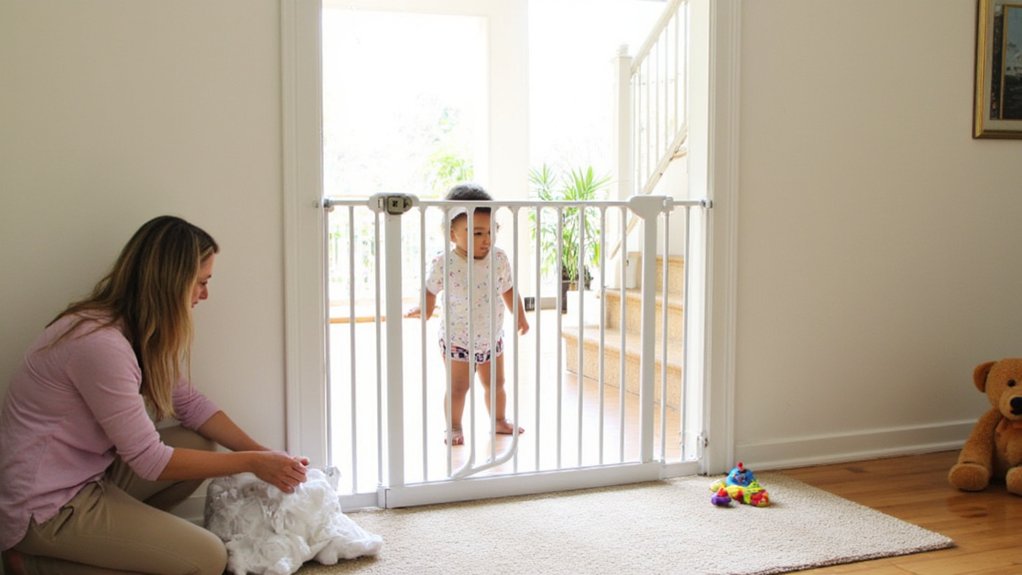
When choosing top-rated baby safety gates, you want one that’s sturdy, safe, and easy to use. Opt for hardware-mounted gates for stairs and high-risk spots—they’re more secure and meet safety standards. Pressure-mounted gates work well for doorways but aren’t as stable on stairs. Look for durable materials like metal, secure locking mechanisms, and easy one-handed operation. Measuring your space accurately guarantees a perfect fit. Keep these essentials in mind, and you’ll find the perfect gate to safeguard your home and child—with more tips to come.
Table
- Main Points
- Understanding Different Types of Baby Gates
- Key Safety Features to Look For
- Installation Methods and Their Importance
- How to Measure for the Perfect Fit
- Evaluating Material Quality and Durability
- Ease of Use and Accessibility Considerations
- Comparing Popular Baby Gate Models and Their Benefits
- Frequently Asked Questions
- Final Thoughts
Main Points
- Choose the gate type based on location: pressure-mounted for low-risk areas, hardware-mounted for stairs, and hybrid for versatility.
- Prioritize gates with durable materials like heavy-duty steel and JPMA certification for enhanced safety and longevity.
- Ensure gates meet safety standards: at least 22 inches tall with slats spaced under 3 inches, and secure locking mechanisms.
- Opt for easy installation and use, favoring tool-free pressure-mounted gates for temporary needs or hardware-mounted for permanent safety.
- Select gates with one-handed operation, wide openings, and secure locks that are childproof but convenient for adults.
Understanding Different Types of Baby Gates
When you’re choosing a baby gate, understanding the different types available helps you pick the safest option for your home.
Pressure-mounted gates are easy to install and remove without tools, ideal for doorways or low-risk areas.
Pressure-mounted gates offer quick, tool-free installation, perfect for doorways and low-risk zones.
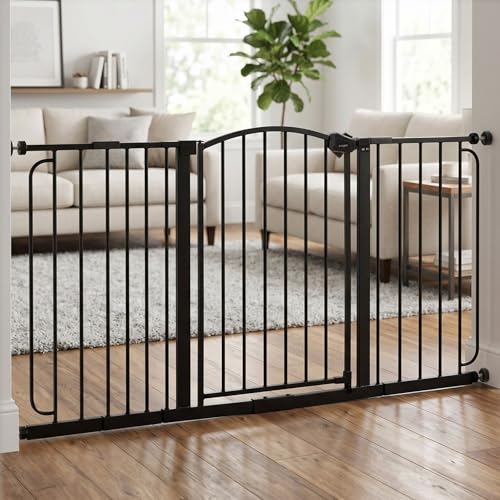
Hardware-mounted gates, on the other hand, offer sturdy, permanent security, making them the best choice for stairways or hazardous spots. Some models, such as those with an extra-tall height, provide added safety to prevent climbing or jumping, which is especially useful in homes with both children and pets.
Hybrid-style gates blend these features, providing versatility for various needs.
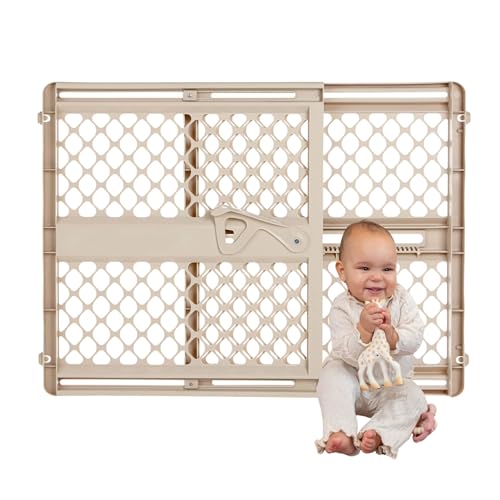
As a caregiver, you’ll want to take into account material durability—metal gates last longer, wood gates look appealing, and plastic gates are lightweight.
Child-proofing professionals emphasize key safety features like reliable latching systems, height requirements of at least 22 inches, and slat spacing under 3 inches to prevent accidents.
Knowing these types guarantees you select the right gate to protect your little ones effectively.
Key Safety Features to Look For
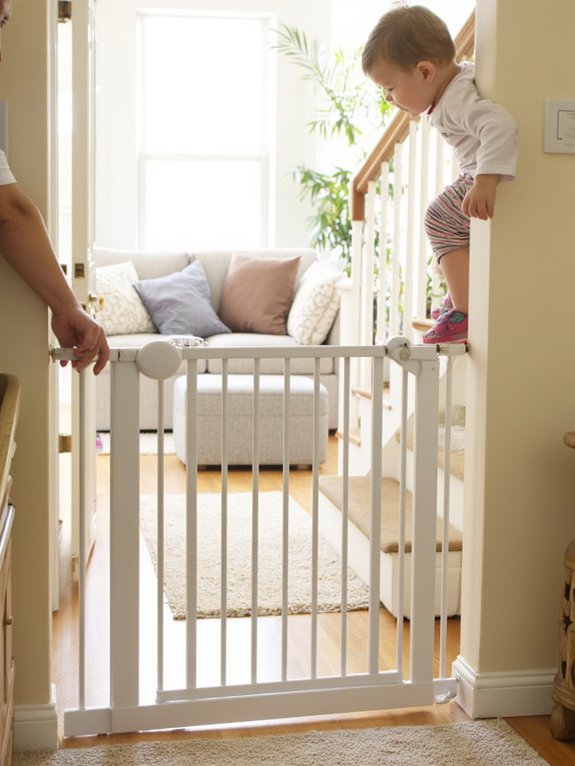
Choosing baby gates with the right safety features can make all the difference in protecting your child from potential hazards.
Always select a gate that meets JPMA safety standards—this means it should be at least 22 inches tall with slat spacing under 3 inches to prevent head entrapment.
For enhanced child safety, hardware-mounted gates are ideal, especially near staircases, as they offer superior stability compared to pressure-mounted options. The double-lock safety release found on some gates can make it even more difficult for toddlers to open, giving parents extra peace of mind.
Look for a locking mechanism that’s easy to use for adults but secure against toddlers.
Durable materials like metal or solid wood with smooth, splinter-free edges guarantee both safety and longevity.
Features such as audible clicks and automatic closing also boost reliability.
Prioritizing these elements helps you provide a safe environment while respecting the importance of the installation method.
Installation Methods and Their Importance

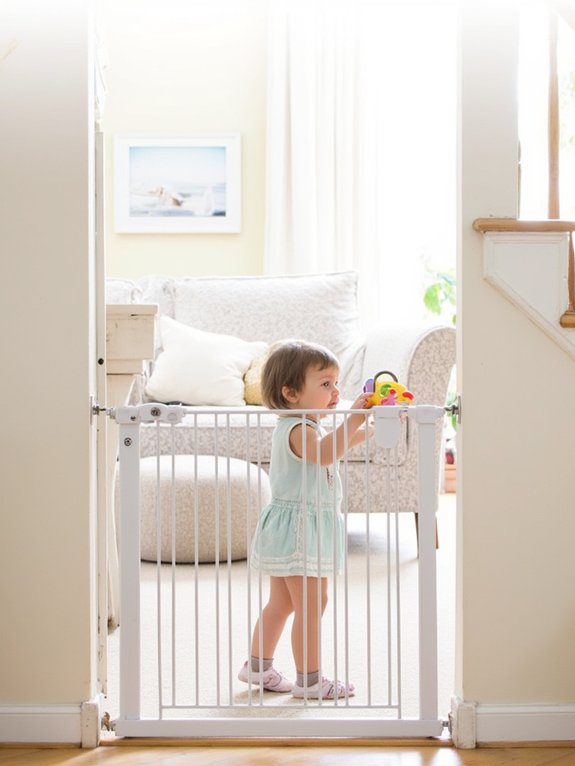
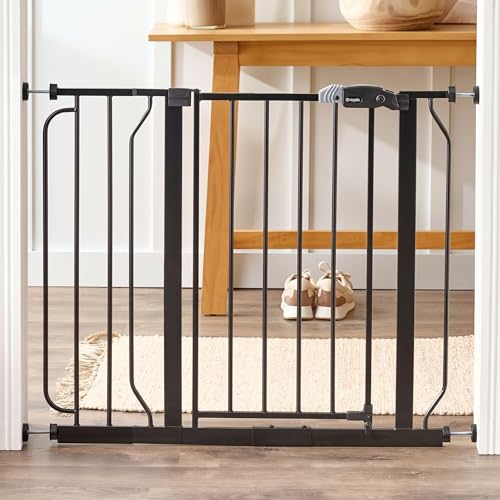
You’ll want to choose between hardware-mounted and pressure-mounted gates based on where you plan to install them, as hardware-mounted gates offer superior stability for high-risk areas like stair tops.
Installation ease varies, with pressure-mounted gates being simpler to set up but less secure under force.
Taking accurate measurements and understanding each method’s safety and stability will help you protect your child effectively.
For example, pressure-mounted design gates like the Regalo Easy Fit are ideal for temporary setups and doorways, but are not recommended for use at the top of stairs due to safety limitations.
Hardware-Mounted Vs Pressure
Although both hardware-mounted and pressure-mounted baby safety gates serve to protect your child, their installation methods greatly impact their safety and suitability for different areas. Hardware-mounted gates offer superior security and stability by anchoring firmly with screws, meeting stricter safety standards—especially critical at the top of stairs where the risk of falls is highest. While pressure-mounted gates provide ease of installation and removal, making them ideal for renters or temporary use, they lack the same reliability and should never be used in hazardous zones. Hardware-mounted gates are especially recommended for areas with high fall risk due to their strong attachment and durable construction. Although hardware-mounted gates involve installation drawbacks like drilling, their enhanced child safety benefits justify this effort. Understanding these differences helps you choose the right gate to guarantee your child’s safety without compromising convenience or peace of mind.
Installation Ease Factors
Understanding the differences between hardware-mounted and pressure-mounted gates sets the stage for evaluating how installation ease impacts your choice.
Pressure-mounted gates are easy to install without tools, making them ideal for renters or temporary setups. Many pressure-mounted models, like those featuring a SecureTech Indicator, also provide visual confirmation of a proper lock, adding an extra layer of confidence during installation.
Hardware-mounted gates, while more secure, require accurate measurements, assembly before installation, and anchoring with screws.
You’ll want to measure your space carefully, especially if you need extension panels to fit wider openings.
Installation ease also includes features like one-handed operation, which markedly enhances convenience in daily use.
Choosing a gate that balances secure mounting with straightforward setup guarantees you can focus more on caring for your child and less on complicated assembly.
Prioritizing these factors helps you serve your family safely and efficiently.
Safety and Stability
When securing areas like stairways, hardware-mounted gates offer the best stability because they anchor firmly to the wall with screws. This installation method is essential in high-risk areas where your child’s safety depends on a baby gate’s unwavering strength. For families looking for a gate that balances space-saving design with safety, some retractable models can also provide versatility for doorways and hallways, but should not replace hardware-mounted gates at stairways.
While pressure-mounted gates are easier to install and move, they don’t provide the installation stability needed near stairs due to possible dislodgment from child interactions.
Always choose JPMA certified baby gates, ensuring they meet rigorous safety standards, including resistance to lateral forces.
Regularly inspect your safety gate’s installation to prevent accidents, especially in high-traffic zones.
By prioritizing hardware-mounted gates in vital spaces and understanding installation methods, you serve your family best, creating secure environments where little ones can explore safely and confidently.
How to Measure for the Perfect Fit
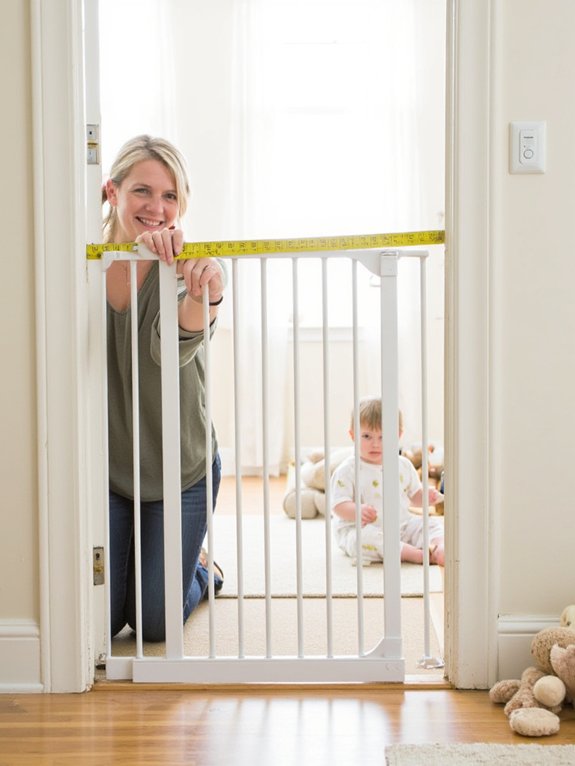
To get the perfect fit for your baby safety gate, start by measuring the width of the opening at three points: top, middle, and bottom, since doorways can be uneven.
Accurate width measurement is essential to guarantee safety and stability.
Accurate width measurement is crucial for ensuring your baby gate is both safe and stable.
Keep these key steps in mind when learning how to measure for the perfect fit:
- Include obstructions like baseboards or molding in your measurements, as they affect installation.
- For hardware-mounted gates, add 2-3 inches to accommodate mounting brackets.
- For pressure-mounted gates, measure the clear opening without obstructions to guarantee a secure hold.
- Always compare your measurements to the manufacturer’s specifications for minimum and maximum width adjustments.
Taking these steps guarantees your gate fits perfectly and keeps your little one safe.
Evaluating Material Quality and Durability

Because your baby's safety depends on it, choosing a gate made from durable, high-quality materials is crucial.
Metal gates offer superior material strength and durability, making them ideal for high-risk areas like staircases. Many heavy-duty steel gates are engineered to withstand impacts from active toddlers and even large pets, ensuring lasting protection in busy households.
Wood gates provide an attractive option but vary in sturdiness, so select ones with solid construction.
Plastic gates are lightweight and portable but less durable under constant wear and damage, especially in busy spaces.
Always look for gates certified by the Juvenile Products Manufacturers Association, as this guarantees they meet rigorous safety standards concerning durability and material strength.
Remember to regularly inspect your gate for signs of wear or damage.
Even the best materials can degrade over time, so maintaining your gate’s integrity protects your child effectively.
Ease of Use and Accessibility Considerations
You’ll want a baby gate that’s easy to open with one hand, so you can manage it even when you’re carrying your little one or other items.
A wide walk-through opening makes moving through with groceries or a stroller much simpler.
Also, look for gates with straightforward locking mechanisms to guarantee you can secure them quickly without frustration.
One-Handed Operation
How can you manage a busy household while keeping your child safe? Choosing top-rated baby gates with one-handed operation is key.
This feature lets caregivers open and close gates easily while holding a child or carrying items, enhancing both safety and ease of use.
Prioritize gates with user-friendly latches and reliable features designed for quick access without compromising childproofing spaces.
Look for baby gates that:
- Offer secure, one-handed operation for busy caregivers
- Include intuitive, child-resistant latches
- Provide swift access to prevent accidents
- Maintain robust safety standards without complexity
Walk-Through Gate Width
Along with one-handed operation, the width of your baby gate’s walk-through opening plays a significant role in daily convenience.
When choosing a gate, prioritize a walk-through gate width of at least 23.6 inches to comfortably accommodate average-sized adults.
Narrow walk-thru openings, often around 16 inches, can restrict caregivers carrying items or moving quickly, reducing ease of access.
Wider walk-through gates, like the North States Deluxe Decor Gate, enhance accessibility, fitting openings up to 6 feet and providing ample space for smooth passage.
This thoughtful consideration guarantees caregivers can move effortlessly while attending to little ones, minimizing frustration.
By focusing on both one-handed operation and sufficient gate width, you create a safer, more accessible environment that supports your caregiving responsibilities with ease.
Locking Mechanism Simplicity
While ensuring your baby gate secures your little one safely, it’s equally essential that the locking mechanism is simple and accessible for you.
A user-friendly locking mechanism that’s easy to open with one hand can make a big difference, especially when you’re carrying your child or groceries. It should provide a secure closure with audible clicks to confirm it’s locked, giving you peace of mind. Some baby gates, like those with an auto-close mechanism, add extra assurance by making sure the gate locks itself after each use.
At the same time, the mechanism must confound toddlers by requiring adult strength and dexterity, preventing little hands from opening it. Be mindful of the complexity; overly intricate designs can slow you down during frequent use.
Consider these key points when choosing your gate’s locking mechanism:
- One-handed operation for caregiver convenience
- Audible clicks indicating secure closure
- Toddler confound features requiring adult strength
- Balanced complexity for ease of use and safety
Comparing Popular Baby Gate Models and Their Benefits
Because safety and convenience are your top priorities, choosing the right baby gate means weighing the benefits of various models carefully.
Hardware-mounted designs like the Cardinal Gates SS-30 offer superior security and easy installation, perfect for stairways and high-risk areas.
If you need a budget-friendly baby gate that's easy for adults to use, the North States Easy Swing & Lock provides a simple pressure-mounted option, though it’s best for perpendicular setups.
For wide openings, consider the North States Deluxe Decor Gate, which fits spaces up to six feet and functions like a small fence.
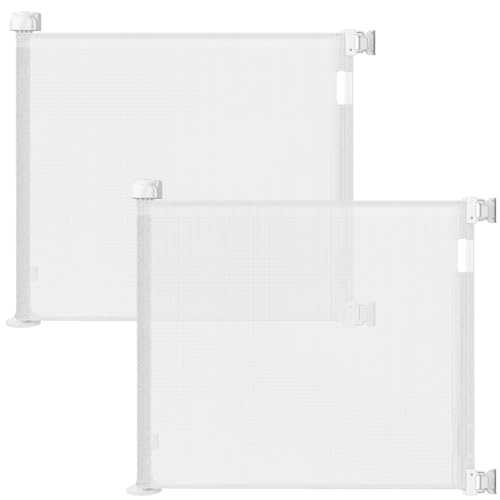
The Smart Retract Retract-A-Gate suits tight spaces with its retractable fabric but may require two hands to lock.
Assess your space and needs to install the right baby gate that balances safety, convenience, and budget effectively.
Frequently Asked Questions
What Is the Best Baby Gate Brand?
You’ll find brand comparisons helpful—look for safety certifications, user reviews, and warranty policies. Prioritize gates with easy installation, portability options, design aesthetics, and responsive customer service, all while balancing price ranges to guarantee your baby’s safety and your peace of mind.
How Do You Pick a Baby Gate?
You’ll want to contemplate baby gate types like hardware mounted gates for stairs, pressure mounted options for easy setup, space saving gates for tight areas, extra wide or adjustable height gates, plus portable, decorative, and indoor outdoor gates.
What Is the Safest Type of Baby Gate?
The safest baby gate types are hardware mounted gates; they securely anchor, meeting gate safety standards. Adjustable height gates and swing gates offer benefits, but avoid pressure mounted gates near stairs. Consider retractable gate options and baby gate features carefully.
What Is the Best Material for a Baby Gate?
Wondering if wood vs plastic or metal vs fabric suits your needs best? Consider durability factors, gate height, installation ease, portability, maintenance tips, aesthetic considerations, and cost comparison to choose a safe, stylish baby gate you'll trust.
Final Thoughts
Choosing the right baby safety gate is essential—did you know that nearly 2 million children visit emergency rooms yearly due to home injuries? By understanding gate types, safety features, and installation methods, you can create a safer space for your little one. Measure carefully, prioritize durable materials, and pick a model that’s easy for you but secure for your child. With the right gate, you’re not just protecting your baby—you’re giving yourself peace of mind.
If you want to know other articles similar to How to Choose Top-Rated Baby Safety Gates you can visit the Baby Gates & Safety Systems category.
Best Baby Safety Gates for Pets and Babies

10 Baby Proofing Tips for Open Floor Plans
What Are the Most Stylish Baby Gates?
3 Best Wooden Baby Gates With Walk-Through Doors

10 Best Baby Gates for Outdoor Decks

What Baby Gates Work for Irregular Shaped Spaces?

Best Extra Long Baby Gates for Playrooms

Best Extra Tall Baby Gates for Toddlers

Why Choose a Baby Gate With Cat Door?
This is also interesting