
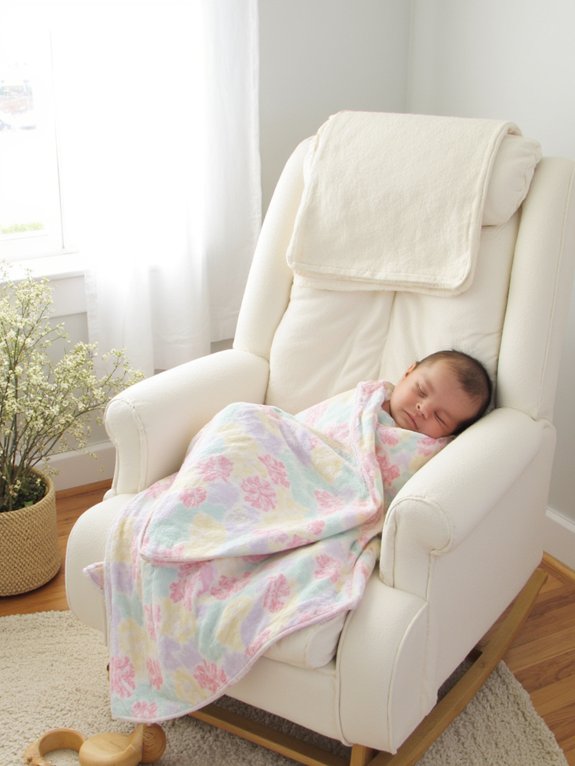
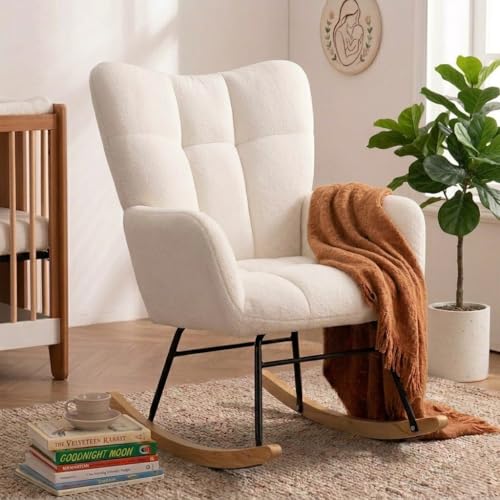












What Are Hypoallergenic Glider Fabrics for Babies?

You want hypoallergenic glider fabrics that protect your baby’s delicate skin from irritants and allergens. Choose natural fibers like organic cotton or bamboo, which are soft, breathable, and chemical-free, preventing rashes and discomfort. Avoid synthetic materials and harsh chemical treatments that can cause reactions. Look for trusted certifications guaranteeing safety and quality. Proper care, like washing with gentle detergents, keeps these fabrics safe and fresh. Keep exploring to find the ideal fabric that guarantees your baby’s comfort and health.
Table
- Main Points
- Understanding Hypoallergenic Fabrics
- Common Allergens in Baby Glider Fabrics
- Benefits of Hypoallergenic Glider Fabrics for Babies
- Natural Fibers Used in Hypoallergenic Glider Fabrics
- Organic Cotton as a Hypoallergenic Option
- Bamboo Fabric Characteristics and Benefits
- The Role of Silk in Hypoallergenic Baby Products
- Chemical Treatments to Avoid in Baby Glider Fabrics
- Breathability and Comfort in Hypoallergenic Fabrics
- Certifications and Standards for Hypoallergenic Fabrics
- Caring for Hypoallergenic Glider Fabrics
- Comparing Hypoallergenic Fabric Options for Baby Gliders
- Choosing the Right Glider Fabric for Sensitive Baby Skin
- Frequently Asked Questions
- Final Thoughts
Main Points
- Hypoallergenic glider fabrics minimize allergic reactions by using natural fibers like organic cotton and bamboo that are gentle on baby’s sensitive skin.
- These fabrics avoid chemical irritants such as flame retardants, formaldehyde, and harmful dyes to ensure a safer, healthier nursery environment.
- They promote moisture-wicking and temperature regulation to keep babies comfortable and reduce skin irritation during use.
- Hypoallergenic glider fabrics resist dust mites, mold, and allergens, preventing common triggers of allergies and respiratory issues.
- Choosing certified fabrics, like those with OEKO-TEX or GOTS labels, guarantees the material is tested free from harmful substances.
Understanding Hypoallergenic Fabrics
Although many fabrics can cause irritation, hypoallergenic fabrics are specifically designed to minimize allergic reactions by containing fewer allergy-inducing substances, making them ideal for your baby's sensitive skin.
When choosing materials, organic cotton stands out as a top option because it’s naturally grown without harmful chemicals, reducing the risk of irritation.
Hypoallergenic fabrics like organic cotton offer softness and breathability, creating a comfortable environment that helps prevent rashes.
Keep in mind, though, some fabrics labeled hypoallergenic might still cause reactions, so always check certifications like OEKO-TEX Standard 100 and perform patch tests when possible.
By selecting the right hypoallergenic fabrics, you’re actively protecting your baby’s sensitive skin and providing the gentle care they deserve.
Common Allergens in Baby Glider Fabrics
You need to be aware that chemical irritants like flame retardants and dyes in some fabrics can cause skin reactions in your baby.
Even natural fibers aren’t always risk-free, as allergens like dust mites can cling to them and trigger sensitivities.
Choosing truly hypoallergenic materials means understanding these common irritants to protect your little one’s comfort and health.
Chemical Irritants in Fabrics
When selecting fabrics for your baby’s glider, understanding chemical irritants is crucial to protect sensitive skin. Chemical residues from dyes, flame retardants, and finishing agents often cause discomfort and allergic reactions. Many synthetic fibers like polyester can trap heat and moisture, worsening skin sensitivity. To minimize risks, choose hypoallergenic materials free from harmful additives such as formaldehyde and heavy metals. Opting for fabrics dyed with low-impact, non-toxic dyes further reduces exposure to irritants. Certifications like OEKO-TEX Standard 100 help you identify safe options tested for harmful substances. Prioritizing these factors guarantees your baby’s glider fabric supports delicate skin health, providing comfort and safety while you nurture your child’s well-being.
Natural Fiber Allergens
Beyond chemical irritants, natural fiber allergens can also affect your baby's comfort and health.
While natural fibers like organic cotton, linen, and bamboo generally offer hypoallergenic properties, some babies with sensitive skin may still react to them.
Understanding these allergens helps you choose fabrics that truly protect your little one.
Keep these points in mind when selecting baby glider fabrics:
- Some natural fibers can harbor dust mites, a common allergen.
- Improperly processed fibers might contain residual allergens.
- Blends with synthetic fibers may reduce breathability, increasing irritation.
- Regular cleaning minimizes allergen buildup like pet dander.
Benefits of Hypoallergenic Glider Fabrics for Babies
Although selecting the right fabric might seem simple, choosing hypoallergenic glider fabrics offers significant benefits for your baby’s health and comfort. Hypoallergenic materials, often made from organic cotton, minimize allergens and irritants that can trigger reactions. They also regulate temperature and wick moisture, keeping your baby cozy during long periods. The smooth texture prevents skin irritation, and resistance to dust mites and mold promotes a cleaner environment.
| Benefit | Impact on Baby |
|---|---|
| Allergen Reduction | Prevents allergic reactions |
| Moisture & Temperature | Enhances comfort |
| Skin-Friendly Texture | Avoids rashes and discomfort |
Natural Fibers Used in Hypoallergenic Glider Fabrics

When choosing hypoallergenic glider fabrics, you’ll find organic cotton stands out for being gentle and chemical-free, perfect for your baby’s sensitive skin.
Silk’s natural resistance to dust and mold adds a touch of luxury while minimizing allergens.
Linen’s breathable texture helps keep your little one comfortable by wicking away moisture effectively.
Benefits of Organic Cotton
Because your baby’s delicate skin deserves the gentlest care, choosing organic cotton for glider fabrics makes a significant difference.
Organic cotton is a hypoallergenic natural fiber grown without harmful pesticides, reducing exposure to irritants for sensitive skin.
When you choose organic cotton, you’re ensuring comfort and safety, as these fabrics:
- Are soft and breathable, minimizing skin irritation
- Contain no chemical treatments or synthetic additives
- Absorb moisture naturally, helping regulate your baby’s temperature
- Often meet strict certifications like GOTS and OEKO-TEX
Silk’s Hypoallergenic Qualities
If you want a fabric that naturally resists allergens like mold and dust mites, silk stands out as an excellent choice for your baby's glider.
As a hypoallergenic fiber, silk creates a safe environment by repelling common irritants that can affect sensitive skin. Produced without harmful chemicals by silkworms, high-quality mulberry silk preserves its natural properties, ensuring a gentle touch against delicate skin.
Its smooth texture minimizes friction, reducing irritation during long periods of contact in the glider chair. Plus, silk’s temperature-regulating ability helps keep your baby comfortable, preventing overheating.
Choosing silk for your glider fabric means prioritizing both comfort and health, supporting your commitment to providing the best care for your little one’s sensitive skin.
Linen’s Breathable Texture
Linen’s natural breathability makes it an excellent fabric choice for your baby’s glider.
As a natural fibre derived from flax, linen helps regulate temperature, keeping your baby comfortable without causing skin irritation.
Choosing linen means opting for a hypoallergenic fabric, which means it resists common allergens that could affect your little one.
Here’s why linen stands out for glider upholstery:
- Absorbs and releases moisture quickly, maintaining dryness
- Resists mold and dust mites, common allergy triggers
- Offers a soft yet durable texture, gentle on sensitive skin
- Contains fewer chemical irritants than synthetic fabrics
Organic Cotton as a Hypoallergenic Option
When choosing fabrics for your baby’s glider, organic cotton stands out as a hypoallergenic option that prioritizes both safety and comfort. Grown without harmful chemicals, certified organic cotton protects sensitive skin and repels common allergens like dust mites. Its natural softness and breathability reduce irritation risks, making it ideal for baby glider cushions. Plus, it’s easy to clean, retaining its gentle touch over time.
| Feature | Benefit | Importance for Baby |
|---|---|---|
| Certified Organic | No pesticides or chemicals | Guarantees safety and purity |
| Hypoallergenic | Repels dust mites and allergens | Minimizes allergic reactions |
| Soft & Breathable | Comfortable for sensitive skin | Enhances baby’s comfort |
Choosing organic cotton means serving your baby’s well-being with trustworthy, gentle fabric.
Bamboo Fabric Characteristics and Benefits
Bamboo fabric offers a range of benefits that make it an outstanding choice for your baby’s glider cushions.
As a naturally hypoallergenic material, it’s gentle on sensitive skin and less likely to cause irritation or allergic reactions.
You’ll appreciate how breathable bamboo fabric keeps your baby comfortable by promoting air circulation and wicking away moisture.
Its antimicrobial properties help maintain a clean, odor-free environment, essential for your little one’s health.
Plus, bamboo’s softness rivals silk, providing a soothing touch that supports your baby’s comfort during every cuddle.
- Naturally hypoallergenic for sensitive skin
- Highly breathable and moisture-wicking
- Antimicrobial to reduce bacteria and odors
- Exceptionally soft and gentle on delicate skin
Choosing bamboo fabric means prioritizing both comfort and care.
The Role of Silk in Hypoallergenic Baby Products
You’ll appreciate how silk’s natural resistance to allergens like dust mites and mold makes it ideal for babies with sensitive skin.
Its smooth, breathable texture helps prevent irritation, keeping your little one comfortable throughout the night.
Choosing silk bedding can support better sleep quality while protecting your baby’s delicate skin.
Silk's Allergen Resistance
Because silk naturally resists mold, dust mites, and other common allergens, it stands out as an ideal fabric choice for hypoallergenic baby products.
When you choose silk, you’re providing a safer environment for babies with sensitive skin by minimizing exposure to irritants.
Its hypoallergenic nature stems from:
- Minimal chemical processing during production, ensuring purity
- Resistance to common allergens like dust mites and mold
- Smooth texture that reduces skin irritation risks
- Temperature regulation, which helps prevent overheating
Benefits for Sensitive Skin
When you choose silk for your baby's products, you provide a fabric that naturally minimizes allergic reactions and skin irritation. Silk’s hypoallergenic properties resist mold, dust mites, and odors, making it perfect for sensitive skin. Its smooth texture reduces friction, preventing rashes and discomfort. Plus, silk regulates body temperature, helping your baby stay comfortable and less prone to irritation caused by overheating. Unlike synthetic fabrics, silk is processed without harmful chemicals, ensuring gentle care for delicate skin.
| Feature | Benefit for Sensitive Skin |
|---|---|
| Hypoallergenic fiber | Minimizes allergic reactions |
| Smooth texture | Reduces friction and irritation |
| Temperature regulation | Prevents overheating discomfort |
| Chemical-free process | Gentle on delicate skin |
Silk helps you nurture your baby’s sensitive skin with natural, effective care.
Silk in Baby Bedding
Building on the benefits of silk for sensitive skin, incorporating this fabric into baby bedding can greatly enhance your infant’s comfort and health.
Silk is naturally hypoallergenic, helping you minimize allergen exposure by resisting mold, dust mites, and odors. Choosing silk bedding supports your baby’s delicate skin and overall well-being.
When selecting silk baby bedding, consider these advantages:
- Hypoallergenic properties reduce allergy risks for sensitive skin
- Smooth, breathable texture regulates body temperature
- Chemical-free production guarantees safety for infants
- Promotes better sleep by preventing rashes and discomfort
Chemical Treatments to Avoid in Baby Glider Fabrics
Although baby glider fabrics might look harmless, they can contain chemical treatments that pose serious health risks to your infant.
You should avoid fabrics treated with formaldehyde and flame retardants, as these chemicals can cause skin irritations and respiratory problems.
Synthetic materials like polyester often harbor chemical additives that irritate sensitive baby skin, increasing the risk of allergic reactions.
Low-quality dyes and finishes can also trigger these reactions, so choosing fabrics dyed with natural or low-impact dyes is crucial.
To protect your baby, prioritize natural fibers and look for certifications such as OEKO-TEX Standard 100, which guarantees fabrics are free from harmful substances.
By carefully selecting chemical-free fabrics, you create a safer, healthier environment that supports your infant’s well-being.
Breathability and Comfort in Hypoallergenic Fabrics
Selecting chemical-free baby glider fabrics is just one part of guaranteeing your infant’s comfort and safety.
Breathability and comfort play an essential role, especially for sensitive skin. Choosing natural fibers like organic cotton, linen, or bamboo promotes ideal air circulation, preventing overheating and moisture buildup.
Natural fibers like organic cotton, linen, and bamboo ensure breathability and comfort for sensitive baby skin.
These fabrics support your baby's comfort by:
- Enhancing breathability to regulate temperature effectively
- Wicking away moisture to reduce sweat and the risk of rashes
- Minimizing heat and humidity trapped compared to synthetic materials
- Avoiding harsh chemicals through low-impact dyes for safer contact
Certifications and Standards for Hypoallergenic Fabrics
Several trusted certifications can help you identify truly hypoallergenic glider fabrics for your baby. Look for GOTS-certified organic materials, which guarantee the fabric is made from organic fibers while meeting strict environmental and social criteria. This certification guarantees your baby’s fabric is free from harmful chemicals often found in conventional textiles. Additionally, OEKO-TEX Standard 100 certification tests fabrics for over 100 harmful substances, confirming that they pose no risk to your baby’s sensitive skin. Choosing glider fabrics with these certifications means you’re prioritizing safety and comfort, reducing the chance of allergic reactions or irritation. By selecting certified hypoallergenic fabrics, you provide a healthier, safer environment that supports your baby’s well-being during every cuddle and nap.
Caring for Hypoallergenic Glider Fabrics
When you care for hypoallergenic glider fabrics properly, you help maintain their gentle qualities and protect your baby’s delicate skin.
Caring for hypoallergenic fabrics means choosing chemical free cleaning methods that prevent irritation and preserve softness. Follow these key steps:
- Use fragrance-free, gentle detergents to avoid harsh chemicals.
- Wash covers regularly in warm water to eliminate allergens like dust mites and pet dander.
- Skip fabric softeners and dryer sheets, which may introduce irritants.
- Treat stains with natural, bleach-free removers to maintain hypoallergenic integrity.
Additionally, store cushions in a clean, dry place to prevent mold growth, which can aggravate allergies.
With mindful care, you guarantee the fabric stays safe and comfortable for your baby’s sensitive skin every day.
Mindful care ensures hypoallergenic fabrics remain safe and cozy for your baby’s delicate skin daily.
Comparing Hypoallergenic Fabric Options for Baby Gliders
Choosing the right hypoallergenic fabric for your baby’s glider can make a significant difference in comfort and safety.
Organic cotton stands out for being free from harmful chemicals and pesticides, ensuring gentle care for sensitive skin.
Bamboo fabric offers natural antimicrobial properties and excellent moisture-wicking, keeping your baby dry and comfortable.
Both fabrics are breathable, reducing irritation risks.
While linen is another hypoallergenic option, organic cotton and bamboo tend to excel in softness and moisture management.
When you choose glider fabrics, prioritize certifications like GOTS or OEKO-TEX to guarantee safety and purity.
By thoughtfully comparing these materials, you can confidently select a hypoallergenic fabric that supports your baby’s well-being and provides lasting comfort during every gliding moment.
Choosing the Right Glider Fabric for Sensitive Baby Skin
Because your baby’s skin is incredibly delicate, selecting the right glider fabric matters more than you might realize. You want materials that are hypoallergenic, gentle, and safe from irritants.
Organic cotton and bamboo are excellent choices—they’re soft and chemical-free. Some modern gliders are made with GREENGUARD Gold certified materials, which ensure safer nurseries by minimizing chemical emissions. Avoid synthetic fabrics like polyester or nylon, as they trap heat and moisture, causing discomfort or rashes. Silk is another natural, hypoallergenic option that regulates temperature well.
When choosing, keep these tips in mind:
- Look for certifications like GOTS or OEKO-TEX to guarantee safety
- Opt for organic cotton or bamboo for softness and breathability
- Steer clear of synthetic fabrics that can irritate sensitive skin
- Always test fabric swatches on your baby’s skin before finalizing
Frequently Asked Questions
What Fabrics Are Hypoallergenic for Babies?
You’ll find organic cotton options gentle on baby skin, while bamboo fabric benefits include softness and antimicrobial properties. If you need synthetic fiber alternatives, choose those labeled hypoallergenic and OEKO-TEX certified to guarantee safety and comfort.
Is Sugar Glider Hypoallergenic?
Though not knights, you should know sugar gliders aren’t hypoallergenic pets. Sugar glider care requires managing sugar glider allergies caused by dander and saliva. Different sugar glider breeds don’t change allergen risks, so proceed cautiously to serve others safely.
What Type of Material Is Hypoallergenic?
You should choose natural fibers like organic cotton, silk, or bamboo for allergy relief. These materials reduce irritants, ensuring baby safety. Always look for certified hypoallergenic fabrics to protect sensitive skin and provide comfort.
What Is the Most Hypoallergenic Cloth?
You’ll find organic cotton the most hypoallergenic cloth for sensitive skin, excelling in allergy prevention. Its natural fibers and gentle feel make fabric choices easier when prioritizing comfort and safety for those you care about most.
Final Thoughts
Choosing hypoallergenic glider fabrics isn’t just about avoiding allergies—it’s about creating a safe, soothing space for your baby’s sensitive skin to thrive. While no fabric can guarantee zero reactions, opting for natural, certified materials like organic cotton greatly reduces risks. By understanding allergens and caring properly for these fabrics, you’re making an informed, loving choice that supports your baby’s health and comfort every day. Trust your instincts—they’re backed by thoughtful science and care.
If you want to know other articles similar to What Are Hypoallergenic Glider Fabrics for Babies? you can visit the Gliders & Rocking Chairs category.
Top Gliders for Tall Parents: Comfort & Support
What Makes a Glider Recliner With Ottoman Ideal?
Top 3 Gliders for Nursing Comfort
Top Nursery Gliders With Handy Side Storage Pockets

Choosing Between Rocking Chair and Glider for Nursery
5 Best Eco-Friendly Nursery Rocking Chairs

What Glider Chairs Offer Lumbar Support for Nurseries?

Best Minimalist Nursery Glider Chair Designs
Step-by-Step Guide to Assembling Nursery Gliders
This is also interesting