





Two-Story Flatpack Prefab House Review

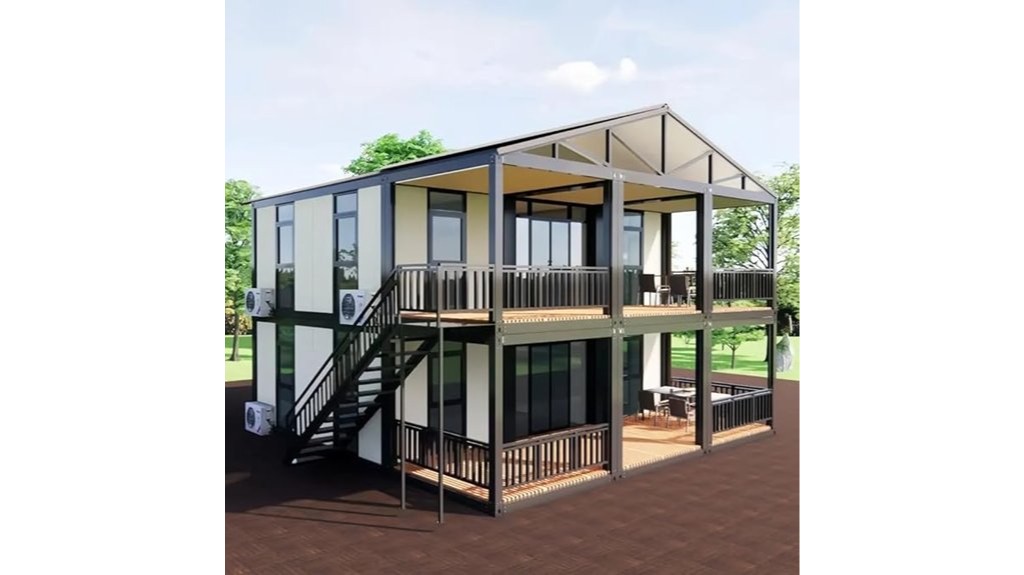
You’ll find the two-story flatpack prefab house impresses with its 10-minute rapid setup, sturdy galvanized steel frame, and insulated sandwich panels that enhance energy efficiency and durability. Its modular design weighs 5,600 pounds for transport and offers flexible layouts from 1 to 5 rooms, allowing you to customize window styles, terraces, and roof types to fit your needs. Perfect for off-grid living, it balances technical excellence with adaptability. Keep exploring to uncover its detailed energy and design features.
Table
Main Points
- The two-story flatpack prefab house offers rapid setup, typically installed within 10 minutes using modular, lightweight components.
- It features a durable galvanized steel frame and fireproof, waterproof sandwich panels for long-lasting weather resistance.
- Customizable layouts allow 1 to 5 rooms, flexible window and door options, and adaptable terrace and roof designs.
- Energy-efficient design includes insulated panels and large windows that optimize natural light and reduce utility costs.
- Suitable for off-grid living with robust structural integrity and sustainable features supporting self-sufficiency and practical adaptability.
Energy Efficiency Advantages and Drawbacks
You’ll appreciate the house’s insulated sandwich panels and large windows that optimize natural light, reducing energy consumption.
However, you might notice that thermal regulation could be enhanced to minimize heat loss in extreme climates.
Let’s assess both the effective features and areas where energy efficiency can improve. Additionally, homeowners benefit from up to 30% reduction in energy use due to the improved insulation of prefabricated concrete houses.
What We Liked
Several energy efficiency features stand out in the Two-Story Flatpack Prefab House, making it a compelling option for sustainable living.
You’ll appreciate how its fireproof, waterproof sandwich panel walls and galvanized steel frame enhance insulation and reduce energy loss.
The design integrates large windows, maximizing natural light and cutting dependence on artificial lighting, aligning with your sustainability options.
Its flexible interior design allows you to optimize space for ventilation and heat control, further improving energy efficiency.
These elements combine to offer a technically sound, eco-conscious home that supports your freedom to live sustainably without sacrificing comfort or style.
Additionally, the use of eco-friendly materials in the house’s construction further reduces environmental impact and promotes sustainable living.
What Can Be Improved
While the Two-Story Flatpack Prefab House offers notable energy efficiency strengths, there are areas that could benefit from further refinement.
You’ll appreciate its sustainable design, but improving insulation in extreme climates remains essential for ideal thermal regulation.
Incorporating advanced sustainability practices like solar integration and enhanced ventilation would boost energy autonomy.
Also, consider maintenance considerations: ensuring easy access to insulation panels and HVAC components will reduce long-term energy loss and upkeep costs.
Drawing inspiration from material durability and quality in leading prefab dome models can further enhance the house's resistance to environmental factors and improve its overall energy performance.
Rapid Setup, Durable Design
Because rapid deployment is essential for many applications, the Two-Story Flatpack Prefab House offers an installation time of just 10 minutes, enabling swift setup without sacrificing quality.
You benefit from rapid construction techniques that streamline assembly while maintaining structural integrity. The design utilizes sturdy materials, including galvanized steel frames and fireproof, waterproof sandwich panels, ensuring resilience against diverse weather conditions.
This approach guarantees durability without prolonging setup, granting you freedom to relocate or expand as needed. The combination of speed and strength supports versatile use cases, empowering you to establish a reliable, long-lasting living space quickly and efficiently. Prefabricated houses also prioritize energy efficiency through thermal insulation panels and energy-saving appliances, helping to reduce long-term utility costs.
Flatpack Components and Materials
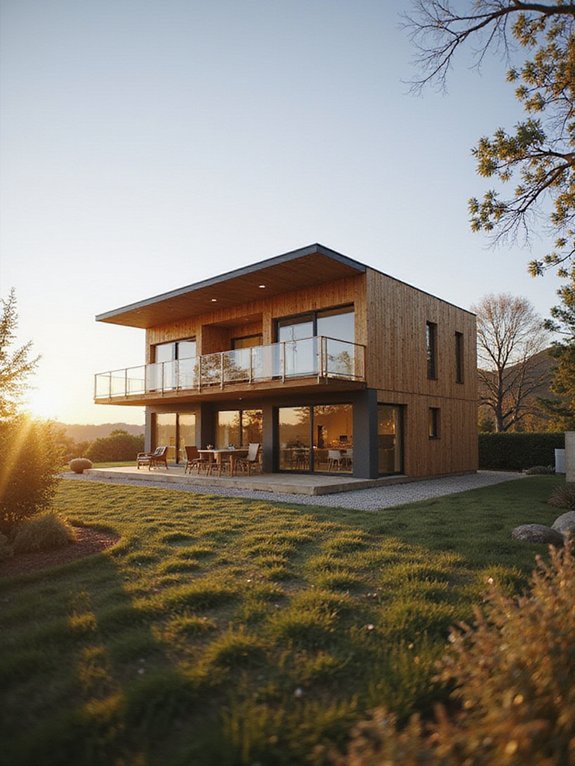
You’ll find the Two-Story Flatpack Prefab House measures 465 by 246 by 97 inches and weighs 5,600 pounds, balancing size with transportability. The flatpack design breaks down into modular components engineered for efficient handling and assembly. Following a clear step-by-step guide, you can quickly construct the structure with precision and minimal tools. For those considering long-term safety and resilience, the house incorporates durable materials such as galvanized steel and insulated panels, which are known for their longevity and energy efficiency.
Dimensions and Weight Details
When evaluating the Two-Story Flatpack Prefab House, you’ll find its components designed with precise dimensions and manageable weight to facilitate transport and assembly.
The dimensions overview reveals a compact form measuring 465 x 246 x 97 inches, balancing spaciousness with portability. In weight comparison, the structure tips the scales at 5600 pounds, light enough for efficient handling yet solid for durability.
Consider these key points:
- Optimized size for ease of movement and site placement
- Weight engineered for swift transport without heavy machinery
- Dimensions that empower your freedom to relocate or expand effortlessly
When planning your project, it’s important to also consider assembly complexity as it can directly impact setup time and the overall convenience of installation.
Step-By-Step Flatpack Assembly Guide
Three main components form the foundation of assembling the Two-Story Flatpack Prefab House: the galvanized steel frame, fireproof and waterproof sandwich panel walls, and customizable modular elements such as windows, doors, and flooring.
You’ll start by securing the steel frame, ensuring structural integrity. Next, attach the sandwich panels precisely to maintain insulation and weather resistance.
Finally, install modular components based on your customization choices. Use assembly tips like checking alignment frequently and tightening fasteners systematically.
These steps highlight flatpack benefits—speed, efficiency, and adaptability—empowering you to build a durable, flexible home that suits your freedom-driven lifestyle. Many flatpack houses offer expandable container house designs that allow for rapid assembly and easy transport, providing even more flexibility for diverse living needs.
Customizable Layout and Rooms
You can customize the Two-Story Flatpack Prefab House with 1 to 5 rooms, tailoring the layout to your specific needs.
The floor plans offer flexibility, allowing you to choose window and door configurations that optimize light and access.
Additionally, terrace and roof designs are adaptable to enhance both functionality and aesthetic appeal.
Thanks to the house’s energy-efficient designs, you can further personalize your space while benefiting from reduced utility costs and eco-friendly living.
Room Number Options
Multiple room configurations are available for the Two-Story Flatpack Prefab House, allowing you to tailor the layout precisely to your needs.
You can choose between 1 to 5 rooms, optimizing space without compromising functionality. This flexibility guarantees efficient space optimization, whether you need a compact tiny home or a more expansive living area.
Each configuration maximizes usable square footage within the structural limits of the container dimensions. By selecting your preferred number of rooms, you control how the footprint supports your lifestyle, balancing privacy and openness.
This customizable approach empowers you to create a home that truly fits your freedom. The ability to select expandable designs ensures your living space can adapt as your needs evolve over time.
Flexible Floor Plans
Building upon the variety of room configurations, the Two-Story Flatpack Prefab House offers flexible floor plans that let you customize layouts to fit specific functional requirements.
You can design open layouts that enhance spatial flow or create multi functional spaces to maximize utility. This adaptability enables seamless integration of living, working, and recreational areas within the same footprint. Prefabricated models excel at modular layouts, allowing homeowners to tailor the number and configuration of rooms to suit their needs.
Window and Door Choices
A variety of window and door options enhance the Two-Story Flatpack Prefab House’s customizable layout and room configurations.
You can select from multiple window styles—including sliding, casement, or fixed—to optimize natural light and ventilation according to each room’s function.
Door materials range from insulated steel to composite wood, balancing durability with aesthetic preferences.
These choices allow you to tailor thermal performance and security without compromising design flexibility.
Terrace and Roof Designs
Extending your customization beyond windows and doors, the Two-Story Flatpack Prefab House offers adaptable terrace and roof designs that integrate seamlessly with your chosen layout and room configurations.
You can select from multiple terrace styles, including open decks or covered patios, tailored to maximize outdoor usability and complement your interior space. Roof options range from flat to pitched, each engineered for structural integrity and weather resistance.
These choices allow you to optimize natural light, ventilation, and aesthetic appeal without compromising durability. This flexibility guarantees your prefab home reflects your unique lifestyle while maintaining technical excellence.
Ideal for Off-Grid Living
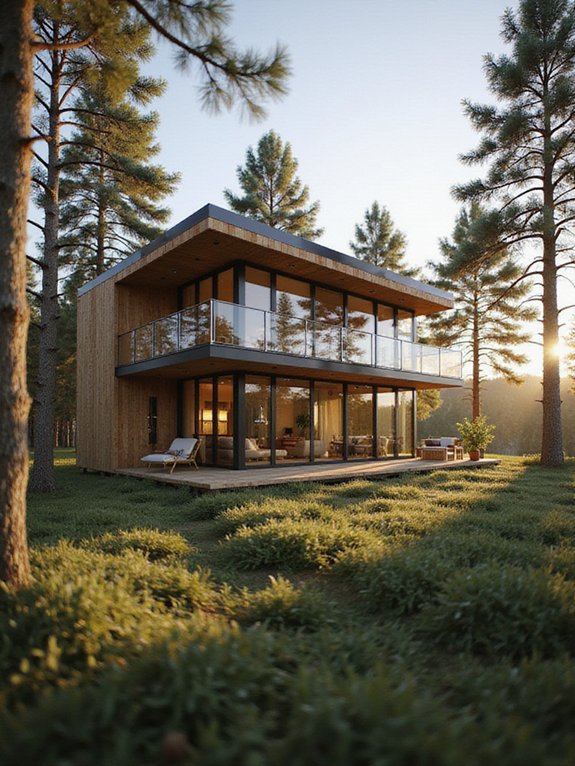
Since the Two-Story Flatpack Prefab House features quick assembly with a structural design optimized for durability and adaptability, it suits off-grid living environments exceptionally well.
You’ll appreciate its robust galvanized steel frame and fireproof, waterproof sandwich panels, ensuring resilience in remote locations.
Its customizable layout and efficient use of space support sustainable living by minimizing resource consumption.
Large windows maximize natural light, reducing energy needs, while rapid installation lets you establish a reliable shelter swiftly.
For those seeking freedom through self-sufficiency, this prefab house balances technical excellence with practical adaptability, making it ideal for off-grid lifestyles.
Frequently Asked Questions
What Warranty Coverage Is Included With the Prefab House?
Think of warranty details as your safety net; you get a 1-year coverage option ensuring protection against defects. This precise warranty gives you peace of mind, letting you enjoy your prefab house with confidence and freedom.
Can the House Be Painted in Custom Colors?
You can choose custom color options to paint your house, ensuring it reflects your style. The paint durability is engineered to withstand weathering, maintaining vibrant aesthetics while providing long-lasting protection for your investment.
How Much Does the Prefab House Weigh?
Like a steadfast anchor, this prefab house weighs 5,600 pounds, balancing weight specifications with structural integrity. You’ll appreciate its robust frame—engineered precisely for freedom, durability, and dependable performance in any setting you choose.
Is Financing Available for Purchasing the Container House?
You’ll find financing options vary, so you should consult mortgage lenders familiar with prefab house purchases. Their support can open up flexible payment plans, granting you freedom to own this container house without immediate full payment.
Where Is the Prefab House Manufactured?
Manufactured meticulously in Henan, China, this prefab house uses premium production materials like galvanized steel and fireproof panels. You’ll appreciate its precise manufacturing locations, ensuring robust, reliable construction that supports your freedom to customize and live flexibly.
If you want to know other articles similar to Two-Story Flatpack Prefab House Review you can visit the Prefabricated Homes category.
Luxury Modular Container Home Review

Tiny Home Kit Review: Affordable Modern Living

Micro Modular Home 20×40 Review

Prefab Tiny Homes Review: Compact Living Redefined

20FT Modular Homes Review: A Tiny Living Solution

Tiny House Prefabricated Review: Compact Living Solution

Prefab Mobile Tiny Home Review

Prefabricated Pop-Up Tiny House Review

Portable Prefab Tiny Home Review
This is also interesting