









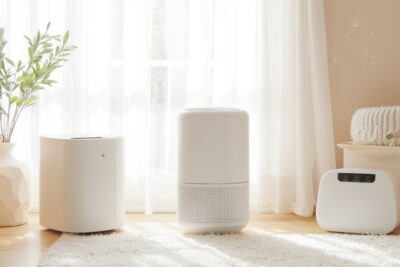
Best Air Purifiers for Eliminating Baby Odors

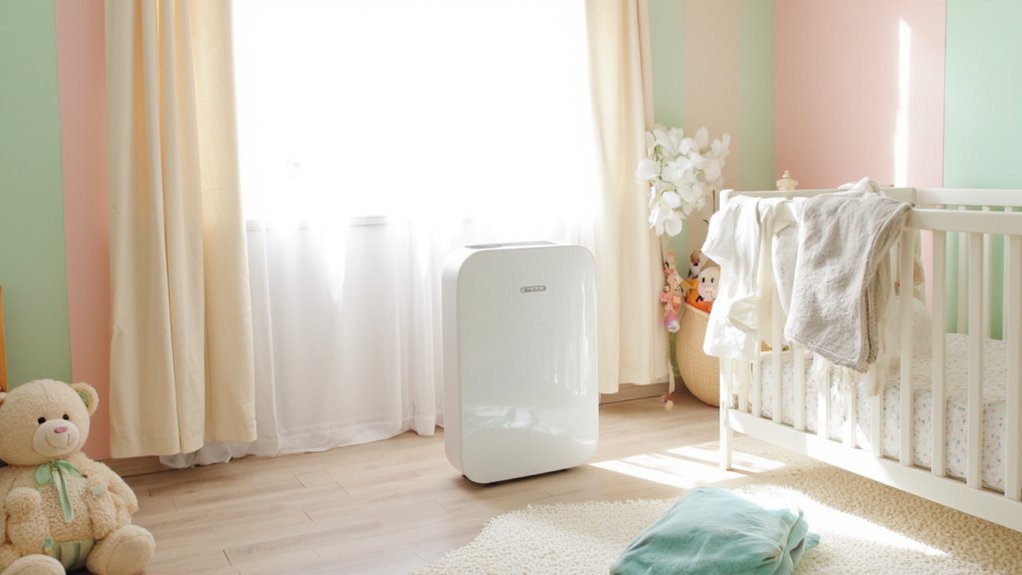
To eliminate baby odors effectively, you’ll want an air purifier with both HEPA and activated carbon filters, like the Levoit Core 300S, which captures 99.97% of airborne particles and neutralizes diaper smells. Choose a model that operates quietly (below 50 dB) and fits your nursery size to guarantee consistent odor removal. Proper placement near odor sources enhances performance. Keep filters maintained for lasting efficiency. Exploring these factors will help you select the best purifier for your baby’s room environment.
Table
- Main Points
- Top Air Purifiers Recommended for Baby Nurseries
- Key Features to Consider in Baby Room Air Purifiers
- How Air Purifiers Effectively Remove Baby Odors
- Noise Levels and Energy Efficiency in Nursery Air Purifiers
- Placement Tips for Optimal Air Purifier Performance in Baby Rooms
- Frequently Asked Questions
- Final Thoughts
Main Points
- Choose air purifiers with HEPA and activated carbon filters for effective removal of baby odors and airborne particles.
- Opt for models like Levoit Core 300S or GermGuardian 18 Console with proven odor reduction capabilities.
- Ensure noise levels are below 50 dB for a quiet nursery environment that won’t disturb baby’s sleep.
- Place purifiers near odor sources such as diaper changing areas for faster and more efficient odor elimination.
- Maintain regular filter replacements and continuous operation to sustain optimal odor removal and air quality.
Top Air Purifiers Recommended for Baby Nurseries
When choosing an air purifier for your baby's nursery, you want a device that efficiently removes airborne particles while operating quietly to avoid disturbing sleep.
A powerful air purifier like the Levoit Core 300S offers a compact air design and removes 99.97% of dust and allergens, making it ideal for maintaining air quality in the baby’s room.
The GermGuardian 18 Console, equipped with a HEPA filter, excels at reducing odors and cleaning the air effectively.
For those who want to monitor air quality closely, the Mila Air Purifier tracks VOCs and allergens quietly.
Additionally, the Coway Airmega AP-1512HH Mighty swiftly reduces smoke pollution, enhancing the environment.
These air purifiers for babies provide reliable options to guarantee a clean, safe nursery atmosphere.
Key Features to Consider in Baby Room Air Purifiers

Choosing the right air purifier for your baby's room involves more than just picking a well-known brand or model.
Selecting an air purifier for your baby's room requires thoughtful consideration beyond brand recognition.
You should prioritize HEPA filters, as they capture 99.97% of airborne particles, guaranteeing effective air cleaning and reducing allergens.
Activated carbon filters are also essential for neutralizing odors common in a baby room, such as those from diapers.
Aim for units with noise levels below 50 dB to maintain a quiet environment conducive to sleep.
For optimal results, consider models with AHAM certification to ensure reliable and energy-efficient performance in your nursery.
Features like real-time air quality monitoring and automatic fan speed adjustment offer precise control over air purification, adapting to changing conditions.
Finally, compact designs guarantee the purifier fits seamlessly into your nursery without compromising efficiency.
By considering these features, you provide a safer, cleaner atmosphere tailored to your baby's needs.
How Air Purifiers Effectively Remove Baby Odors
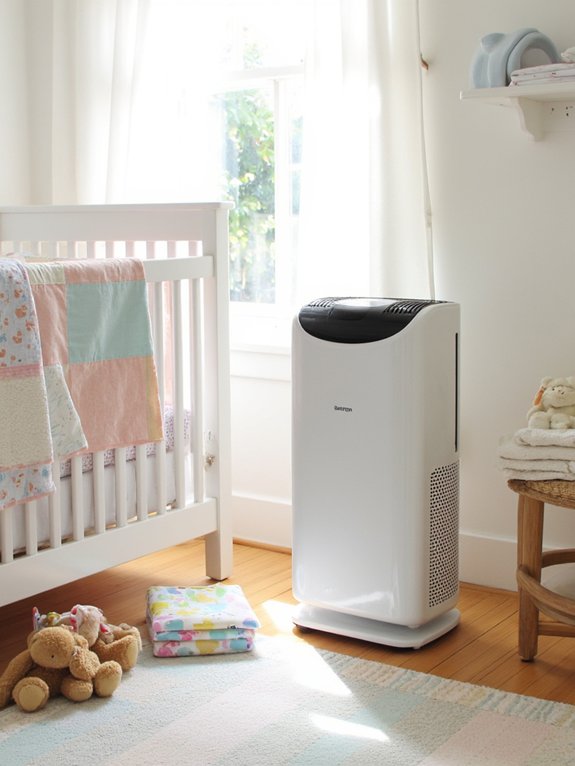
Although baby odors can be persistent and challenging to eliminate, air purifiers equipped with activated carbon and HEPA filters effectively reduce these smells by capturing odor-causing molecules and airborne particles.
Activated carbon filters adsorb and neutralize odors from diapers, baby food, and common nursery sources, while HEPA filters trap fine particles that contribute to unpleasant smells.
An air purifier with a high Clean Air Delivery Rate, like the Coway Airmega AP-1512HH, can reduce strong odors by over 99% within 30 minutes, ensuring fresh air quality in your nursery.
By continuously filtering air, these purifiers support your baby’s health, maintaining a cleaner environment free from irritants.
Choosing the right air purifier helps you serve your family by prioritizing both comfort and safety.
Noise Levels and Energy Efficiency in Nursery Air Purifiers
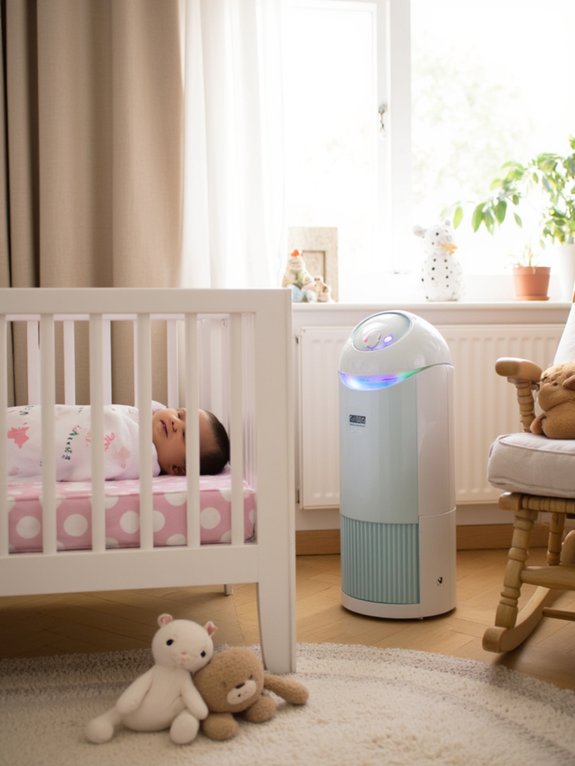
Maintaining a quiet and energy-efficient environment is essential for nursery air purifiers, as excessive noise and high power consumption can disrupt your baby's rest and increase household costs.
You should select models with noise levels at or below 50 dB—some, like the Levoit Core 300S, operate as quietly as 39 dB.
While air purifiers with higher CADR excel in odor elimination, they may consume more energy; balancing these factors guarantees cost-effective operation.
Smart technology can help you monitor energy efficiency and adjust settings remotely, optimizing performance.
Regular maintenance, including timely filter replacements, is critical to sustaining low operational noise and preserving both odor control and energy savings.
Choosing energy-efficient units like the Coway Airmega AP-1512HH supports continuous use without excessive power consumption.
Placement Tips for Optimal Air Purifier Performance in Baby Rooms
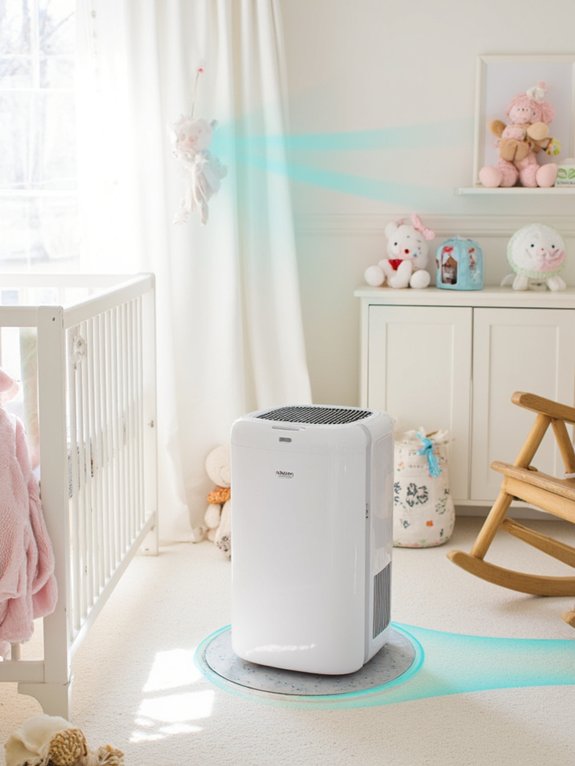
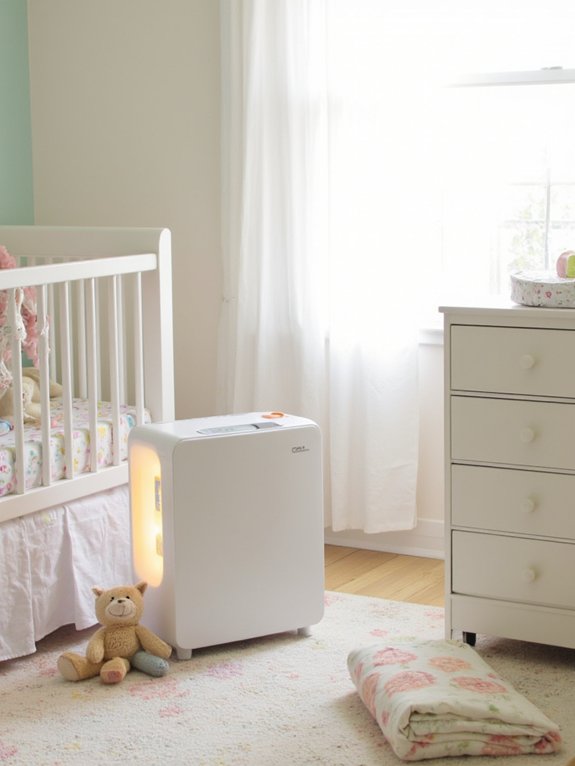
When you place an air purifier near known odor sources like diaper changing areas or pet spaces, you enhance its ability to eliminate unpleasant smells effectively.
For peak performance, follow placement tips such as positioning the unit on stable furniture, at least a few feet from walls or obstructions, to guarantee optimal airflow.
Select an air purifier suited for the room size—for example, a model effective up to 219 sq. ft. should be centrally located in smaller baby rooms.
Maintain continuous operation to consistently support odor removal and promote a cleaner environment.
Finally, regularly replace filters according to manufacturer guidelines, as clogged filters reduce performance.
These practices help you maximize your air purifier’s efficiency, creating a healthier atmosphere for your baby.
Frequently Asked Questions
Do Air Purifiers Actually Remove Odors?
You’ll find air purifiers improve odor removal by using HEPA and activated carbon filters, enhancing air quality. Consider room size, air circulation, and maintenance tips to tackle odor sources effectively while ensuring baby safety.
Is It Good to Have an Air Purifier in Your Room With a Baby?
Did you know HEPA filters capture 99.97% of particles? Using an air purifier with safe materials, proper noise levels, and filter maintenance improves air quality, supports baby sleep, controls humidity, and benefits baby allergies, considering room size and avoiding essential oils.
Do Air Purifiers Help With Litter Odor?
You’ll find air purifiers with activated carbon and HEPA filters improve litter box odor control by removing pet dander and household smells. Regular use enhances air quality, supporting your cleaning routine for effective odor elimination.
How to Purify Air in a Baby Room?
To keep your baby room’s atmosphere fresh, place air purifiers with HEPA filters near odor sources, maintain proper ventilation, control humidity, use safe materials, incorporate gentle essential oils cautiously, and follow strict cleaning routines for allergy prevention.
Final Thoughts
Choosing the right air purifier for your baby’s room is like planting a protective shield around their delicate environment. By focusing on key features such as odor elimination, noise levels, and energy efficiency, you can guarantee cleaner, fresher air that safeguards your little one’s health. Proper placement enhances effectiveness, helping you create a safe, comfortable nursery. With careful selection, you’ll reduce unwanted odors and support your baby’s well-being every day.
If you want to know other articles similar to Best Air Purifiers for Eliminating Baby Odors you can visit the Air Purifiers & Humidifiers category.
3 Best Air Purifiers for Baby Room Dust
How to Choose a Baby Room Air Purifier
Why Choose a Compact Air Purifier for Nursery?
Best Portable Air Purifiers for Baby Strollers
7 Tips for Choosing Baby Asthma Air Purifiers
7 Best Air Purifiers for Baby Nurseries
5 Tips for Choosing Baby Allergy Air Purifiers

Why Choose an Air Purifier With Night Light?
5 Tips for Choosing the Best Air Purifier for Newborns
This is also interesting