











Best Baby Carriers for Preemies and Small Babies

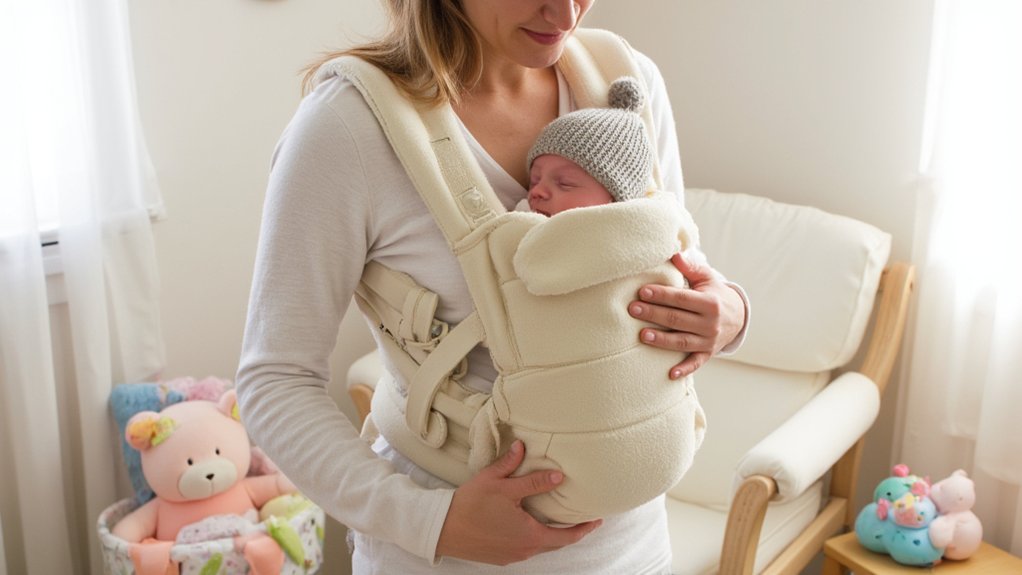
You’ll want a baby carrier that offers excellent head and neck support, supports the natural “froggy” M-position for healthy hips, and fits snugly to keep your preemie secure. Wraps like Boba Wraps, and adjustable structured carriers with open hip seat designs are great options for tiny babies under 3.5kg. Look for breathable materials to prevent overheating, and always make certain you follow safe positioning guidelines. Keep following for tips on choosing the perfect carrier as your baby grows.
Table
- Main Points
- Understanding Baby Development From Newborn to Five Months
- Key Features to Look for in Carriers for Preemies and Small Babies
- Recommended Baby Carriers for Premature and Low Birth Weight Infants
- Benefits of Babywearing for Preemies and Small Babies
- Safe Positioning and Ergonomics in Baby Carriers
- The TICKS Guideline for Safe Babywearing Practices
- When to Start Babywearing Your Preemie
- Comparing Wraps, Slings, and Structured Carriers for Tiny Babies
- Tips for Babywearing After a Caesarean Section
- How to Choose the Right Carrier Based on Your Baby’s Growth and Needs
- Frequently Asked Questions
- Final Thoughts
Main Points
- Choose carriers with excellent head and neck support to protect fragile muscles in preemies and small babies.
- Opt for adjustable carriers that offer snug fits and multiple carrying positions to accommodate growth and comfort.
- Select carriers promoting the ergonomic "M position" to support healthy hip and spine development.
- Use breathable materials and open designs like the Tushbaby Hip Seat Carrier to reduce overheating and suffocation risks.
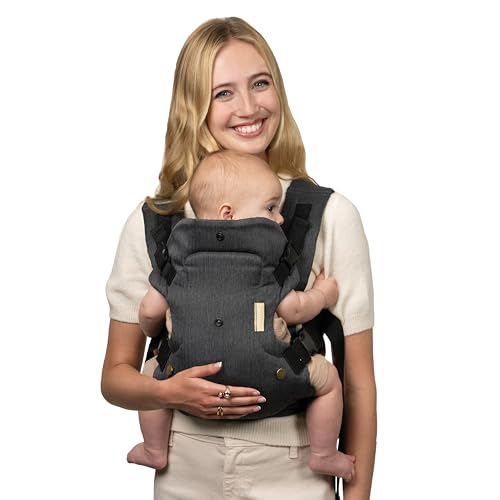
- Consider wrap carriers such as the Boba Wrap for secure, froggy-like support ideal for very small or preemie infants.
Understanding Baby Development From Newborn to Five Months
Although newborns vary in size, most weigh between 2.5kg and 4kg, with preemies typically weighing less than average.
When choosing a newborn carrier, understanding weight requirements is essential to guarantee safety and comfort. In the first months, babies have underdeveloped neck muscles, so you must provide firm support to their head and spine. Many modern carriers offer ergonomic design features that prioritize both the baby's and the caregiver's posture and comfort.
Babywearing experts emphasize maintaining the baby’s natural curved posture, often described as a "froggy" position, to promote healthy development.
As your little one grows, by 4 to 5 months, their neck muscles strengthen, allowing for better head control, which changes how you carry them.
Knowing these developmental milestones helps you select and use carriers safely, supporting your baby’s growth while keeping them secure and comfortable.
Key Features to Look for in Carriers for Preemies and Small Babies
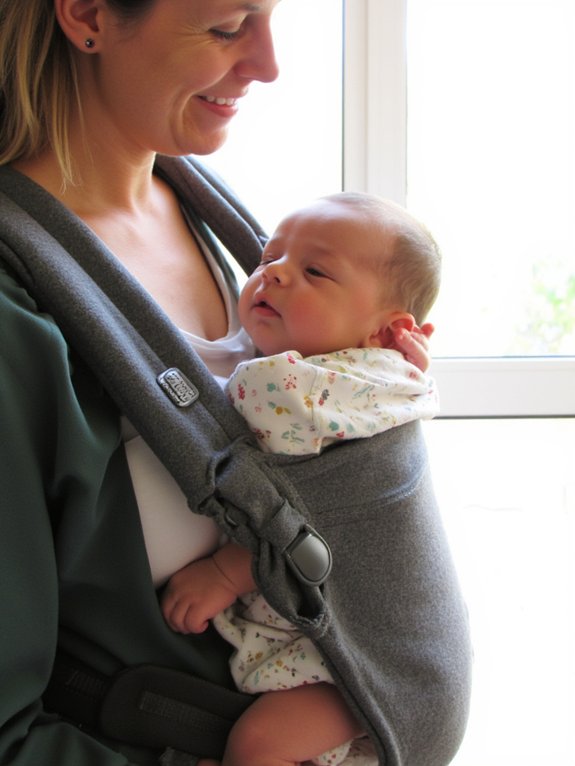
When choosing a carrier for your preemie, prioritize essential safety features like strong head and neck support to protect delicate muscles.
Look for adjustable fit options that keep your baby snug and secure without causing discomfort.
Also, select carriers made from breathable, supportive materials designed to promote healthy development and ease of use.
Many top-rated carriers are recognized for their ergonomic design, which helps ensure proper hip positioning and reduces strain for both baby and caregiver.
Essential Safety Features
Because preemies and small babies need extra care, choosing a carrier with essential safety features is crucial to protect their delicate bodies.
When selecting baby carriers, prioritize these key aspects:
- Adequate head and neck support to stabilize fragile muscles and prevent injury.
- A safe weight limit that matches your baby's size, especially since many carriers require a minimum of 3–3.5 kg.
- Proper hip carry positioning, promoting the “M position” for healthy hip development.
- Use of breathable materials to help regulate your baby’s temperature comfortably.
- Designs like open hip seat carriers that guarantee clear airways and reduce suffocation risk.
- Many carriers now feature ergonomic X-shaped cross straps that distribute weight evenly and minimize fatigue for parents, offering added comfort and stability for both you and your baby.
Focusing on these features helps you provide secure, comfortable babywearing that nurtures your little one’s well-being.
Starting Babywearing Timing
Before you begin babywearing with your preemie, it's important to consult your medical team to determine the right timing based on your baby's health.
Starting babywearing depends on your little one’s readiness, especially for preemies who may need extra care.
Keep these points in mind:
- Begin babywearing once your preemie is stable and cleared to go home.
- Use stretchy wraps for ideal neck support and a natural froggy position.
- Avoid structured carriers until your baby reaches the minimum weight of 3kg to 3.5kg.
- Consider open hip seat carriers that promote healthy hip development and reduce suffocation risks.
- Always watch for signs of discomfort and remove your baby immediately if needed.
This approach guarantees safe, nurturing babywearing tailored to your preemie’s unique needs.
Benefits of Babywearing for Preemies and Small Babies
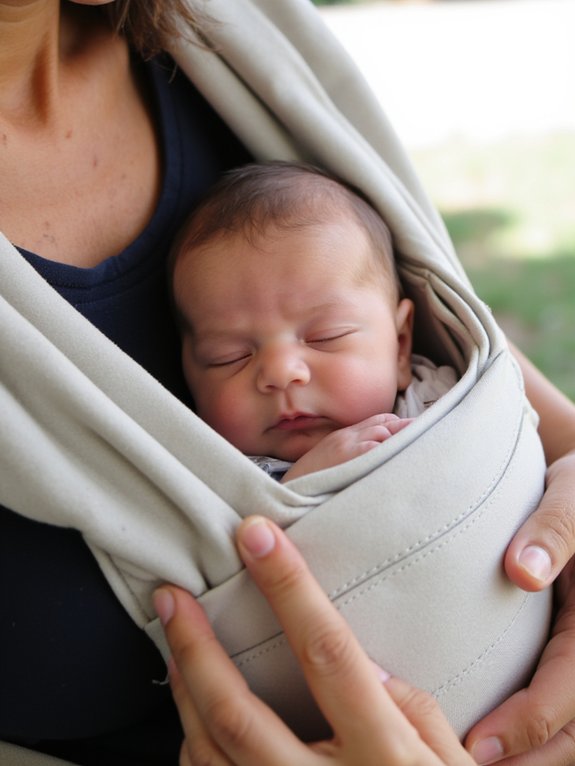
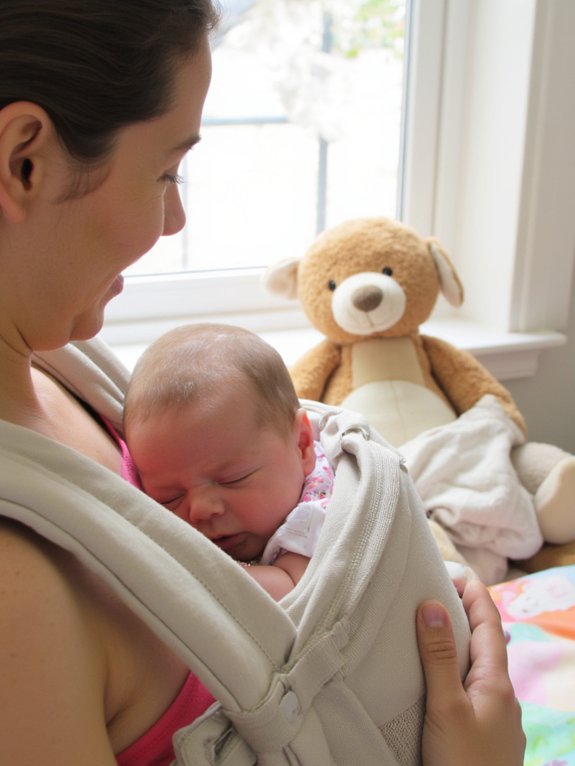
When you wear your preemie or small baby close to your body, you create a secure, womb-like environment that helps them relax and feel comforted.
Babywearing offers preemies the gentle support they need while mimicking the snugness they experienced before birth. Using specially designed carriers, you foster safe, close contact that strengthens bonding and attachment, which are vital for emotional growth.
This closeness also promotes breastfeeding success by allowing easy access and encouraging skin-to-skin contact. Additionally, babywearing supports healthy hip development by maintaining the baby's hips in the recommended "M position," reducing risks like hip dysplasia.
By choosing carriers made for preemies, you guarantee essential head and neck support while minimizing suffocation risks, making babywearing a nurturing and safe way to serve your little one.
Safe Positioning and Ergonomics in Baby Carriers
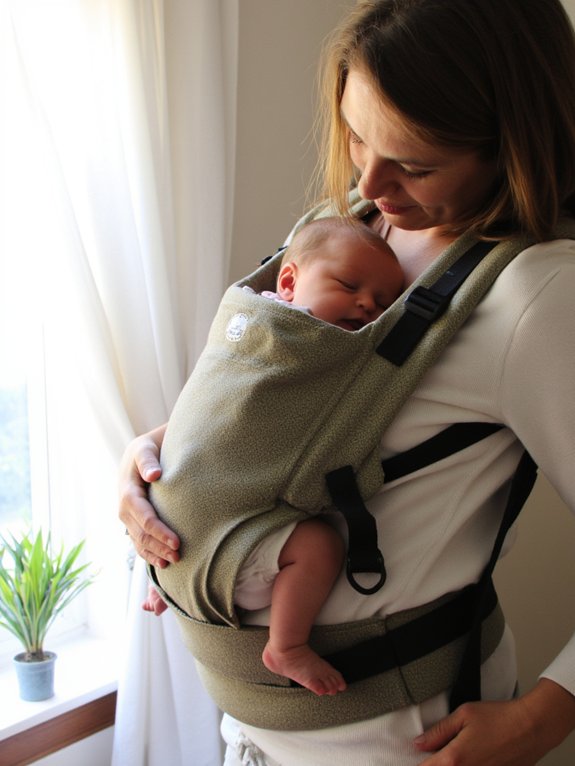
When carrying your preemie, supporting their head and neck is essential since their muscles are still developing.
You’ll want to make certain their hips and spine are properly aligned in an ergonomic position, like the “M position,” to promote healthy growth.
Keeping these elements in check helps your baby stay comfortable and safe while you bond.
Ergonomic Carrying Positions
Although carrying a preemie requires extra care, choosing an ergonomic position guarantees your baby's safety and comfort.
Ergonomic carrying positions focus on supporting your baby’s natural posture while reducing strain on both of you. When you use adjustable carriers, you can customize the fit to maintain ideal positioning.
Remember to always:
- Support the baby's spine in a gentle curve to mimic their natural resting shape
- Position knees higher than the bottom to promote healthy hip development
- Follow the TICKS guideline: Tight, In view, Close enough to kiss, Keep chin off chest, Supported back
- Make sure the carrier allows easy adjustments for comfort and safety
- Prioritize positions that reduce stress on your baby’s delicate body
Head and Neck Support
Because preemies have underdeveloped neck muscles, providing proper head and neck support in baby carriers is essential to prevent injury and guarantee comfort.
When babywearing, make certain your carrier offers firm yet gentle head and neck support, keeping your baby’s airway clear and chin off the chest.
Safe positioning means supporting their fragile necks while allowing natural movement.
Carriers like stretch wraps and ring slings excel here, molding snugly around your preemie to maintain a secure, froggy-like position.
This support reduces strain and promotes healthy posture.
Always check that the carrier facilitates safe positioning tailored to your baby’s size and needs.
Consulting a trained babywearing expert can help you find the right fit, making sure your preemie stays safe, comfortable, and well-supported during every carry.
Hip and Spine Alignment
Guaranteeing proper hip and spine alignment in baby carriers plays a vital role in preventing hip dysplasia and supporting your preemie's healthy development.
When choosing a carrier, focus on safe positioning that promotes ergonomic positioning for both your baby and you. Here’s what to keep in mind:
- Position your baby in the "M position," with knees higher than the bottom, supporting legs from knee to knee.
- Ascertain the spine remains gently curved, mimicking their natural held position.
- Keep your preemie's airway clear and unobstructed at all times.
- Use carriers with adjustable features to customize fit and support safe positioning.
- Follow manufacturer guidelines on weight limits and age appropriateness for healthy development.
- Many modern baby carriers, such as the Momcozy, offer built-in lumbar padding and padded leg openings to further support healthy hip and spine alignment for both babies and parents.
The TICKS Guideline for Safe Babywearing Practices
When you carry your preemie using the TICKS guideline, you prioritize their safety and comfort by keeping them chest-to-chest with you and their face visible at all times.
This position prevents airway obstruction, essential for preemies with weaker neck control. Confirm their chin stays off their chest to maintain clear breathing.
The carrier should support your baby from knee to knee, encouraging healthy hip positioning and a tucked pelvis, which supports their natural spinal curve.
Regularly check that your baby isn’t slumping to avoid suffocation risks.
Following the TICKS guideline guarantees you practice safe babywearing practices that protect your tiny one’s delicate development while strengthening your bond.
Your attentiveness creates a secure, nurturing environment for your preemie.
When to Start Babywearing Your Preemie
Although every preemie's readiness varies, you can usually start babywearing once your little one is healthy enough to come home; just be certain to consult your medical team for tailored guidance.
Knowing when to start babywearing helps guarantee your preemie’s safety and comfort. Here are key points to take into account:
Knowing when to start babywearing ensures your preemie's safety, comfort, and well-being throughout the experience.
- Begin babywearing when your preemie is awake, alert, and can maintain head and neck support.
- Choose carriers designed with safety features ideal for preemies—open hip seat carriers are often best.
- Watch closely for any signs of discomfort; remove your baby immediately if they seem unsettled.
- Work with a trained babywearing consultant to select a carrier that fits your preemie's unique needs.
- Always prioritize your preemie's health and your medical team’s advice when deciding when to start babywearing.
Comparing Wraps, Slings, and Structured Carriers for Tiny Babies
Since your preemie’s comfort and safety come first, choosing the right type of carrier can feel overwhelming.
Wrap carriers like the Boba Wrap offer snug, froggy-like support perfect for tiny babies, ensuring excellent neck and spine alignment.
Baby ring slings may seem convenient, but they often run large and require careful use to keep your preemie safe and comfortable.
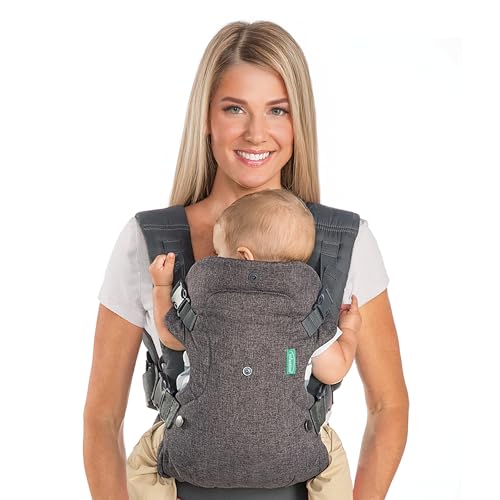
Structured carriers generally need a minimum weight of 3 to 3.5 kg, so they mightn't suit very small infants.
However, the Tushbaby Hip Seat Carrier stands out with its open design, reducing suffocation risk while supporting healthy hip positioning.
Prioritize carriers that maintain a gentle spine curve and knee-to-knee support to nurture your baby’s development effectively and lovingly.
Tips for Babywearing After a Caesarean Section
Before you start babywearing after a Caesarean Section, you should consult your healthcare provider to confirm that your body is ready and to discuss any precautions.
Consult your healthcare provider before babywearing post-Caesarean to ensure safe and comfortable recovery.
When carrying your baby, prioritize comfort and support to protect your healing incision. Consider these tips:
- Choose a structured carrier with wide waistbands to support your back and abdomen.
- Begin with short babywearing sessions to gradually build tolerance.
- Opt for carriers that allow a front-facing position to reduce strain.
- Verify the carrier is easily adjustable for a snug fit without pressure.
- Pay close attention to any discomfort, and stop if you feel pain.
Many structured carriers, such as the Ergobaby Omni Deluxe, offer padded lumbar support to help distribute weight evenly and minimize strain during your recovery.
A thoughtful approach to babywearing helps you nurture your little one safely while respecting your recovery.
How to Choose the Right Carrier Based on Your Baby’s Growth and Needs
Choosing the right carrier for your preemie depends heavily on their growth and specific needs, especially given their delicate development.
Prioritize a baby carrier that offers excellent head and neck support to protect your little one’s fragile condition. Look for carriers like ring slings or stretch wraps that encourage a froggy-like position, important for healthy hip development.
Check the minimum weight requirements, ensuring the carrier suits your baby’s current size. Adjustability is vital—it allows the carrier to grow with your baby and adapt to different carrying positions as they develop.
Always consult safety guidelines and seek advice from your pediatrician or a babywearing consultant to choose a carrier that supports your baby’s unique needs confidently and safely.
Frequently Asked Questions
Can You Use a Baby Carrier With a Preemie?
You can use a baby carrier with a preemie by following safety guidelines and choosing carrier types offering head support. Prioritize comfort considerations, consult your pediatrician, and learn from parent experiences to guarantee your baby's safety and bonding.
How to Carry a Premature Baby?
When carrying a premature baby, don’t bite off more than you can chew—prioritize skin to skin contact for developmental benefits, choose the right sizes, and follow safety precautions to support their delicate needs with love and care.
Can a Baby Be Too Small for a Carrier?
Yes, your baby can be too small for certain carriers due to weight limits. Prioritize preemie safety by choosing appropriate carrier types and using correct positioning techniques to guarantee proper support, especially for tiny, fragile infants.
Will Preemie Babies Always Be Small?
Imagine an old clock steadily ticking—like growth patterns in preemies, they vary. With attentive preemie care, proper nutrition, and monitoring developmental milestones, your baby’s weight gain often normalizes, so they won’t always remain small.
Final Thoughts
Choosing the right baby carrier for your little one, especially a preemie or small baby, is a gentle step toward nurturing their delicate beginnings. By focusing on safety, comfort, and supportive design, you’re creating a cozy haven that welcomes both you and your baby. Remember, every tiny milestone deserves thoughtful care, and with the right carrier, you’ll foster a bond that’s as tender as it is strong—guiding your baby’s growth with confidence and love.
If you want to know other articles similar to Best Baby Carriers for Preemies and Small Babies you can visit the Baby Carriers category.
Best Baby Carriers for C-Section Moms
What Are the Best Soft Structured Baby Carriers?

10 Best Affordable Baby Carriers Under $50

Best Baby Carriers for Breastfeeding On the Go

How to Choose the Best Baby Carrier for Back Support

What Baby Carrier Fits Dads With Broad Shoulders?

5 Best Baby Carriers for Toddlers Over 30 Pounds

Why Choose Lightweight Baby Carriers for Travel?

10 Best Baby Carriers for Hot Weather
This is also interesting