










How to Choose Baby Sleepers for High Beds

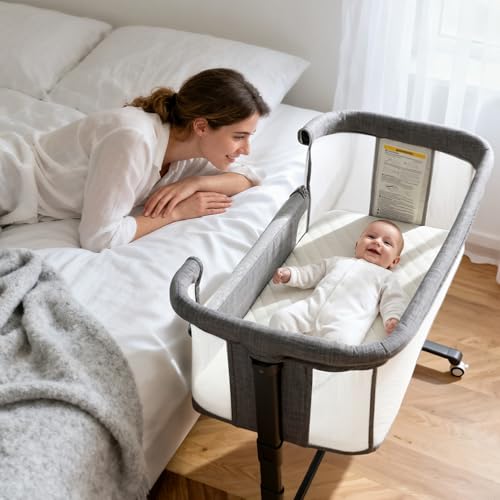
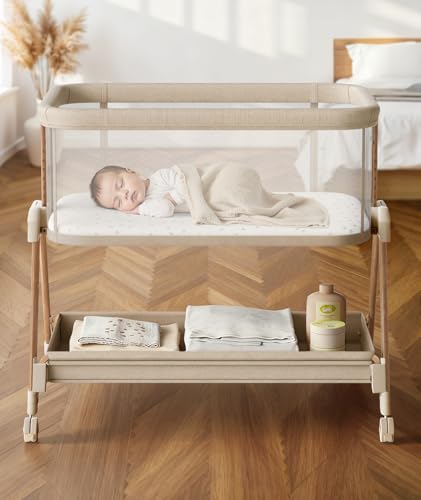
When choosing a baby sleeper for a high bed, you’ll want one with adjustable height settings that align perfectly with your mattress, eliminating any risky gaps. Look for secure attachments to keep the bassinet steady and breathable mesh sides for airflow and safety. Materials should be soft, hypoallergenic, and easy to clean. Stability and portability matter, too, especially if you move the sleeper often. Keep these basics in mind to create a safe, comfortable sleep space for your baby and discover which specific features make the best fit.
Table
- Main Points
- Understanding the Importance of Proper Bassinet Height Alignment
- Key Safety Features for Baby Sleepers on High Beds
- Adjustable Height Bassinets: Benefits and Options
- Material and Design Considerations for Breathability and Comfort
- Portability and Stability Factors to Consider
- Maintenance Tips for Bassinets Used With Tall Beds
- Frequently Asked Questions
- Final Thoughts
Main Points
- Choose adjustable height sleepers to align the bassinet surface with the adult mattress, eliminating dangerous gaps.
- Ensure the sleeper securely attaches to the bed with stable straps and plates to prevent tipping or separation.
- Select models with breathable mesh sides for enhanced airflow, visibility, and reduced overheating risks.
- Opt for lightweight, foldable or wheeled bassinets to facilitate easy movement and maintain stability on high beds.
- Regularly inspect attachment mechanisms and mattress condition to ensure ongoing safety and hygiene.
Understanding the Importance of Proper Bassinet Height Alignment
When you choose a bassinet for your high bed, ensuring proper height alignment is essential for safe co-sleeping.
Proper bassinet height alignment means the sleeping surface matches the adult mattress level, eliminating dangerous gaps where your baby could get stuck.
Aligning the bassinet surface with your mattress eliminates gaps and keeps your baby safe and secure.
The American Academy of Pediatrics highlights the importance of adjustable height co-sleepers, especially for beds over 24 inches high. Breathable mesh walls are also a key feature recommended for temperature regulation and increased safety, as they provide better airflow and help prevent overheating.
You’ll want to measure your bed from floor to mattress top carefully to pick a model that fits securely.
A bassinet that attaches firmly to your bed stabilizes the co-sleeper, reducing risks of shifting during sleep.
Choosing a bassinet designed with stable sides and adjustable height not only meets safety standards but also helps you create a safer, more comfortable sleep environment for your baby and family.
Key Safety Features for Baby Sleepers on High Beds
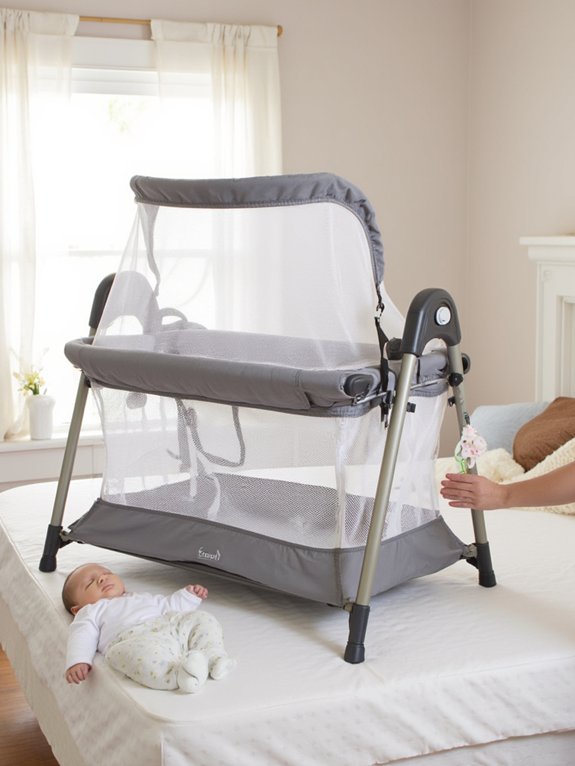
When choosing a baby sleeper for a high bed, you’ll want one with adjustable height settings to guarantee it aligns perfectly with your mattress, preventing dangerous gaps.
Make certain it securely attaches to the adult bed to avoid any movement or separation during use.
These features are vital for keeping your baby safe and comfortable throughout the night.
Additionally, look for models with breathable mesh sides to enhance airflow and visibility, which can further support your baby's safety and comfort.
Adjustable Height Mechanisms
Because baby sleepers need to align securely with high beds, adjustable height mechanisms play an essential role in keeping your little one safe and within easy reach.
Co-sleepers and bedside sleepers designed with adjustable height features allow you to customize the sleeper’s height to match your adult mattress, especially for beds over 24 inches.
This snug fit reduces dangerous gaps, ensuring your baby stays secure throughout the night.
These mechanisms also help maintain stability and minimize movement risks, meeting the stringent safety standards recommended by the AAP.
By choosing a baby sleeper with adjustable height, you’re investing in a product that adapts to your unique bed setup while prioritizing your infant’s safety and your peace of mind during nighttime care.
Secure Bed Attachment
Securing your baby sleeper firmly to a high bed is vital for your infant’s safety and your peace of mind.
You want to guarantee a secure bed attachment using robust straps and plates that eliminate any gaps between the sleeper and adult mattress.
Choose a model with a height adjustable feature to align perfectly with your bed, creating a snug fit that minimizes fall risks.
Prioritize sleepers with stable bases designed to prevent tipping, especially important on elevated beds.
Always check for safety certifications from recognized organizations to confirm the sleeper meets rigorous standards for high-bed use.
Regularly inspect all attachment mechanisms for wear and stability, guaranteeing continuous protection as your baby grows and moves.
This careful approach helps you serve your baby’s safety needs with confidence.
Adjustable Height Bassinets: Benefits and Options
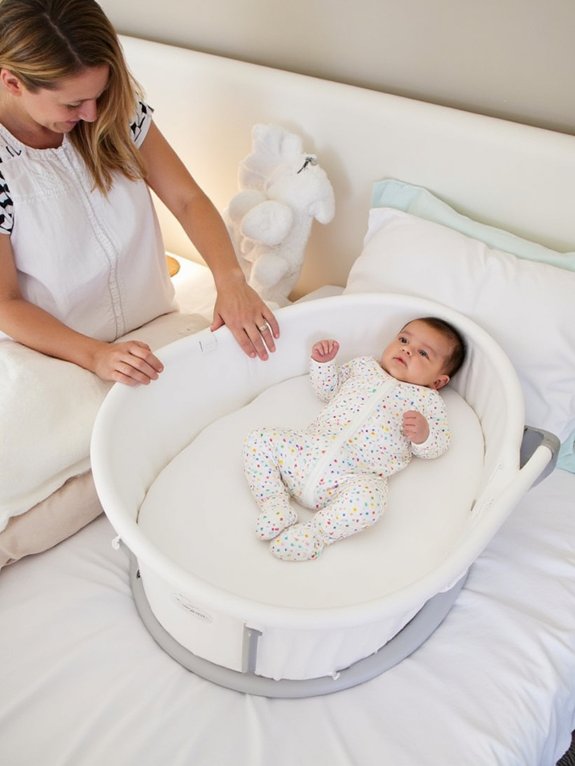
Although choosing the right baby sleeper for a high bed can feel challenging, adjustable height bassinets offer a practical solution that adapts to your specific setup.
These bassinets guarantee a secure fit alongside adult mattresses, making co-sleeping arrangements safer and more comfortable. With height adjustments, you can align the bassinet seamlessly with beds over 24 inches high, giving you easy access during nighttime feedings or diaper changes without straining your back. Many models also feature breathable mesh panels to enhance airflow and allow you to easily keep an eye on your baby, which further increases safety and peace of mind.
Models like the Arm’s Reach Clear-Vue Co-Sleeper highlight this flexibility, accommodating various bed heights. Investing in adjustable height bassinets also supports your baby’s growth, allowing the bassinet to adapt as they shift through different sleep stages.
This makes them a thoughtful, evidence-based choice for parents prioritizing safety and convenience.
Material and Design Considerations for Breathability and Comfort

When choosing a baby sleeper for a high bed, you want materials and designs that keep your little one comfortable and safe throughout the night.
Prioritize breathability by selecting sleepers made from cotton or those featuring mesh sides, which promote air circulation and help regulate temperature. For added peace of mind, consider options that have fully washable components, which make it easier to maintain hygiene and freshness.
Hypoallergenic materials are essential to minimize allergic reactions and create a safe sleep environment, especially for sensitive infants.
Ascertain the mattress inside the sleeper offers proper firmness, providing a flat, stable surface that aligns with safe sleep practices and reduces suffocation risks.
Ensure the mattress is firm and flat to support safe sleep and prevent suffocation risks.
Also, look for machine-washable fabrics that maintain their breathability and comfort after frequent cleaning.
By focusing on these material and design considerations, you can confidently support your baby’s health and well-being while they rest on a high bed.
Portability and Stability Factors to Consider

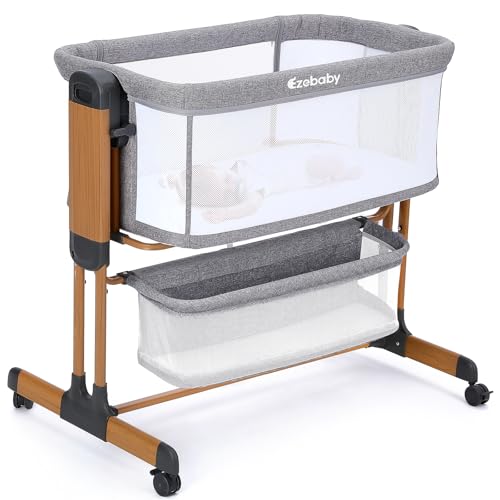
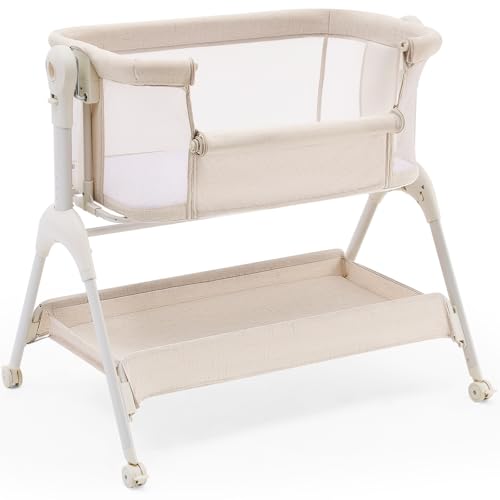
Because safety and convenience go hand in hand, focusing on portability and stability is essential when choosing a baby sleeper for high beds. You’ll want a model with adjustable height to securely align the sleeper with your bed, preventing gaps that could compromise stability. Co-sleepers with leg extensions suit beds higher than 24 inches, ensuring a safe fit. Portability matters too—lightweight, foldable sleepers make moving between rooms simple, easing nighttime care. Some bassinets even feature wheels for effortless transport. Stability is critical; choose a sleeper with a robust base and anti-tip features to reduce accident risks, especially on tall beds. Bassinet models like the Besrey Baby Bassinet Bedside Sleeper combine secure brakes and universal casters to offer both stability and easy mobility, making them an ideal choice for parents with high beds. Balancing portability with solid stability helps you care for your baby confidently, keeping both convenience and safety in perfect harmony.
Maintenance Tips for Bassinets Used With Tall Beds
You’ll want to keep a regular cleaning routine to guarantee the bassinet stays free from allergens and germs.
Check the attachment points often to make certain the co-sleeper remains securely fastened to your tall bed.
Also, care for the fabric and mattress by keeping them clean and making sure the mattress fits snugly for your baby’s safety.
Regular Cleaning Routine
Although maintaining a bassinet used with tall beds can seem challenging, establishing a regular cleaning routine is crucial for your baby’s safety and comfort. You should follow a strict cleaning schedule—ideally weekly—to keep the bassinet hygienic and aligned with safe sleep recommendations. Clean removable fabric parts like the mattress pad by machine washing, and wipe hard surfaces with a gentle, non-toxic cleaner. Regularly inspect the crib for loose parts or wear, especially since tall beds can increase dust accumulation. Replace the mattress if it shows wear or stains to guarantee a firm and clean sleep surface.
| Task | Frequency |
|---|---|
| Wash mattress pad | Weekly |
| Wipe hard surfaces | Weekly |
| Inspect bassinet parts | Weekly |
Secure Attachment Checks
When using a bassinet with a high bed, it’s crucial to regularly check that the attachment system remains secure and stable. You should guarantee a secure attachment by verifying the stable strap and plate system firmly connects the bassinet to the bed, preventing any gaps or movement. Pay special attention to the bassinet height, making sure it aligns with the mattress level to avoid dangerous gaps. Conduct routine safety checks by inspecting attachment points and hardware for wear or loosening. Always follow the manufacturer’s installation guidelines carefully to maintain ideal safety. These steps help you protect your baby by keeping the bassinet stable and preventing tipping or wobbling, especially when placing or removing your little one from the bassinet. For added peace of mind, regularly check the secure locking mechanism to ensure the bassinet stays firmly in place and meets recommended safety standards.
Fabric and Mattress Care
After confirming your bassinet is securely attached to a high bed, maintaining the fabric and mattress becomes your next priority to keep your baby safe and comfortable.
Choose a hypoallergenic, breathable mattress to reduce allergy risks and promote restful sleep, especially for sensitive skin. Always use a fitted sheet designed for your bassinet’s mattress size to guarantee a snug fit, preventing any gaps that could compromise safety. For added peace of mind, select a mattress with CertiPUR-US certification to ensure it is free from harmful chemicals and meets high safety standards.
Regularly inspect the fabric for wear or loose threads, as damaged material can pose hazards. Prioritize easy cleaning by selecting a mattress cover that’s removable and machine-washable, since spills and leaks happen often.
Clean and disinfect all fabric and mattress surfaces frequently to minimize germs and allergens, safeguarding your baby’s health and comfort throughout the night.
Frequently Asked Questions
Should the Bassinet Be Higher Than the Bed?
You shouldn’t let the bassinet height exceed the bed’s surface; it risks bed safety and baby sleeping quality. Matching heights supports parent comfort, eases sleep training, and guarantees secure, safe interactions during those precious nightly moments.
When to Lower the Baby Bed?
You should lower the baby bed height once your baby can sit up or pull to stand, following bed change tips. This guarantees baby sleep safety and creates a secure infant sleep environment aligned with safe sleeping practices.
How to Choose a Co-Sleeper?
You’ll want to focus on co sleeper safety, materials, and features like breathable mesh sides. Understanding co sleeper styles helps you find the right fit, while benefits include easier nighttime care and secure bonding with your baby.
When to Move Baby Out of Bedside Sleeper?
You should move your baby out of the bedside sleeper around 4 to 6 months, prioritizing baby safety, infant comfort, and sleep shift. Consider your parent preferences while ensuring they’ve outgrown the sleeper and meet developmental milestones.
Final Thoughts
Choosing the right baby sleeper for a high bed isn’t just about convenience—it’s about creating a safe haven, much like the gentle hug of a mother’s arms. By focusing on proper height alignment, sturdy design, and breathable materials, you’re giving your baby comfort and security. Remember, just as Goldilocks sought what was “just right,” you deserve a sleeper that fits perfectly—protecting your little one while giving you peace of mind every night.
If you want to know other articles similar to How to Choose Baby Sleepers for High Beds you can visit the Bassinets category.
How to Choose an Organic Non-Toxic Sleep Space

What Are the Best Sleep Solutions for Twins?

What Are the Safest Sleep Practices for Infants?

5 Best Sleep Solutions for C-Section Moms

Bassinet Vs Crib: Best Sleep Option for Newborns

Best Portable Bassinets for Travel in 2024

How to Choose a Modern Baby Sleeper

How to Choose the Best Bassinet for Small Spaces

5 Best Stroller-Compatible Sleep Solutions for Newborns
This is also interesting