






How to Choose Car Seats for Preemies

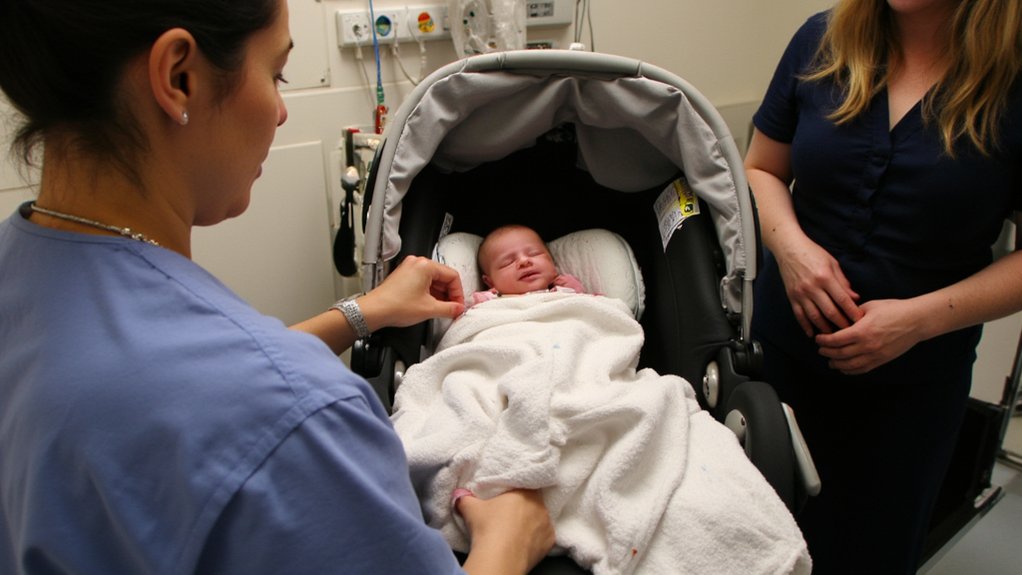
When choosing a car seat for your preemie, prioritize models with ultra-low harness heights (under 5 inches) and close crotch buckles to prevent slumping and protect fragile airways. Make certain the seat reclines up to 45 degrees and offers supportive, safe inserts. Always install the seat rear-facing with properly aligned harness straps. Confirm your baby passes a car seat challenge test to monitor breathing and oxygen levels. For detailed guidance on installation, safety checks, and alternatives like car beds, keep exploring expert advice.
Table
- Main Points
- Key Features of Car Seats Suitable for Preemies
- Top Recommended Car Seat Models for Preemies
- Understanding the Car Seat Challenge Test for Premature Infants
- Proper Installation Techniques for Preemie Car Seats
- Safety Considerations and Special Precautions for Preemie Travel
- When to Consider Using a Car Bed Instead of a Car Seat
- Resources and Support for Parents of Preemies Using Car Seats
- Frequently Asked Questions
- Final Thoughts
Main Points
- Choose infant car seats with ultra-low harness heights under 5 inches for secure fit and reduced slumping risk.
- Ensure the car seat has adjustable recline angles up to 45 degrees for safe and comfortable positioning.
- Look for models like Clek Liing, Chicco KeyFit 30, and Evenflo NurtureMax designed specifically for small preemies.
- Always perform or confirm a car seat challenge test to monitor oxygen levels and breathing before travel.
- Install the seat rear-facing with shoulder straps at or below the shoulders and crotch buckle close to prevent slumping.
Key Features of Car Seats Suitable for Preemies
When choosing a car seat for your preemie, you'll want to focus on features that guarantee both safety and comfort for their delicate size.
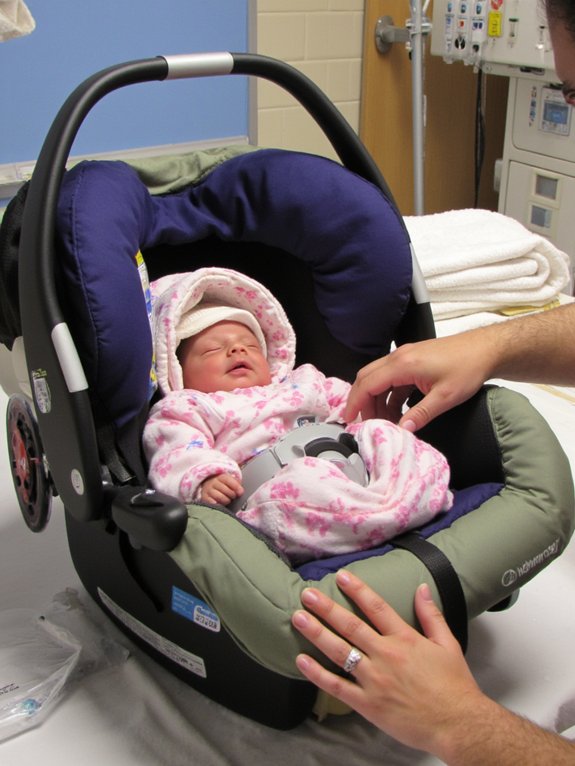
Preemie car seats must have a low harness height, ideally less than 5 inches from the bottom, to securely accommodate infants weighing as little as 4-5 pounds.
A close crotch buckle is critical—it minimizes slumping and keeps your baby's body aligned with the harness, enhancing protection.
Look for a flat backrest to prevent the head from pushing forward, which is essential for tiny airways.
The adjustable recline angle, up to approximately 45 degrees, allows you to position your newborn safely and comfortably during travel.
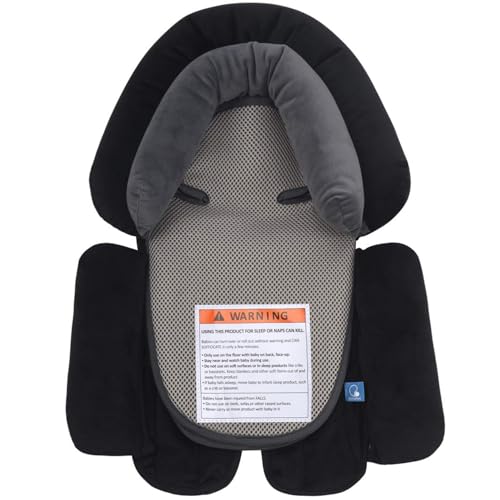
Supportive inserts may help improve fit, but always prioritize safety features above all.
Top Recommended Car Seat Models for Preemies
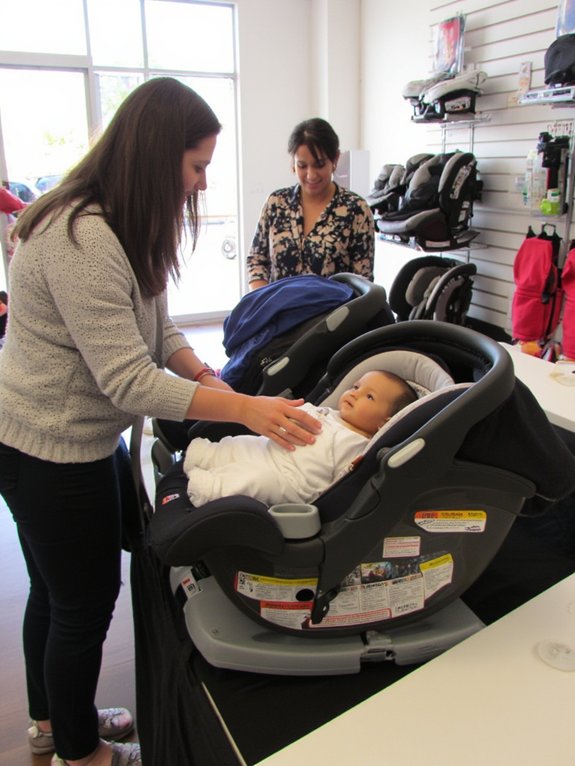
Although selecting a car seat for your preemie can feel overwhelming, focusing on models designed with ultra-low harness heights and supportive inserts guarantees maximum safety and comfort.
To Keep Your Baby Safe, prioritize infant car seats that fit small babies well and offer precise adjustment options.
- Clek Liing: With an ultra-low harness height starting at 4 pounds, it assures a secure, comfortable fit tailored for preemies.
- Chicco KeyFit 30: Features supportive head and body inserts for enhanced protection, accommodating infants from 4 to 30 pounds.
- Evenflo NurtureMax: An affordable choice with a harness height of just 4 inches, designed specifically to fit small babies well.
Choosing from these top recommended models helps you confidently Keep Your Baby Safe on every ride.
Understanding the Car Seat Challenge Test for Premature Infants
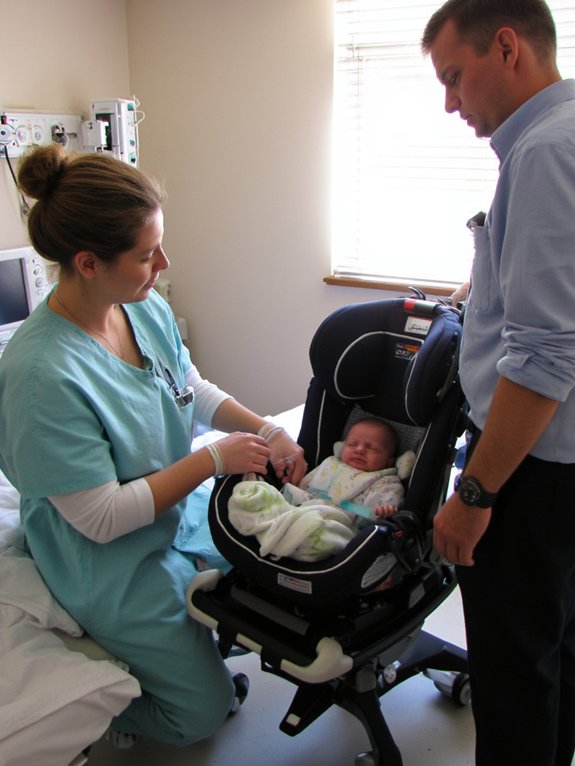
Since premature infants face unique respiratory challenges, healthcare providers perform the car seat challenge test to guarantee your baby can safely tolerate the semi-reclined position during car travel. This test monitors your preemie’s oxygen levels, heart rate, and breathing patterns for at least 90 minutes in infant seats designed for car seat safety. Passing this test is essential before discharge, ensuring your baby’s comfort and security during trips.
| Test Aspect | Purpose |
|---|---|
| Oxygen Levels | Confirm adequate oxygenation |
| Heart Rate | Detect irregularities or distress |
| Respiratory Stability | Assess tolerance to seat position |
If your baby struggles, the test repeats or alternative transport methods are advised to protect your preemie’s well-being.
Proper Installation Techniques for Preemie Car Seats
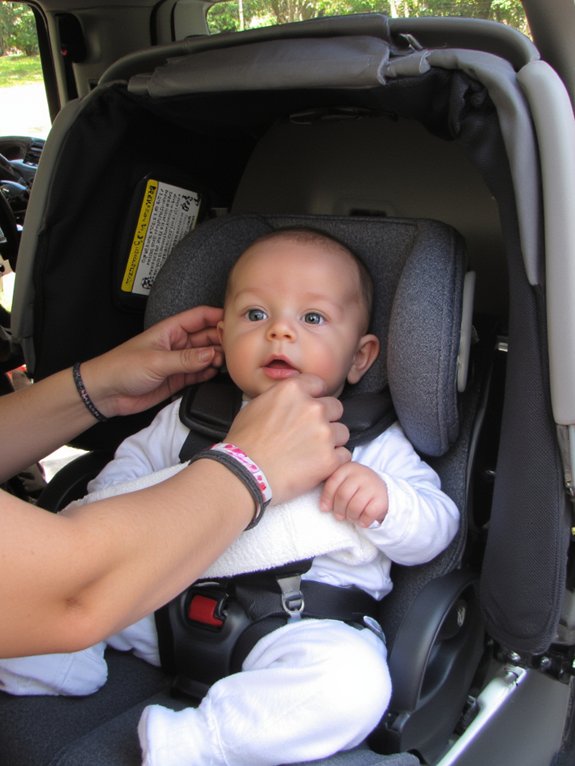
Confirming your preemie's car seat is installed correctly demands careful attention to specific measurements and positioning tailored to their size and developmental needs.
For proper installation of a rear-facing car seat designed for small newborns, focus on these critical points:
- Position the car seat strictly rear-facing until your infant reaches the manufacturer’s size limits, enhancing head and neck protection.
- Adjust the crotch strap to less than 5.5 inches to prevent slumping, and set lower harness straps less than 10 inches from the seat bottom for a secure fit.
- Verify shoulder straps align at or just below the baby’s shoulders, using the lowest harness height.
Always consult the manufacturer’s guidelines and double-check stability to maintain peak safety for your preemie.
Safety Considerations and Special Precautions for Preemie Travel
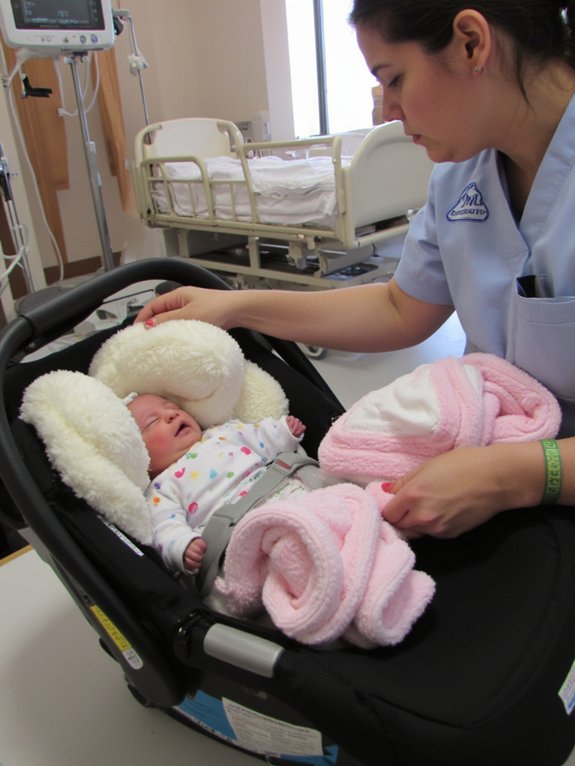
When traveling with your preemie, you must prioritize their unique respiratory and developmental needs to maintain safety throughout the journey.
Confirm your infant undergoes a car seat challenge test before discharge to verify stable oxygen levels when seated.
Select a car seat with a harness height under 5 inches from the base to prevent slumping and provide proper support.
Always install the car seat rear-facing, positioning shoulder straps at or below your preemie's shoulders for maximum safety.
Avoid using add-on inserts not approved by the manufacturer, as they can compromise fit and protection.
For preemies with respiratory complications, discuss the option of a car bed with your healthcare provider, as it allows safer, flat positioning during travel.
Prioritizing these safety measures protects your vulnerable infants effectively.
When to Consider Using a Car Bed Instead of a Car Seat
If your preemie struggles to maintain stable oxygen levels or breathing while seated, a car bed might be the safer choice over a traditional car seat.
Car beds allow infants to lie flat, which is critical for preemies with respiratory or neurological concerns.
Consider a car bed if:
Consider a car bed if your preemie struggles with breathing or falls outside traditional car seat guidelines.
- Your preemie fails the car seat challenge test, indicating breathing instability when upright.
- Your infant weighs between 4 and 15 pounds, matching typical car bed weight limits.
- Safety recommendations from your healthcare provider or manufacturer advise against traditional car seats.
Car beds secure using seatbelts or the LATCH system, accommodating various vehicles.
Always follow specific manufacturer guidelines to guarantee ideal safety for your preemie’s unique needs during travel.
Using the correct device demonstrates your commitment to protecting these vulnerable infants.
Resources and Support for Parents of Preemies Using Car Seats
You can access detailed safety guidelines like the "Travel Safe: Preterm Infants" fact sheet to guarantee proper car seat use for your preemie.
Educational videos and resources, including the Infant Car Seat Buying Kit, help you select and install the right seat confidently.
Additionally, affiliate purchasing options streamline finding approved products tailored to your baby’s specific needs.
Educational Content Access
How can you guarantee your premature infant travels safely and comfortably in a car seat? Access to precise educational resources is essential.
Hospitals conduct car seat tolerance screenings to evaluate your preemie’s response to travel restraints before discharge. To further support you, consider these steps:
- Utilize multilingual fact sheets like "Travel Safe: Preterm Infants" for evidence-based guidance on safe travel practices.
- Explore instructional videos on platforms such as YouTube demonstrating correct Infant Car Seat installation and adjustments tailored for preemies.
- Leverage the Infant Car Seat Buying Kit to identify models meeting safety standards for low-birth-weight infants.
Engaging with community forums also offers practical insights from other parents, enhancing your confidence and ability to serve your preemie's unique needs effectively.
Safety Guidelines Availability
Access to clear safety guidelines and supportive resources empowers parents to navigate the challenges of transporting premature infants securely.
You can rely on materials like the "Travel Safe: Preterm Infants" fact sheet, available in multiple languages, which outlines critical safety guidelines tailored for preemies.
Hospitals often perform car seat tolerance screenings to assess your infant’s response and guarantee safe positioning before discharge.
Online platforms, including YouTube, provide practical demonstrations on proper car seat use.
Additionally, the Infant Car Seat Buying Kit helps you select a car seat that fits your preemie’s unique needs, especially if medical conditions affect usage.
Collaborating closely with healthcare professionals guarantees you receive personalized instructions, enabling you to protect your infant effectively during travel.
Affiliate Purchasing Options
Maneuvering the array of car seats suitable for premature infants can be overwhelming, but affiliate purchasing options simplify this process by connecting you directly to trusted products.
These affiliate links offer practical support, ensuring you access car seats designed specifically for preemies' unique needs. For families considering long-term investments, some car seats offer extended use and adjustable features to accommodate children as they grow, providing both safety and cost-effectiveness. To make informed decisions, consider these resources:
- Utilize the Infant Car Seat Buying Kit for detailed guidance tailored to low-birth-weight babies.
- Access multilingual educational materials like the "Travel Safe: Preterm Infants" fact sheet to understand safety standards.
- Explore community recommendations highlighting brands such as Chicco and Evenflo, which accommodate infants as small as 3 pounds.
[affiai keyword="car seats for premature infants" template="carousel" count="7"
Frequently Asked Questions
Do Preemies Need Special Car Seats?
You’ll prioritize preemie safety by selecting appropriate car seat types that meet car seat regulations. Guarantee proper positioning, especially with low harness heights, and consult healthcare providers to confirm your preemie's specific needs for safe travel.
How Should Preemie Look in a Car Seat?
You’ll guarantee preemie positioning maintains a neutral head, harness snug at or below shoulders, and straps aligned. Prioritize car seat safety with infant support inserts and recline under 45 degrees—essential travel tips for secure, comfortable rides.
What Is the Car Seat Challenge for Premature Babies?
Think of the car seat challenge as a safety checkpoint. You monitor oxygen levels and preemie positioning closely, following pediatric recommendations to guarantee car seat safety, confirming your premature baby's comfort and well-being during travel.
How to Fit a Preemie in a Car Seat?
You’ll use fitting techniques like adjusting harness straps and crotch height, choose car seat types meeting safety regulations, and add support inserts to keep your preemie secure and comfortable, ensuring proper alignment and protection during travel.
Final Thoughts
Choosing the right car seat for your preemie might feel like solving a complex puzzle—because it is. But don’t worry, you’re not alone in maneuvering this critical safety step. With the right features, proper installation, and understanding tests like the Car Seat Challenge, you’ll guarantee your tiny traveler is secure. Ironically, the smallest passengers demand the biggest attention, but your careful choices will make every trip safer and more comfortable for your preemie.
If you want to know other articles similar to How to Choose Car Seats for Preemies you can visit the Baby Car Seats category.
What Are the Best Baby Car Seats for Small Cars?
Why Choose Baby Car Seats Under $100?
How to Use Rotating Baby Car Seats Safely
Why Choose FAA Approved Car Seats for Airplanes?
10 Tips for Choosing the Best Convertible Car Seat
10 Tips for Rear Facing Car Seat Installation
What Are the Easiest Baby Car Seat Covers to Clean?
10 Tips for Choosing High Weight Limit Car Seats
Top 3 Baby Car Seats Compatible With Strollers
This is also interesting