


Top 5 Tips for Choosing a Crib Mattress


When choosing a crib mattress, make certain it fits snugly—no gaps wider than half an inch—and is firm to reduce risks like suffocation. Pick one made from safe, non-toxic materials with certifications like GREENGUARD Gold. Consider whether foam or innerspring suits your needs and if a dual-sided mattress offers longer use. Look for waterproof, easy-to-clean covers, and check the warranty to guarantee durability. Keep these points in mind, and you’ll be well prepared to select the best mattress for your baby.
Table
Main Points
- Ensure the mattress fits snugly with dimensions around 51.625 by 27.25 inches and a maximum gap of ½ inch.
- Choose a firm mattress with a maximum thickness of six inches to reduce suffocation and SIDS risks.
- Select mattresses made from certified, non-toxic, and allergen-free materials, avoiding vinyl, PVC, latex, or wool.
- Opt for waterproof, vinyl-free, and phthalate-free covers that are easy to clean and machine washable.
- Check for warranties, JPMA certification, and inspect durability regularly to ensure long-term safety and support.
Ensure Proper Mattress Fit and Firmness
When choosing a crib mattress, you need to confirm it fits snugly within the crib, measuring about 51.625 inches long by 27.25 inches wide, with no more than a ½-inch gap to prevent hazards.
A proper fit eliminates dangerous gaps where an infant could become trapped. Select a firm mattress that provides a firm surface, avoiding softness that can increase the risk of SIDS and suffocation. The mattress shouldn't indent under your baby's weight and must meet safety standards. For added peace of mind, look for CertiPUR-US certification to ensure the mattress is made without harmful chemicals and meets high safety criteria.
Choose a firm mattress that fits snugly to prevent gaps and reduce SIDS and suffocation risks.
Keep in mind the maximum thickness is six inches to maintain this proper fit and confirm infant sleep safety. Regularly test the crib mattress for movement and adjust as your baby grows, always prioritizing a secure, firm surface that supports safe, restful sleep.
Choose Safe and Certified Materials

Since your baby spends many hours sleeping, choosing a crib mattress made from safe, certified materials is essential to protect their health.
Look for mattresses with certifications like GREENGUARD Gold, CertiPUR-US, or GOTS, ensuring they meet strict safety and chemical flame retardant standards. For added peace of mind, consider mattresses that have regular safety testing and adhere to federal flammability standards.
Avoid crib mattresses containing vinyl or PVC, as these materials release toxic chemicals harmful to indoor air quality. Instead, opt for organic, non-toxic materials that reduce exposure to synthetic substances.
Prioritize allergen-free options, steering clear of latex or wool if your infant is sensitive.
Confirm the mattress complies with federal flammability standards using safe fire retardants to maintain safety.
By selecting certified, organic, and non-toxic crib mattress materials, you provide a healthier, safer sleep environment for your baby.
Consider Mattress Types and Dual-Sided Options

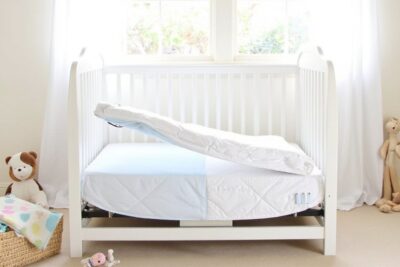
Selecting a crib mattress goes beyond choosing safe materials; understanding the types and features available helps you make the best choice for your baby's comfort and development. You’ll find foam and innerspring crib mattresses most common. Foam is lightweight and affordable but requires high-density material to meet safety guidelines and avoid risks. Innerspring offers durability and support, with firmness influenced by coil count. Dual-sided mattresses provide a firmer side for infants and a softer side for toddlers, adapting as your child grows. Many parents appreciate two-stage designs that allow a mattress to support children from infancy through toddlerhood, offering both safety and long-term value. Verify all mattresses meet standard dimensions (51.625" x 27.25" x max 6") for a snug, safe fit.
| Mattress Type | Firmness | Best For |
|---|---|---|
| Foam | High-density, firm | Infants |
| Innerspring | Depends on coil count | Support & durability |
| Dual-sided | Firm (infants)/Soft (toddlers) | Growing child |
Prioritize Waterproof Covers and Easy Cleaning
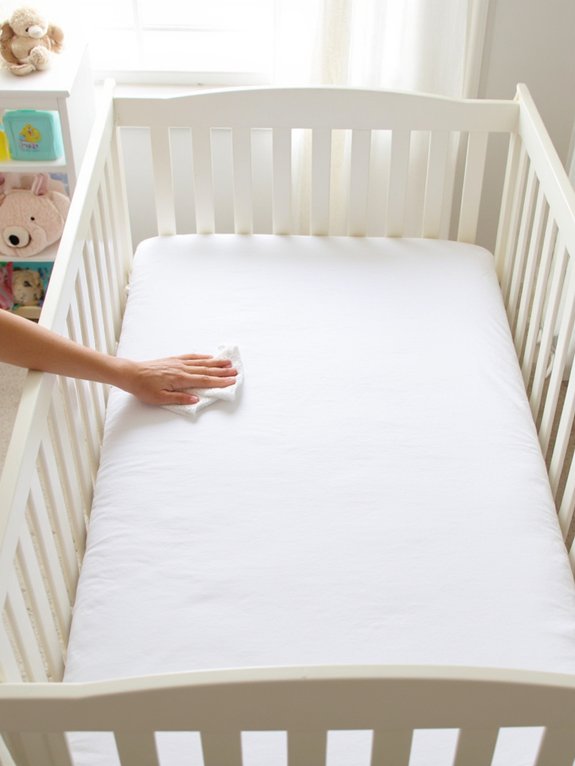
Although choosing the right crib mattress is essential, prioritizing a waterproof cover is equally important to protect against spills, diaper leaks, and accidents.
Waterproof mattress covers shield crib mattresses from diaper blowouts, preventing mold, bacteria, and allergens from developing inside.
Opt for vinyl-free and phthalate-free covers to guarantee a healthier sleep environment for your baby. These materials reduce exposure to harmful chemicals while maintaining durability.
For cleaning, choose covers that are machine washable or easy to wipe with mild soap and water, avoiding harsh chemicals that can degrade materials.
Regular cleaning helps control allergens and dust mites, enhancing overall infant health.
By selecting a protective, easy-to-clean cover, you’ll maintain a hygienic sleeping space, making care simpler and supporting your baby’s well-being every night.
Evaluate Warranty and Long-Term Durability
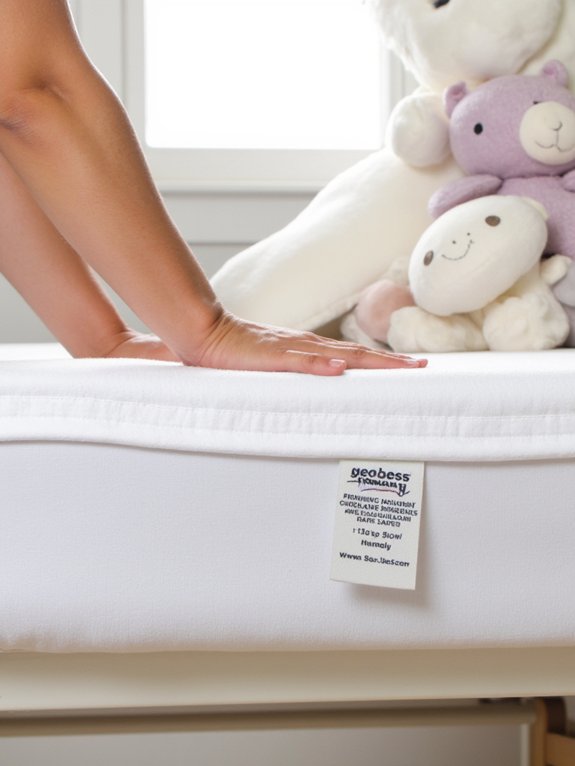
Protecting your crib mattress with a waterproof cover is just one aspect of guaranteeing a safe sleep environment.
To truly safeguard your baby, you need to evaluate the warranty and long-term durability. Look for a mattress with a warranty spanning from one year to lifetime—it reflects the manufacturer’s confidence in the materials and construction. When selecting a crib mattress, consider models that are JPMA certified to ensure they meet high safety standards as described for the Dream On Me Ivy Crib.
Innerspring mattresses often offer greater durability and support compared to foam, which may wear down faster. Consider brands that provide a satisfaction guarantee, so you can test the mattress and confirm it meets your safety and comfort standards.
Regularly inspect the mattress for wear or damage to guarantee consistent support.
- Choose a mattress with a solid warranty and clear return policy
- Prefer innerspring cores for enhanced durability and support
- Verify use of high-quality materials to prevent premature wear
- Opt for satisfaction guarantees to guarantee long-term safety and comfort
Frequently Asked Questions
How to Choose the Best Crib Mattress?
You should prioritize mattress firmness and safety standards, select hypoallergenic, breathable designs, and consider size options. Budget wisely for longevity, choose waterproof covers, and maintain proper cleaning to guarantee safe, comfortable sleep for your baby.
What to Avoid in a Baby Mattress?
Imagine a mattress soaked in toxic chemicals; avoid that! Steer clear of soft, non-breathable materials lacking safety standards, waterproof covers, and size compatibility. Prioritize firmness, hypoallergenic options, weight, breathability, and longevity for your baby's health.
Is Foam or Coil Better for Crib Mattress?
You’ll choose foam for better temperature regulation and hypoallergenic materials, but coil mattresses offer superior coil strength, mattress firmness, and durability factors. Compare foam density and weight distribution, check safety certifications, and consider price for your baby’s comfort.
What Is the Best Mattress to Avoid SIDS?
You should choose a firm mattress that fits snugly to support safe sleep practices and SIDS prevention strategies. Prioritize breathable materials, regulate temperature, follow mattress firmness guidelines, and maintain a safe infant sleep environment to reduce risk factors.
Final Thoughts
Choosing the right crib mattress is like laying a strong foundation for your baby’s comfort and safety. You’ll want to guarantee a snug fit and firm support, pick materials that are certified and safe, and consider options like dual-sided mattresses. Don’t forget waterproof covers for easy cleaning and check the warranty for long-lasting use. By paying attention to these details, you’re creating a secure, healthy sleep space your little one deserves.
If you want to know other articles similar to Top 5 Tips for Choosing a Crib Mattress you can visit the Crib Mattresses category.
Why a Firm Crib Mattress Is Safest for Babies
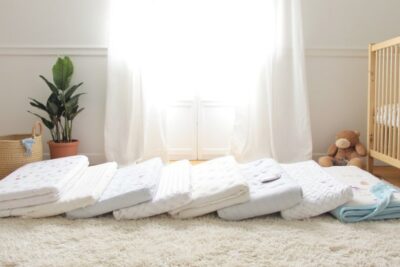
7 Best Crib Mattresses for Small Nursery Spaces
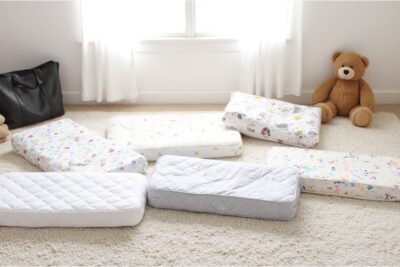
5 Best Portable Crib Mattresses for Travel
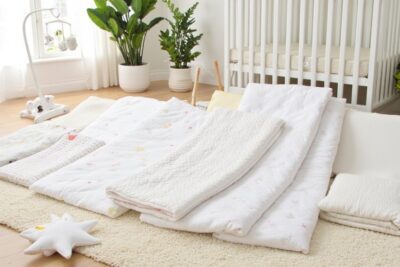
7 Top Greenguard Certified Crib Mattresses Tips
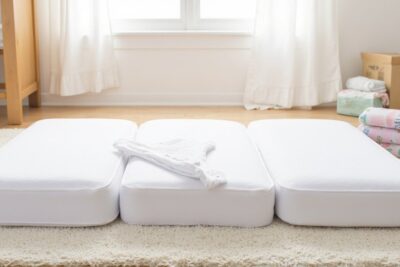
Best Crib Mattresses With Washable Covers
Best Dual Sided Crib Mattresses for Toddlers
7 Tips for Choosing a Crib Mattress for Reflux
Top Benefits of Bamboo Fiber Crib Mattresses
What Is the Best Hypoallergenic Crib Mattress?
This is also interesting