


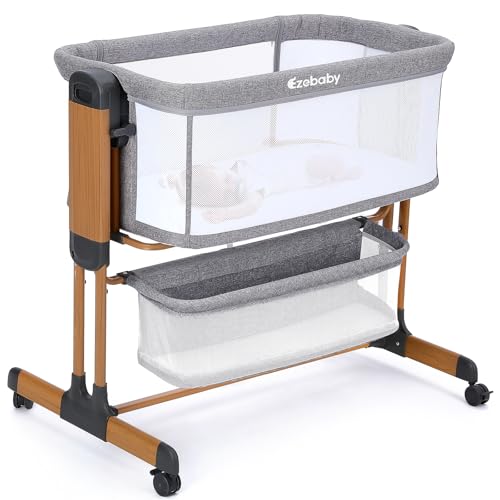



How to Choose a Co-Sleeper Bassinet for Newborns


When choosing a co-sleeper bassinet for your newborn, prioritize safety features like secure bed attachment, breathable mesh sides, and a firm, hypoallergenic mattress. Make certain adjustable height for convenient nighttime care and compatibility with your bed type. Consider portability if you plan to move it between rooms. Look for sturdy construction and compliance with safety standards to protect your baby. If you want to support closer, safer sleep and ease your caregiving, exploring these aspects deeper can guide your choice.
Table
- Main Points
- Understanding Co-Sleeper Bassinets and Their Benefits
- Key Safety Features to Look for in a Co-Sleeper Bassinet
- Assessing Size, Portability, and Compatibility With Your Bed
- Materials and Breathability Considerations for Newborn Sleep
- Adjustable Features and Ease of Use for Nighttime Care
- Comparing Popular Co-Sleeper Bassinet Models
- Tips for Transitioning Your Baby From a Co-Sleeper Bassinet
- Frequently Asked Questions
- Final Thoughts
Main Points
- Prioritize a co-sleeper bassinet with secure attachment straps to prevent gaps and ensure safe proximity to your bed.
- Choose breathable mesh sides or materials to enhance airflow and reduce suffocation risks for your newborn.
- Select adjustable height and lockable wheels for easy nighttime caregiving and stable positioning next to various bed types.
- Ensure the bassinet includes a firm, ASTM-standard mattress that fits snugly to avoid entrapment hazards.
- Opt for non-toxic, hypoallergenic materials that promote comfort and comply with current infant sleep safety standards.
Understanding Co-Sleeper Bassinets and Their Benefits
Co-sleeper bassinets offer a smart solution for parents who want to keep their newborn close without sharing the same sleep surface. Designed to attach securely to your bed, a co-sleeper bassinet guarantees safety while promoting room-sharing, a practice recommended by the American Academy of Pediatrics for at least six months.
With breathable mesh sides, these bassinets enhance airflow, reducing suffocation risks and providing peace of mind. Adjustable heights allow you to align the sleeping surface perfectly with your bed, making nighttime caregiving and breastfeeding easier without disrupting your rest. Many models now include C-section friendly design benefits that minimize strain for recovering parents, helping you care for your newborn comfortably during those important first nights.
Breathable mesh sides improve airflow, while adjustable heights ensure seamless bedside care and restful nights.
By choosing a co-sleeper, you create a safe, accessible environment that supports both your baby’s well-being and your own sleep quality, allowing you to serve your family with confidence and care.
Key Safety Features to Look for in a Co-Sleeper Bassinet

You need to choose a co-sleeper bassinet that securely attaches to your bed to eliminate dangerous gaps.
Make sure it features breathable materials like mesh sides to keep your baby safe and comfortable.
Also, check that the frame is sturdy and well-constructed to prevent any accidents while your newborn sleeps.
For added peace of mind, look for a bassinet that meets current infant sleep safety standards and uses non-toxic materials to prioritize your baby’s health.
Secure Bed Attachment
When securing a bassinet to your bed, it’s essential to confirm it stays firmly in place throughout the night.
Choose a co-sleeper bassinet with a secure bed attachment system featuring adjustable straps or brackets that fit various bed heights and types. This prevents gaps and guarantees stability, significant for your baby’s safety. Many modern bassinets also feature lockable wheels that enhance stability and prevent accidental movement during nighttime use.
Look for sturdy, lockable mechanisms that keep the bassinet from shifting unexpectedly, meeting recognized safety standards like ASTM or JPMA. A solid base and rigid sides protect against tipping and folding, reducing entrapment hazards.
Also, verify the mattress fit is snug within the frame to prevent gaps where your baby could become trapped.
Prioritizing these features helps you create a safe, reassuring sleep environment for your newborn.
Breathable Sleep Surface
A breathable sleep surface plays a crucial role in safeguarding your newborn's rest. When choosing a co-sleeper, prioritize breathable materials like mesh sides to enhance airflow and reduce SIDS risk. A firm mattress that fits snugly and meets ASTM standards is essential to eliminate gaps and safety hazards. The Newton Baby Bassinet’s Wovenaire mattress is a good example of a design that enhances airflow while maintaining firmness for safety. Verify the mattress is hypoallergenic, supporting a clean sleep environment. Avoid padded walls or soft bedding, which can impair breathability and increase danger. Regularly check for loose parts that might compromise your baby’s safety. Here’s what to focus on:
- Mesh sides or wooden slats for ideal airflow
- Firm, ASTM-compliant mattress without gaps
- Hypoallergenic materials free from harmful substances
- Absence of loose parts and padded walls
This approach helps you create a safe, breathable sleep space your newborn deserves.
Sturdy Frame Construction
Because your newborn’s safety depends heavily on the co-sleeper’s stability, choosing one with a sturdy frame construction is vital.
Look for a co-sleeper bassinet built from durable materials like solid wood or heavy-duty metal to guarantee long-lasting stability and prevent tipping. A wide base footprint enhances balance, while reinforced side walls securely attached to the frame prevent accidental folding during sleep. Choosing a model with an auto-lock wheel system can make it easier to move the bassinet while maintaining stability and safety for your baby.
Don’t overlook locking mechanisms on legs or wheels; these features keep the bassinet firmly in place, adding an extra layer of safety.
Finally, verify the co-sleeper meets recognized safety standards such as ASTM or JPMA, confirming it has undergone rigorous testing for frame strength and overall reliability.
Prioritizing these elements helps you create a secure sleeping environment for your newborn.
Assessing Size, Portability, and Compatibility With Your Bed

Although choosing a co-sleeper bassinet might seem straightforward, you’ll want to carefully assess its size, portability, and compatibility with your bed to guarantee safety and convenience.
Matching the co-sleeper’s adjustable height assures a seamless and secure attachment to your bed, meeting safety standards and preventing gaps that risk entrapment.
Consider the footprint carefully—some models provide added functionality but may obstruct pathways. Many parents appreciate that modern bassinets feature full-mesh sides to improve airflow and visibility, which enhances both safety and comfort for your baby.
Portability is key for easy movement, whether within your home or on the go.
Keep these points in mind:
- Adjustable height for compatibility with your bed
- Footprint size balancing space and functionality
- Portability features like wheels or lightweight design
- Secure attachment to meet safety standards
This thoughtful approach helps you serve your newborn’s needs confidently and safely.
Materials and Breathability Considerations for Newborn Sleep

You want to choose a co-sleeper bassinet made from breathable fabrics like mesh sides that improve airflow and keep your baby safe.
A firm mattress that fits snugly without gaps is essential to meet safety standards and reduce suffocation risks.
Prioritizing these materials helps create a secure, comfortable sleep environment for your newborn.
Additionally, choosing a bassinet with eco-friendly materials and design can further support your commitment to safety and sustainability in your baby's nursery.
Breathable Fabrics Importance
When selecting a co-sleeper bassinet, prioritizing breathable fabrics is essential to guarantee your newborn’s safety and comfort.
Breathable fabrics improve airflow, considerably reducing suffocation risk and complying with safe sleep guidelines. To create a healthy sleep environment, focus on these key aspects:
- Choose materials like organic cotton or mesh sides that promote ventilation without compromising ASTM standards for firmness and fit.
- Verify all fabrics and components are non-toxic and hypoallergenic to prevent allergic reactions.
- Prioritize easy cleaning and maintenance to avoid mold or bacteria buildup that can harm your baby.
- Confirm the bassinet’s design supports visibility for monitoring your infant safely through breathable fabric features.
Mesh Sides Benefits
Breathable fabrics form the foundation of a safe co-sleeper bassinet, but mesh sides take airflow and visibility to the next level.
Mesh sides greatly enhance breathability, allowing constant airflow around your newborn, which reduces risks of suffocation and overheating. This design also lets you easily monitor your baby, offering peace of mind while ensuring safe sleep. Many modern bassinets, such as the Jimglo 3 in 1, feature breathable mesh sides that not only improve airflow but also contribute to overall safety by making it easier for parents to observe their baby at any time.
Many mesh co-sleepers use hypoallergenic, moisture-wicking materials that keep the sleeping area dry and comfortable, essential for your infant’s well-being.
Additionally, mesh sides support temperature regulation by letting heat escape, preventing your newborn from becoming too warm.
Choosing a bassinet with mesh sides means prioritizing safety, comfort, and your ability to stay connected with your baby throughout the night.
Mattress Firmness Standards
Although selecting the right co-sleeper bassinet is essential, ensuring the mattress meets firmness standards is equally important for your newborn’s safety.
A firm mattress that fits snugly within the co-sleeper prevents gaps, reducing suffocation risks. Paying attention to the bassinet’s adjustable height and stability features is also crucial, as instability can compromise overall sleep safety.
- Choose a mattress that adheres to ASTM firmness standards and doesn't exceed one inch in thickness.
- Opt for breathable materials like mesh or wooden slats to promote airflow and lower SIDS risk.
- Avoid heavily padded mattresses that can hinder breathability and cause overheating.
- Regularly inspect the mattress for wear and tear, selecting hypoallergenic options to support infant health.
Adjustable Features and Ease of Use for Nighttime Care

Because nighttime care demands quick and easy access to your baby, choosing a co-sleeper bassinet with adjustable features is essential.
Look for co-sleepers with adjustable height to guarantee a snug fit alongside your bed, offering easy access without strain. A drop-down side lets you reach your baby comfortably, making nighttime caregiving like feedings and soothing effortless.
Prioritize breathable sides to maintain airflow and visibility, promoting a safe sleep environment while you monitor your newborn. Lightweight designs with wheels enhance easy mobility, so you can reposition the bassinet as needed during the night.
Additionally, select models with simple assembly to save time and adapt as your baby grows. These features guarantee you can serve your baby’s needs calmly and efficiently throughout each night.
Comparing Popular Co-Sleeper Bassinet Models
When choosing a co-sleeper bassinet, it helps to compare popular models to find the one that fits your lifestyle and your baby’s needs.
Consider these options for nighttime caregiving that balance comfort and convenience:
- Arm’s Reach Clear-Vue Co-Sleeper offers a drop-down side and wheels for easy mobility, perfect for close bedside sleeping.
- Halo BassiNest Swivel Sleeper features a 360-degree swivel and adjustable height, aiding parents recovering from C-sections.
- Maxi-Cosi Iora Bedside Bassinet provides a spacious sleep area with adjustable height but has a larger footprint.
- Chicco LullaGo Anywhere is lightweight and portable, ideal if you need easy travel but may require earlier shift to crib. Many parents appreciate bassinets with breathable mesh sides for increased airflow and safety.
The Snoo Smart Sleeper automates soothing but comes at a higher price and mixed reviews.
Choose what aligns best with your caregiving style.
Tips for Transitioning Your Baby From a Co-Sleeper Bassinet
As your baby grows and reaches important milestones like rolling over or sitting up, it’s essential to plan the change from a co-sleeper bassinet to a crib to guarantee their safety and comfort.
Monitor your baby’s weight and developmental milestones closely since most co-sleepers have a weight limit between 15 to 20 pounds.
A smooth change begins with maintaining a consistent bedtime routine and gradually introducing the crib during daytime naps.
Choose a crib that meets all safety standards, ensuring a firm mattress and a secure sleeping environment free of soft bedding.
Consider a convertible crib to provide familiarity while accommodating growth.
By staying attentive and consistent, you’ll support your baby’s developmental progress and create a safe, comfortable change from co-sleeper to crib.
Frequently Asked Questions
Are Co-Sleeper Bassinets Safe for Newborns?
You’ll find co-sleeper bassinets safe when they meet safety standards, support infant sleep, and aid attachment parenting. They ease nighttime feedings, enhance parent comfort, and help with newborn habits while reducing SIDS risks in shared sleeping arrangements.
How to Pick a Bedside Bassinet?
You can't just grab any bassinet—prioritize co-sleeper features like adjustable height and mattress firmness, check safety standards, material quality, portability, ease of cleaning, design aesthetics, budget, and user reviews to serve your baby best.
How to Choose a Co-Sleeper?
When choosing a co-sleeper, prioritize safety standards, mattress firmness, and height adjustability. Consider fabric materials, ease of cleaning, portability options, style, price range, and brand reputation to guarantee comfort and peace of mind for you and your baby.
When to Move Baby Out of Co-Sleeper Bassinet?
You’ll want to move your baby out of the co-sleeper during changeover stages when infant growth and baby sleep patterns change. Follow safety guidelines, balance parental comfort, and explore bassinet alternatives while embracing co-sleeping benefits and attachment parenting.
Final Thoughts
Choosing the right co-sleeper bassinet means prioritizing safety, ensuring comfort, and embracing convenience. Look for secure features, breathable materials, and adjustable designs that suit your space and lifestyle. Balance portability with stability, and select a model that grows with your baby’s needs. By making informed choices, you create a nurturing sleep environment that supports both you and your newborn. Trust your instincts, stay attentive, and enjoy those precious nights together.
If you want to know other articles similar to How to Choose a Co-Sleeper Bassinet for Newborns you can visit the Bassinets category.
How to Choose an Organic Non-Toxic Sleep Space

What Are the Best Sleep Solutions for Twins?

What Are the Safest Sleep Practices for Infants?

5 Best Sleep Solutions for C-Section Moms

Bassinet Vs Crib: Best Sleep Option for Newborns

Best Portable Bassinets for Travel in 2024

How to Choose a Modern Baby Sleeper

How to Choose the Best Bassinet for Small Spaces

How to Choose Baby Sleepers for High Beds
This is also interesting