
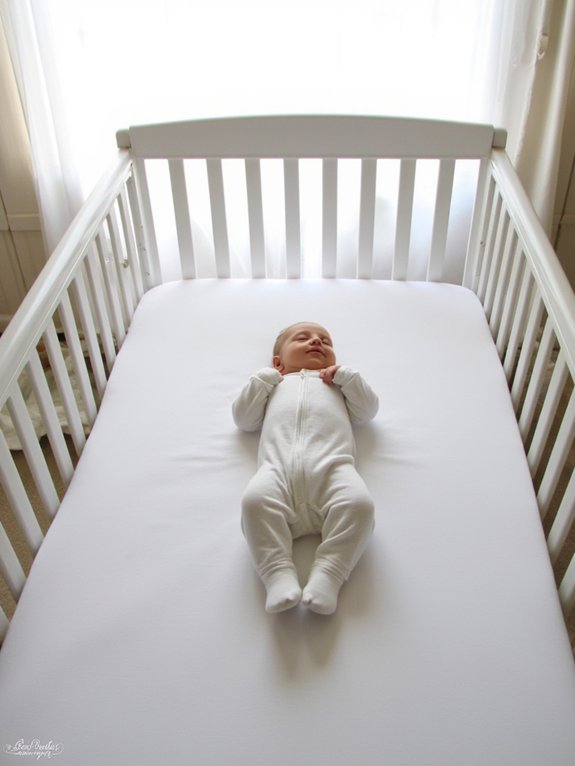









What Are the Safest Sleep Practices for Infants?

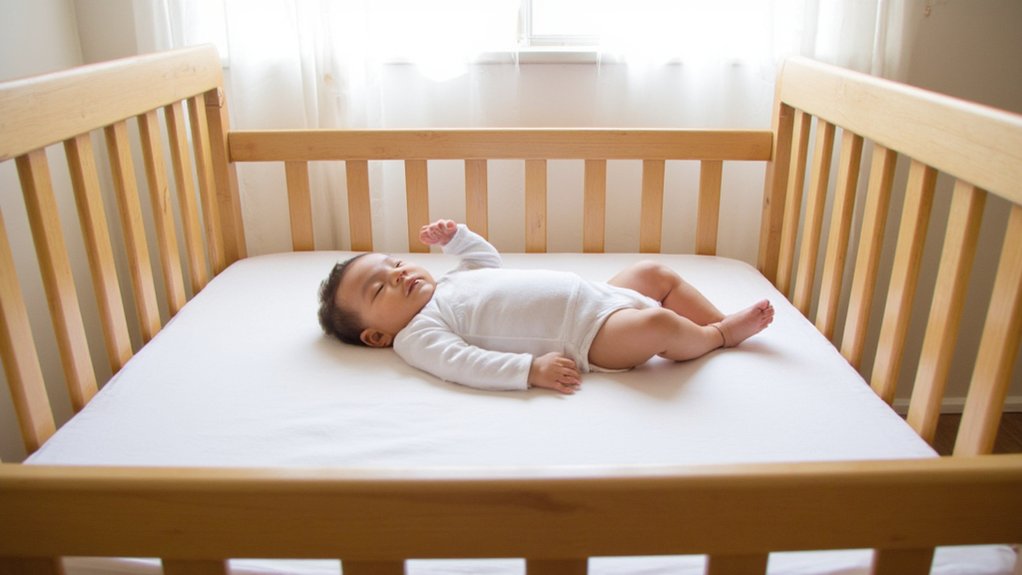
You should always place your baby on a firm, flat sleep surface like a bassinet mattress that fits snugly, avoiding soft bedding, pillows, or loose blankets that can cause suffocation. Position the bassinet on a stable, flat surface away from hazards and dress your infant appropriately to prevent overheating. Follow assembly instructions carefully and regularly inspect the bassinet for safety. These practices dramatically reduce risk and create a secure environment, with important further details to help you guarantee your baby sleeps safely.
Table
- Main Points
- Importance of a Firm Sleep Surface
- Proper Bassinet Assembly and Setup
- Avoiding Soft Bedding and Loose Items
- Recommended Sleep Position for Infants
- Safe Placement of the Bassinet in the Room
- Regular Inspection and Maintenance of Bassinets
- Recognizing and Avoiding Unsafe Bassinet Products
- Frequently Asked Questions
- Final Thoughts
Main Points
- Always place infants on their backs to sleep on a firm, flat mattress without soft bedding or loose items.
- Use a safety-approved bassinet or crib with a snug-fitting sheet and ensure no gaps between mattress and frame.
- Keep the sleep environment free of pillows, blankets, bumper pads, stuffed animals, and other suffocation hazards.
- Maintain a comfortable room temperature and dress infants lightly to prevent overheating during sleep.
- Regularly inspect sleep surfaces and equipment for damage, recalls, and compliance with safety standards.
Importance of a Firm Sleep Surface
A firm sleep surface is essential for your infant’s safety during sleep. The American Academy of Pediatrics recommends a flat, firm mattress that meets safety standards to reduce the risk of Sudden Unexpected Infant Death (SUID) and suffocation.
When setting up your baby’s sleep area, avoid soft bedding like pillows and comforters that can cause your infant to sink, obstructing their breathing. Ensuring the mattress fits snugly within the crib frame eliminates gaps that pose entrapment hazards. Many modern crib mattresses, such as those with dual-sided firmness options, are designed to offer both safety and extended usability as your child grows.
Research clearly shows infants sleeping on firm surfaces face markedly lower risks compared to those on soft bedding. By prioritizing a firm sleep surface and regularly checking the mattress fit, you create a secure environment that supports safe infant sleep and gives caregivers peace of mind.
Proper Bassinet Assembly and Setup

You’ll want to follow the manufacturer’s assembly instructions carefully to guarantee every part is secure and safe.
Make sure the mattress fits snugly in the bassinet, and only use a fitted sheet designed for it to avoid any gaps or hazards.
Regularly check your bassinet against safety recalls and place it away from potential dangers like cords or furniture.
For added peace of mind, ensure features like locking casters are properly engaged to maximize stability and maintain a safe sleep environment for your baby.
Bassinet Safety Standards
When setting up a bassinet, ensuring it meets Consumer Product Safety Commission (CPSC) standards is essential for your infant's safety.
Choose a bassinet with a firm, flat mattress that fits snugly, preventing gaps that could lead to entrapping or suffocation hazards. For added peace of mind, select a bassinet made from breathable materials that help reduce overheating and increase airflow.
Always follow the manufacturer's instructions carefully during assembly, making sure all parts are secure and stable.
Pay close attention to weight limits—typically 15-20 pounds—and use a bassinet designed for your baby's size to avoid safety risks.
Position the bassinet away from curtains, blinds, or furniture that might pose hazards.
Conduct regular inspections for any wear and damage, and stay updated on recalls.
By adhering to these bassinet safety standards, you create a secure sleep environment that truly protects your infant.
Mattress and Sheet Fit
Three key factors guarantee your infant’s bassinet provides a safe sleeping space: a firm mattress, a snugly fitted sheet, and proper assembly.
Using a firm mattress that fits snugly in the bassinet or crib prevents gaps that increase suffocation risk and Sudden Infant Death Syndrome (SIDS). Always cover the mattress with a fitted sheet designed specifically for infants to avoid loose bedding that can compromise the safe sleep environment. For added peace of mind, many bassinets now use breathable mesh panels to enhance airflow and further reduce overheating risks.
Proper assembly assures all parts fit securely, eliminating hazards.
- Choose a firm mattress with no gaps larger than two fingers
- Use a tightly fitted sheet made for infant bassinets or cribs
- Avoid soft or plush mattresses that increase suffocation risk
- Inspect the mattress regularly for damage or wear
These steps protect your baby with a secure, supportive sleep space.
Assembly Instructions Checklist
Although assembling a bassinet may seem straightforward, following the manufacturer's instructions carefully is essential to guarantee your baby's safety.
Start by ensuring the bassinet meets CPSC safety standards and that you follow every step in the assembly instructions, checking for loose screws or parts. It’s also important to consider the adjustable mattress height settings found in some cribs, which can help reduce fall risks as your baby grows.
Use a firm mattress that fits snugly to eliminate suffocation hazards.
Place the bassinet in a smoke-free environment, away from cords or other risks.
Regularly inspect the bassinet for wear and tear, discontinuing use if you find any damage or if it no longer meets safety standards.
Your careful attention to assembly and setup directly supports infant safety, providing a secure sleep space for your baby and peace of mind for you.
Avoiding Soft Bedding and Loose Items

Since your baby’s safety during sleep depends heavily on their environment, you should avoid placing soft bedding or loose items in their crib.
The American Academy of Pediatrics’ safe sleep recommendations emphasize a firm mattress with a tightly fitted sheet, free from anything that could cause suffocation or contribute to sleep-related deaths like Sudden Unexpected Infant Death. Choosing a mattress with Greenguard Gold certification ensures your baby's sleep environment is free from harmful chemicals and meets rigorous safety standards.
To guarantee an infant safe sleep space, keep the crib clear of:
- Pillows and comforters
- Bumper pads
- Stuffed animals
- Loose blankets or weighted covers
These items increase the risk of suffocation and entrapment, especially for babies under one year.
By maintaining a bare, firm sleep surface, you protect your baby’s sleep and align with trusted guidelines to reduce hazards effectively.
Recommended Sleep Position for Infants
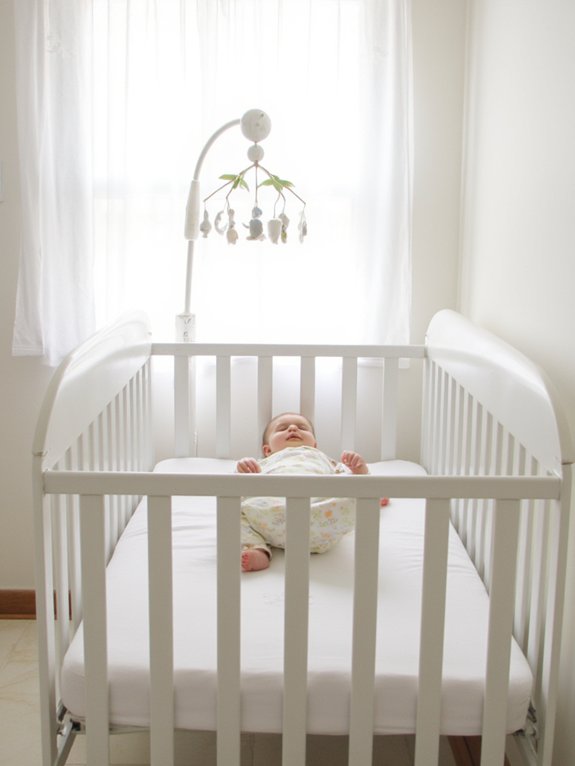
When you lay your baby down for sleep, always place them on their back to greatly reduce the risk of Sudden Infant Death Syndrome (SIDS).
This recommended sleep position protects your infant by lowering the risk of choking, as their gag reflex works best when lying on their back.
Safe sleep guidelines stress that every nap and nighttime sleep should happen in this position to create a secure sleep environment.
Avoid placing your infant on their side because they can easily roll onto their stomach, increasing the risk of sleep-related deaths.
Once your infant changes positions during sleep, caregivers should let them remain as is without repositioning.
By consistently following these practices, you help guarantee a safer sleep environment and reduce the risk of SIDS for your infant.
Safe Placement of the Bassinet in the Room

Positioning your infant's bassinet thoughtfully in your bedroom plays an essential role in creating a safe sleep environment.
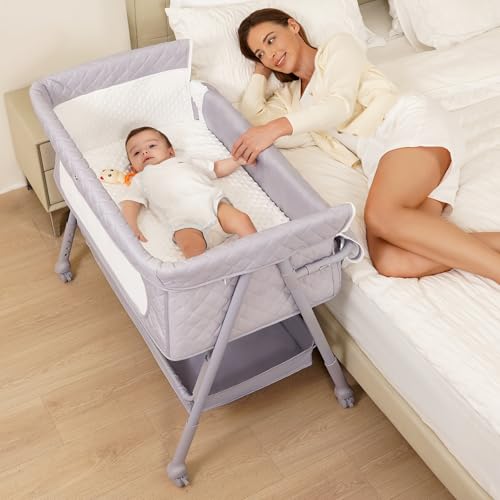
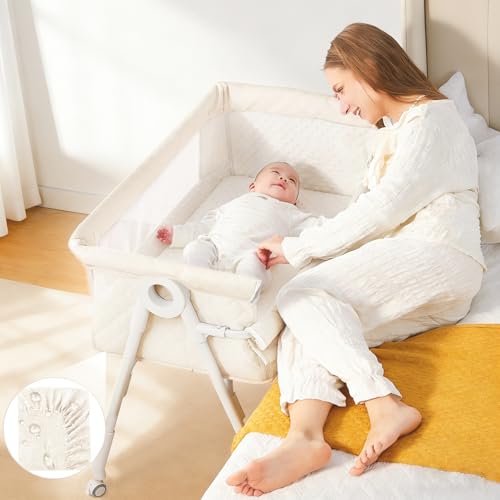
Place the bassinet on a flat, stable surface away from hazards like cords or curtains. Keep it within arm's reach for easy access during nighttime feedings, but on a separate sleep surface to reduce risks. Choosing a bassinet with lockable wheels for stability ensures it remains safely in place and can be moved easily if needed.
Verify the bassinet meets current safety standards, using a firm mattress with a fitted sheet and no soft bedding inside.
Maintain a comfortable room temperature to prevent overheating, dressing your infant lightly and ensuring good ventilation around the bassinet.
- Bassinet on a flat, stable surface free of hazards
- Firm mattress with fitted sheet, no soft bedding or toys
- Positioned within arm's reach but separate sleep surface
- Comfortable room temperature to avoid overheating
Regular Inspection and Maintenance of Bassinets
To keep your infant's sleep space safe, perform regular inspections and maintenance on the bassinet. You should regularly inspect it for wear, damage, or loose parts that could pose a safety risk. Verify the bassinet meets current safety standards, including a firm, flat mattress that fits snugly without gaps. Check that spindles or slats are no wider than 2-3/8 inches apart to prevent head entrapment. Maintain a clean sleeping environment by washing bedding often and removing soft items like pillows or blankets, which increase risk. If the bassinet no longer meets safety guidelines or has been recalled, replace it promptly. By staying attentive to these details, you create a safer sleep space that protects your infant and supports their well-being. Regularly checking adjustable height stability is also important, as instability in this feature could lead to unexpected tilting or suffocation hazards.
Recognizing and Avoiding Unsafe Bassinet Products
When choosing a bassinet, make certain it meets safety standards set by the Consumer Product Safety Commission to protect your baby.
Avoid products with soft bedding, wide slats, or inclined sleepers, as these can increase risks.
Always check for recalls and certifications to guarantee you're providing the safest sleep environment possible.
Additionally, look for bassinets with breathable mesh sides to help reduce the risk of overheating and suffocation.
Unsafe Bassinet Features
Although bassinets provide a convenient sleep space for your infant, choosing one with unsafe features can put your baby at serious risk.
You need to be vigilant about unsafe bassinet features that increase dangers like suffocation and strangulation. Always pick a bassinet with a firm mattress that fits snugly in the frame—soft bedding and bumper pads only add to the suffocation hazard. Full-mesh sides can improve airflow and visibility, reducing suffocation risks and helping to keep your baby safer during sleep.
Make sure the slats or spindles are no wider than 2-3/8 inches apart to prevent strangulation risks. Also, avoid recalled products and confirm compliance with the Consumer Product Safety Commission’s safety standards, steering clear of unsafe sleeping surfaces like inclined sleepers.
- Firm mattress that fits tightly inside the frame
- No soft bedding, bumper pads, pillows, or toys
- Slats spaced no wider than 2-3/8 inches apart
- Verified compliance with Consumer Product Safety Commission, no recalled products
Certified Safe Standards
Because your infant’s safety depends on it, you should always choose a bassinet that meets the Consumer Product Safety Commission’s (CPSC) current standards.
Certified safe standards require a firm mattress and a stable structure with slats spaced no more than 2-3/8 inches apart to prevent entrapment.
Avoid any bassinet with soft bedding like pillows, blankets, or bumper pads, as these increase the risk of suffocation and sleep-related infant deaths.
Regularly check the CPSC website for recalls to verify your bassinet hasn’t been flagged for safety issues.
Be cautious of inclined sleep products or loungers not recommended for safe sleep.
Following manufacturer guidelines and selecting a bassinet that meets these certified safe standards helps protect your infant and supports a secure sleep environment.
Frequently Asked Questions
What Are Safe Sleep Practices for Infants?
You’ll guarantee crib safety by choosing firm, safe sleep surfaces and placing your baby on their back. Follow gentle swaddling techniques, maintain comfortable room temperature, encourage breastfeeding, use pacifiers wisely, and avoid co-sleeping for safe sleep duration.
What Is the Safest Thing for a Baby to Sleep In?
You should choose a firm, breathable crib with a tight-fitting mattress to guarantee crib safety. Place your baby on their back, use safe swaddling techniques or sleep sacks, maintain room temperature, and encourage pacifier use in a consistent sleep routine.
What Is the Safest Way to Sleep With Your Baby?
You’ll guarantee co-sleeping safety by room sharing, placing your baby on their back in a crib with safe baby sleepwear. Maintain a clear sleep environment, establish consistent nighttime routines, use monitoring devices, and stay alert for effective sleep training.
What Is the 5 3 3 Rule for Baby Sleep?
Think of the 5 3 3 rule as a gentle dance guiding baby sleep: 5 hours at night, 3 daytime naps, and 3 awake hours. This rhythm supports safe sleep, infant safety, and healthy sleep patterns in a secure environment.
Final Thoughts
Just like building a strong foundation for a house, ensuring your infant’s sleep environment is firm, clear of soft bedding, and properly assembled sets the stage for safe, peaceful nights. By placing the bassinet securely and inspecting it regularly, you’re not only following best practices—you’re protecting what matters most. Trust these guidelines, and you’ll create a sleep space where your little one can rest safely, giving you both the comfort you deserve.
If you want to know other articles similar to What Are the Safest Sleep Practices for Infants? you can visit the Bassinets category.
How to Choose an Organic Non-Toxic Sleep Space
What Are the Best Sleep Solutions for Twins?
5 Best Sleep Solutions for C-Section Moms

Bassinet Vs Crib: Best Sleep Option for Newborns

Best Portable Bassinets for Travel in 2024

How to Choose a Modern Baby Sleeper

How to Choose the Best Bassinet for Small Spaces

How to Choose Baby Sleepers for High Beds

5 Best Stroller-Compatible Sleep Solutions for Newborns
This is also interesting