








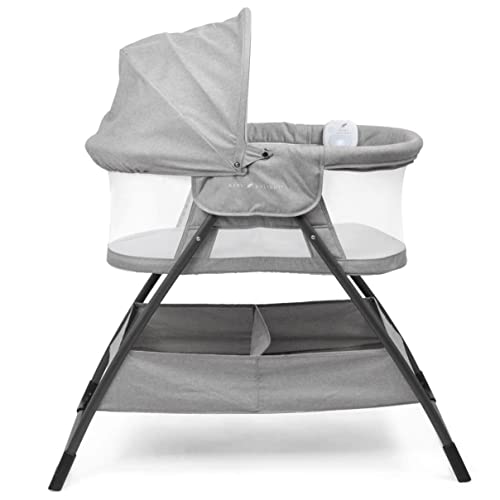

How to Choose the Best Bassinet for Small Spaces

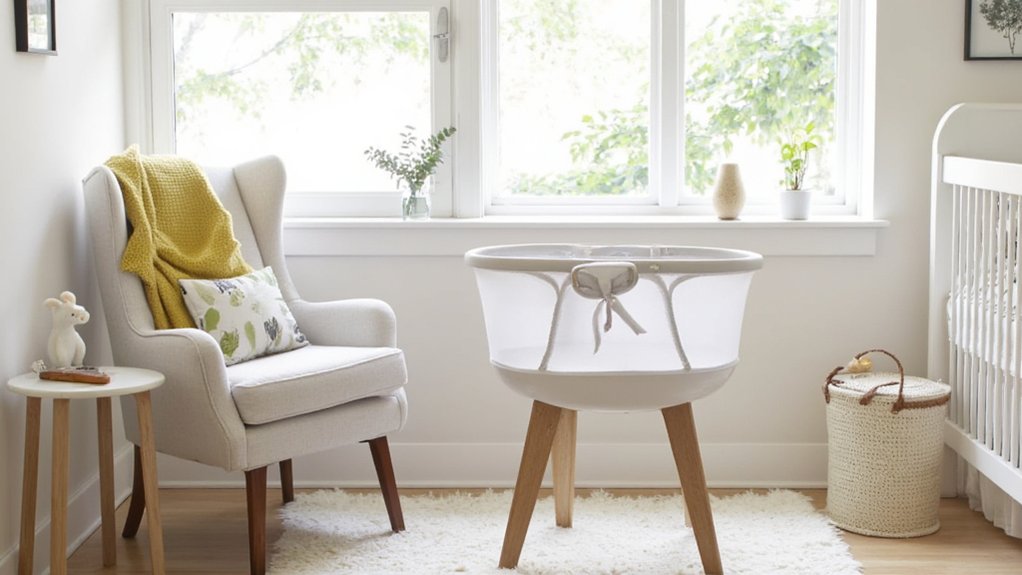
When choosing the best bassinet for small spaces, pick a compact model around 30 by 18 inches with a sturdy frame and breathable mesh sides for safety. Look for adjustable height options to fit your bed, and prioritize lightweight designs with wheels for easy mobility. Integrated storage helps keep essentials organized without clutter. Avoid plush padding and guarantee proper airflow to prevent overheating. If you want to create a safe, efficient environment for your baby, there are key features and positioning tips to bear in mind.
Table
- Main Points
- Benefits of Choosing a Bassinet for Small Living Areas
- Key Safety Features to Consider in Compact Bassinets
- Essential Size and Dimension Guidelines for Small Spaces
- Portability and Mobility: What to Look for in a Bassinet
- Adjustable Height Options for Versatile Use
- Storage Solutions Integrated Into Small-Space Bassinets
- Comparing Different Bassinet Types Suitable for Tight Quarters
- Materials and Fabric Choices for Easy Cleaning and Durability
- Multi-Functional Bassinets That Grow With Your Baby
- Space-Saving Bassinet Designs With Foldability Features
- How to Position a Bassinet for Optimal Room Utilization
- Budget-Friendly Bassinets That Don’t Compromise on Quality
- Evaluating Bonus Features: Sounds, Motion, and Smart Technology
- Considerations for Using Co-Sleepers in Limited Spaces
- Tips for Maintaining and Caring for Your Small-Space Bassinet
- Frequently Asked Questions
- Final Thoughts
Main Points
- Select a bassinet with compact dimensions (around 30 by 18 inches) to fit comfortably in small living areas without overcrowding.
- Prioritize models with mesh sides for better airflow, visibility, and adherence to safety guidelines.
- Choose lightweight, portable designs with wheels or folding features for easy mobility and space-saving storage.
- Ensure the bassinet has sturdy construction, JPMA or ASTM certification, and firm, breathable materials for safe infant sleep.
- Opt for bassinets with built-in storage to keep baby essentials organized and maintain a clutter-free small space.
Benefits of Choosing a Bassinet for Small Living Areas
When space is limited, choosing a bassinet can make a significant difference in your living area’s functionality.
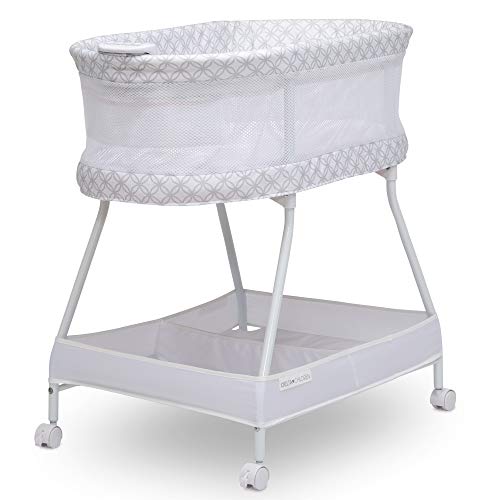
Bassinets are designed to fit comfortably in small spaces, usually measuring about 30 by 18 inches, which makes them far more manageable than traditional cribs. You’ll appreciate their portability, allowing you to keep your baby close by without crowding your room. Many models also feature full-mesh sides that improve airflow and allow you to easily keep an eye on your little one.
Many bassinets also come with built-in storage solutions, so you can neatly organize diapers, wipes, and other essentials without adding clutter. This thoughtful design not only maximizes your small space but also supports safe, cozy sleep for your newborn.
By choosing a bassinet, you’re creating a practical environment that meets both your baby’s needs and your desire to maintain an orderly, functional home.
Key Safety Features to Consider in Compact Bassinets
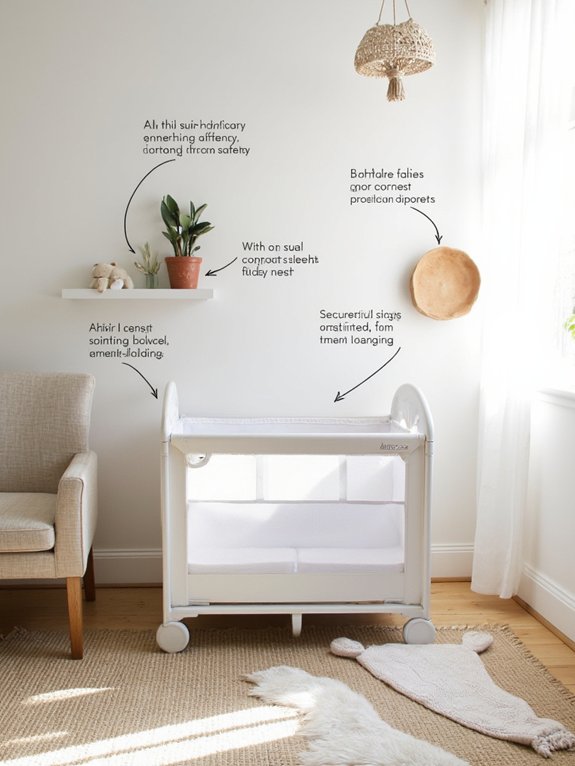
Although compact bassinets save space, they must meet strict safety standards to protect your baby. When selecting one for small spaces, choose models certified by organizations like JPMA or ASTM International to guarantee compliance. Prioritize bassinets with sturdy, stable frames to prevent tipping in tight areas. Mesh sides are essential—they improve ventilation, maintain airflow, and reduce overheating risks in confined environments. Avoid plush padding, as it poses suffocation hazards; instead, stick to firm, breathable materials following AAP guidelines. Regularly inspect your bassinet for wear or recalls to keep the sleep area safe. Many modern bassinets, such as those with height adjustability and mobility features, offer added convenience and safety for parents caring for their infants in compact nurseries. By focusing on these key safety features, you can confidently provide a secure, comfortable environment for your baby without sacrificing valuable space.
Essential Size and Dimension Guidelines for Small Spaces
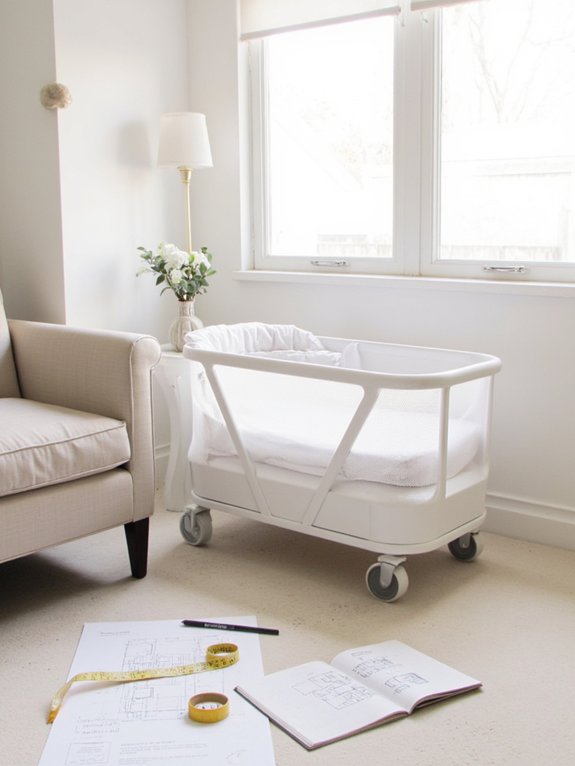
When choosing a bassinet for your small space, aim for dimensions around 30 inches long by 18 to 22 inches wide to guarantee a snug yet safe fit.
Measure your available area carefully, including doorways and pathways, to confirm the bassinet will fit comfortably and move easily.
Prioritize lightweight, compact designs with adjustable heights to maximize convenience and accessibility.
Ideal Bassinet Dimensions
Choosing a bassinet that fits perfectly in your small space means focusing on dimensions between 30 to 40 inches in length and 18 to 22 inches in width.
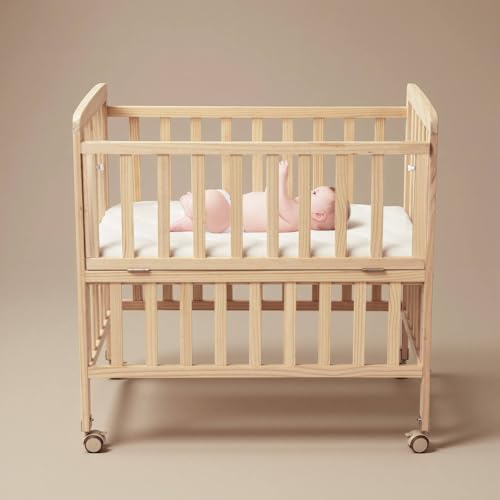
These ideal bassinet dimensions help you maximize comfort in a small bedroom without crowding it. Compact bassinets are designed to blend functionality with space-saving features. For example, mini cribs like the Dream On Me Aden demonstrate how convertible designs can offer both adaptability and efficiency in limited spaces.
When selecting yours, keep these essential points in mind:
- Length and width that fit snugly yet comfortably
- Adjustable height around 30 to 36 inches for easy access
- Lightweight design (10 to 20 pounds) for effortless movement
- Narrow width (~18 inches) to fit tight corners or bedside
- Minimal floor footprint, ideally under 5 square feet
Measuring Your Space
Measuring your space accurately is crucial before buying a bassinet to guarantee it fits comfortably without overcrowding your room. Start by measuring the length, width, and height of your designated area, keeping in mind that most bassinets range from 30 to 40 inches long and 18 to 24 inches wide. Consider models with compact designs if space is tight. Adjustable height features improve accessibility, especially if your bed height varies. Always allow at least 12 inches of clearance around the bassinet for safe mobility.
| Dimension | Typical Range | Notes |
|---|---|---|
| Length | 30–40 inches | Measure available length |
| Width | 18–24 inches | Compact designs can be smaller |
| Height | Adjustable, 3+ settings | Match bed height for ease |
| Clearance Around | 12+ inches | Ensures safe access |
Portability and Mobility: What to Look for in a Bassinet
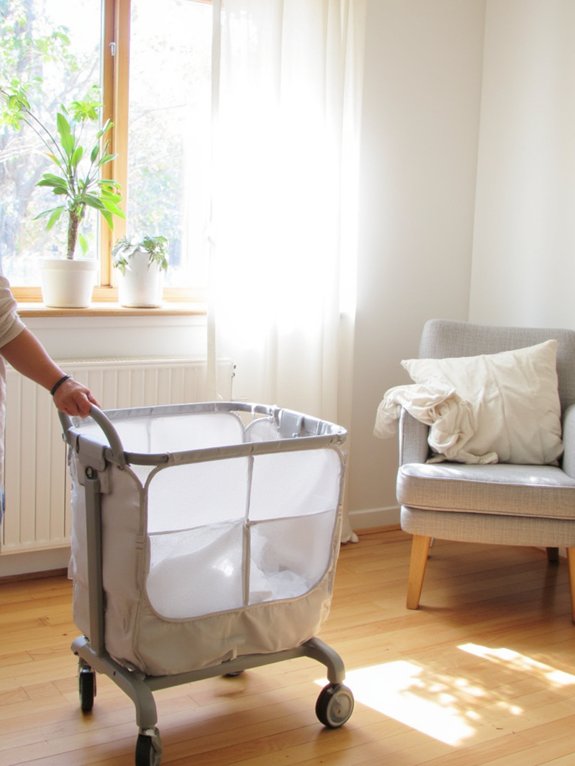
You’ll want a bassinet that’s lightweight, ideally around 12-15 pounds, so you can move it easily without strain.
Look for models with wheels or a compact folding design to make relocating or storing it quick and hassle-free.
Prioritize stable bases and secure locks to keep your baby safe while you maneuver the bassinet around your space.
Many top bassinets include lockable wheels for both mobility and stability, letting you move the bassinet silently and then secure it safely in place.
Lightweight Materials
Portability plays an essential role when selecting a bassinet for small spaces, and lightweight materials are key to making this possible.
Choosing bassinets made from lightweight materials like aluminum or fabric guarantees your bassinet is easy to move without straining yourself. A compact footprint lets you place it conveniently in tight spots, maximizing your living area. For added convenience, look for bassinets with lockable wheels so you can effortlessly relocate your baby’s sleeping space while ensuring safety.
Here’s what to look for:
- Lightweight materials weighing between 10 to 15 pounds
- Foldable designs for effortless storage
- A compact footprint around 30 by 18 inches
- Removable, machine-washable fabric for easy cleaning
- Secure locking wheels for stability and safe mobility
Materials and Fabric Choices for Easy Cleaning and Durability
You’ll want to choose a bassinet made from durable fabrics like polyester or cotton blends that hold up well to frequent washing.
Look for machine-washable materials and removable covers to make cleaning quick and hassle-free.
Breathable mesh sides are also a smart choice—they improve airflow and are easier to keep clean in tight spaces.
Durable Fabric Options
Selecting durable fabric options plays an essential role in ensuring your bassinet remains both functional and easy to maintain over time.
Choosing the right materials means you can confidently care for your baby without worrying about frequent replacements or complicated cleaning.
Look for:
- Durable fabrics like polyester or cotton blends that withstand daily use
- Breathable mesh sides to enhance airflow and reduce overheating risks
- Removable and machine-washable covers for quick, hygienic cleaning
- Water-resistant fabrics to protect against spills and accidents
- Safety-certified materials free from harmful chemicals to safeguard your baby
Machine-Washable Materials
Durable fabric choices naturally lead to pondering how easy those materials are to clean, especially when caring for your baby.
Choosing a bassinet with machine-washable fabrics guarantees you can maintain cleanliness effortlessly, which is essential for handling spills or accidents.
Look for removable covers, like those on the Chicco LullaGo Anywhere, to simplify washing and keep the bassinet fresh.
Materials such as polyester blends offer both comfort and durability, standing up to frequent laundering without fading or losing shape.
Additionally, a water-resistant mattress cover protects against moisture and stains while remaining machine washable, further supporting hygiene.
By regularly washing these fabrics according to guidelines, you preserve the bassinet’s lifespan and, most importantly, provide a safe sleeping environment that supports your infant’s health and well-being.
Breathable Mesh Benefits
Although finding a bassinet that fits small spaces can be challenging, choosing one with breathable mesh sides offers multiple benefits. The bassinet's compact design combined with breathable mesh guarantees your baby stays comfortable and safe. This lightweight, portable material enhances airflow, reducing overheating risks while allowing you to easily monitor your little one. Plus, many mesh covers are removable and machine washable, making cleanup simple without sacrificing durability.
Consider these breathable mesh advantages:
- Promotes safe airflow for better baby comfort
- Enables easy, hygienic cleaning with machine-washable fabric
- Keeps the bassinet portable and easy to move around
- Provides clear visibility to watch your baby effortlessly
- Offers long-lasting, tear-resistant durability throughout use
Choosing breathable mesh supports both your baby’s safety and your caregiving ease in small spaces.
Multi-Functional Bassinets That Grow With Your Baby
When you need a bassinet that adapts as your baby grows, multi-functional designs offer practical solutions that extend usability beyond just the newborn stage.
Multi-functional bassinets often feature adjustable heights and configurations, helping you maintain safe sleep environments while accommodating your baby’s development.
Models with storage baskets, like the Maxi-Cosi Iora, maximize space efficiency by keeping essentials organized and within reach.
Some bassinets pivot or collapse for bedside use, enhancing nighttime access without sacrificing room layout.
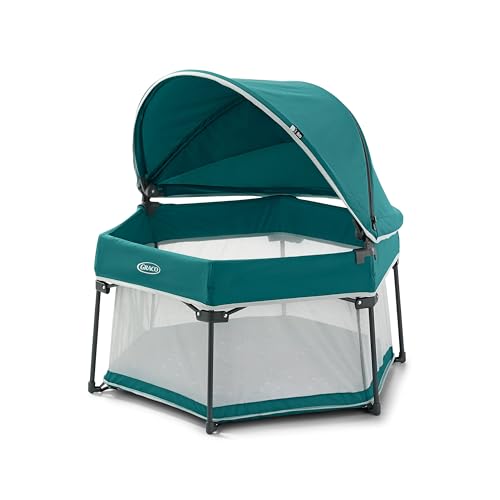
Others convert into play yards or cribs, simplifying changes as your child gains mobility.
Investing in these versatile options means you serve your baby’s changing needs effectively, ensuring comfort and safety without cluttering your small space.
Choose wisely to support your family’s evolving routine.
Space-Saving Bassinet Designs With Foldability Features
If you’re tight on space, choosing a bassinet with foldability features can transform your nursery setup.
These designs maximize your living area while providing a safe, comfortable spot for your baby.
When selecting a foldable bassinet, consider how it enhances your space through:
- Collapsible legs for easy storage in tight corners
- Lightweight materials and breathable mesh for portability and airflow
- Compact size to fit snugly in small rooms without sacrificing safety
- Quick assembly mechanisms that save you time and effort
- Built-in storage compartments to keep essentials organized and clutter-free
How to Position a Bassinet for Optimal Room Utilization
Positioning your bassinet strategically can make a significant difference in how efficiently you use your room’s space.
To maximize floor space, place your bassinet’s compact frame in corners or beside existing furniture, creating a cozy spot for your baby without cluttering the room. Keep it at least a foot away from your bed to guarantee safety while allowing easy access for nighttime caregiving.
Align the bassinet’s height with your bed using adjustable features, so you can reach your baby comfortably during feedings. Always position the bassinet on a flat, stable surface to prevent tipping.
Choose a spot within your line of sight to monitor your little one without leaving bed. Thoughtful placement balances safety, convenience, and space efficiency, helping you serve your child’s needs effectively.
Budget-Friendly Bassinets That Don’t Compromise on Quality
How can you find a bassinet that fits your budget without sacrificing safety or functionality?
Choosing a budget-friendly bassinet that balances quality and space-saving design is essential for your baby’s comfort and your peace of mind.
Consider these options:
- Maxi-Cosi Iora Bedside Bassinet: adjustable height, spacious, quality materials
- Arm’s Reach Clear-Vue Co-Sleeper: drop-down side, wheels for mobility
- Chicco LullaGo Anywhere LE: lightweight, compact, ideal for small spaces
- 4Moms mamaRoo Sleep Bassinet: resale deals, manual rocking, soothing sounds
- Ingenuity Dream & Grow: adjustable height, space-saving design
Each provides safety, functionality, and smart use of limited space.
You can confidently serve your family’s needs without overspending or compromising on quality.
Evaluating Bonus Features: Sounds, Motion, and Smart Technology
While choosing a bassinet that fits your space and budget is essential, evaluating bonus features like sounds, motion, and smart technology can greatly enhance your baby's comfort and your convenience.
Sounds such as built-in white noise machines mimic the womb’s calming environment, helping your baby fall asleep faster. Motion features, including gentle rocking or swaying, soothe fussy infants and can often be customized to your baby’s preferences.
Built-in white noise and gentle rocking mimic the womb, soothing babies and helping them sleep peacefully.
Smart technology takes this further by allowing you to monitor sleep patterns and receive alerts via smartphone apps, giving you peace of mind without constant checking.
Models like the Snoo Smart Sleeper and 4Moms mamaRoo combine these elements seamlessly, making them ideal for small spaces where maximizing functionality and comfort is key.
Considerations for Using Co-Sleepers in Limited Spaces
Because space is limited, choosing a co-sleeper that maximizes accessibility and safety becomes essential.
When using co-sleepers in small spaces, focus on features that support close, secure care without crowding your room. Prioritize models that align with your bed height and offer mobility for easy repositioning.
Consider how added storage can help keep essentials neat and accessible. Remember, safety remains paramount—choose co-sleepers designed to reduce risks while promoting comfort.
Look for these key features in co-sleepers for small spaces:
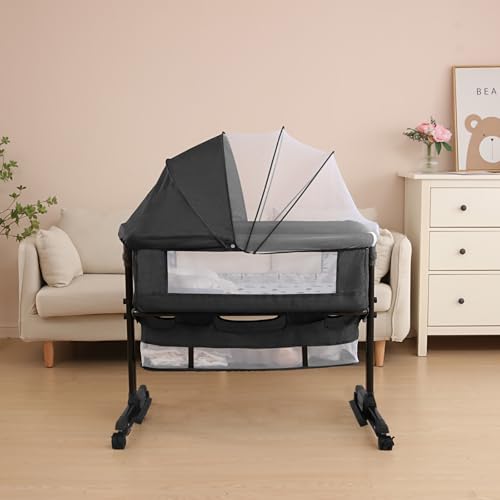
- Drop-down sides for safe bedside access
- Adjustable height to match your bed
- Wheels for effortless room-to-room movement
- Built-in storage for baby necessities
- Designs adhering to safety guidelines from pediatric authorities
These considerations help you serve your baby’s needs effectively, even in limited space.
Tips for Maintaining and Caring for Your Small-Space Bassinet
Once you've chosen the right bassinet for your small space, keeping it clean and secure will guarantee a safe environment for your baby. Regular maintenance is key: inspect all parts for wear, clean removable fabrics often, and store the bassinet properly when not in use. Always follow safety guidelines, including weight limits and certification checks.
| Task | Frequency | Tip |
|---|---|---|
| Inspect structure | Weekly | Check screws and joints |
| Clean fabrics | Bi-weekly or more | Use machine-washable covers |
| Store bassinet | When not in use | Keep in cool, dry place |
| Follow guidelines | Ongoing | Adhere to manufacturer info |
Frequently Asked Questions
What to Consider When Choosing a Bassinet?
You should prioritize safety features, ensuring the bassinet meets certifications. Check mattress quality for your baby’s comfort, and consider portability options to move it easily. These factors help you provide a secure, practical sleeping space.
How to Know if a Bassinet Is Too Small for a Baby?
Think of the bassinet as a cozy nest—if your baby's size or growth milestones push them beyond safety guidelines, like rolling or weight limits, it’s time to upgrade. Prioritize comfort and safety for their best sleep.
Where to Put a Bassinet in a Small Bedroom?
You’ll want to focus on bassinet placement tips like positioning it near your bed and against a wall. In small bedroom layouts, this maximizes space efficiency and keeps your baby safe and close during nighttime care.
How Tall Should a Bassinet Be Next to Bed?
Imagine effortless nighttime cuddles: choose a bassinet height that aligns with your bed for seamless bedside accessibility. This guarantees baby safety and lets you serve your little one with ease, keeping comfort and care within arm’s reach.
Final Thoughts
Choosing the right bassinet for your small space is essential—did you know nearly 60% of new parents live in apartments under 1,000 square feet? Prioritize safety, size, and portability to maximize comfort without clutter. Look for adjustable heights and smart features that add convenience without eating up space. With thoughtful selection, you’ll create a cozy, safe spot for your baby that fits perfectly in your home and lifestyle.
 5 Tips for Choosing Organic Mattress Ready Cribs
 How to Choose the Best Baby Carrier for Back Support
If you want to know other articles similar to How to Choose the Best Bassinet for Small Spaces you can visit the Bassinets category.
How to Choose an Organic Non-Toxic Sleep Space
What Are the Best Sleep Solutions for Twins?

What Are the Safest Sleep Practices for Infants?

5 Best Sleep Solutions for C-Section Moms

Bassinet Vs Crib: Best Sleep Option for Newborns

Best Portable Bassinets for Travel in 2024

How to Choose a Modern Baby Sleeper

How to Choose Baby Sleepers for High Beds

5 Best Stroller-Compatible Sleep Solutions for Newborns
This is also interesting