


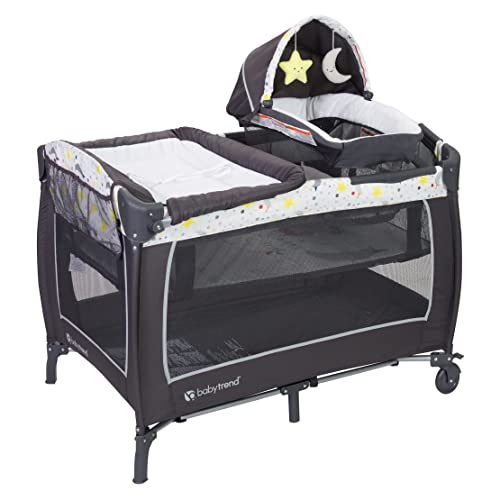




Bassinet Vs Crib: Best Sleep Option for Newborns

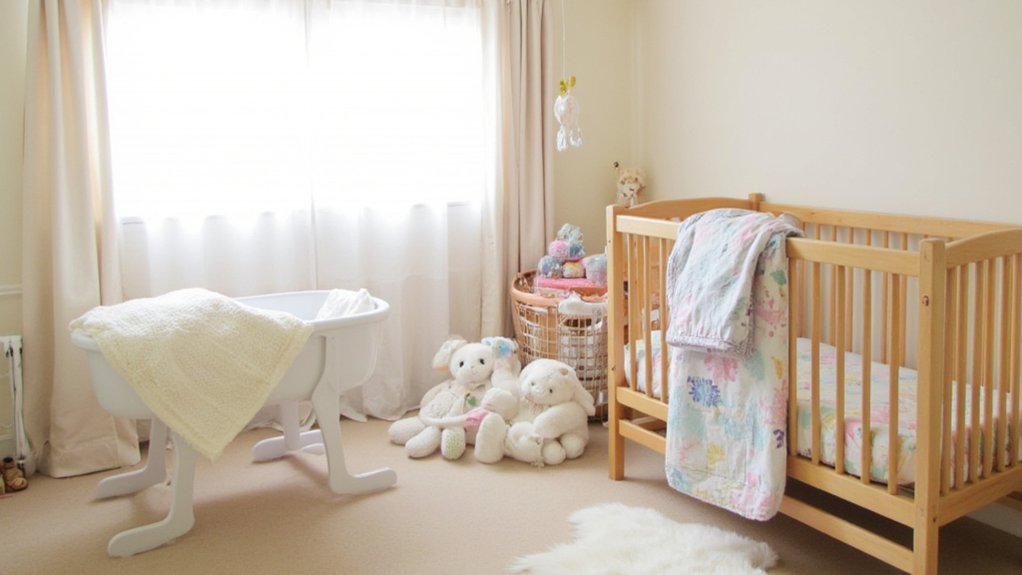
You’ll find bassinets ideal if you want a cozy, portable sleep space for your newborn’s first few months, especially if space is tight or you prefer room-sharing. Cribs offer longer use, growing with your baby up to toddlerhood, and often include storage but take more room and cost more upfront. Safety is key with both, so choose one that meets standards and fits your lifestyle. Explore their differences further to pick the best fit for your family’s needs.
Table
- Main Points
- Understanding Bassinets and Cribs
- Pros and Cons of Bassinets and Cribs
- Safety Considerations for Newborn Sleep
- Cost and Space Factors in Choosing Sleep Options
- Convenience and Functionality Comparison
- How to Choose the Right Sleep Option for Your Baby
- Frequently Asked Questions
- Final Thoughts
Main Points
- Bassinets are ideal for newborns up to 5 months, offering portability and easy nighttime access.
- Cribs provide longer-term use from birth to 2-3 years with more space and durability.
- Safety is paramount; both must meet current standards and have firm, bare sleeping surfaces.
- Bassinets fit small spaces and support room-sharing, while cribs require more room but often include storage.
- Budget-wise, bassinets are cheaper short-term, whereas cribs offer greater long-term value despite higher upfront cost.
Understanding Bassinets and Cribs
While choosing a sleeping space for your newborn, understanding the differences between bassinets and cribs is crucial.
A bassinet provides a smaller, portable sleeping area ideal for newborns up to about five months or 20 pounds. Its breathable mesh or cloth sides offer visibility and comfort, helping parents keep a close watch. Many modern bassinets offer adjustable height settings, allowing you to align the sleep surface perfectly with your bed for easy access during nighttime care.
In contrast, a crib is a larger, sturdier investment that accommodates infants from birth up to two or three years. Cribs feature slatted wooden sides and a firm mattress to guarantee safety and reduce SIDS risks.
Both options require tight-fitting sheets and adherence to safety guidelines, but your choice depends on your infant’s age, sleeping habits, and your lifestyle.
Prioritizing safety and comfort will support your newborn’s restful sleep and your peace of mind.
Pros and Cons of Bassinets and Cribs
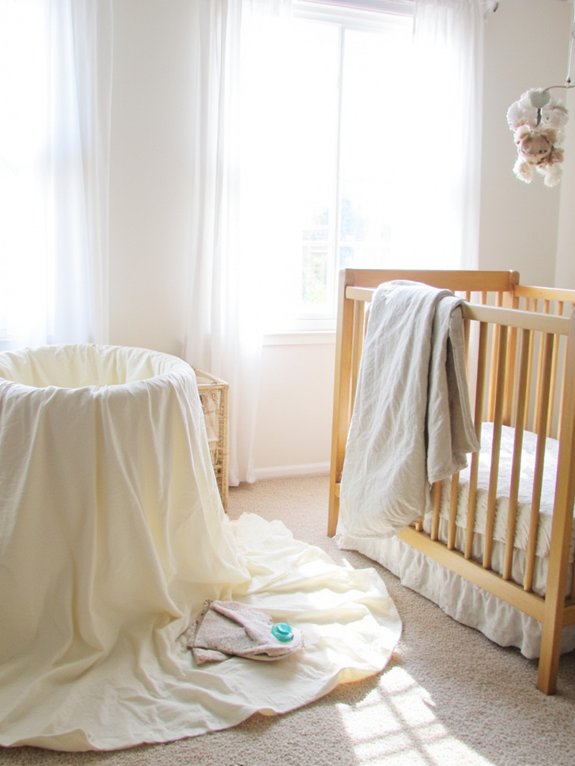
Choosing between a bassinet and a crib means weighing their distinct advantages and limitations to find what suits your baby’s needs and your lifestyle best.
In the bassinet vs crib debate, bassinets offer a smaller size and shape, ideal for room-sharing and easy movement, making them a budget-friendly option for newborns sleep up to about four months. However, they provide limited long-term use. Some modern bassinets, like those with breathable Wovenaire mattress, also emphasize airflow and safety, which can be especially reassuring for new parents.
Cribs, though larger and pricier, offer extended usability, often converting into toddler beds, and more spacious sleeping areas as your child grows.
Both options demand strict adherence to safety features aligned with the American Academy of Pediatrics guidelines to guarantee safe sleeping spaces.
Weighing these pros and cons helps you choose a sleeping space that balances comfort, safety, and practicality for your newborn’s early months and beyond.
Safety Considerations for Newborn Sleep
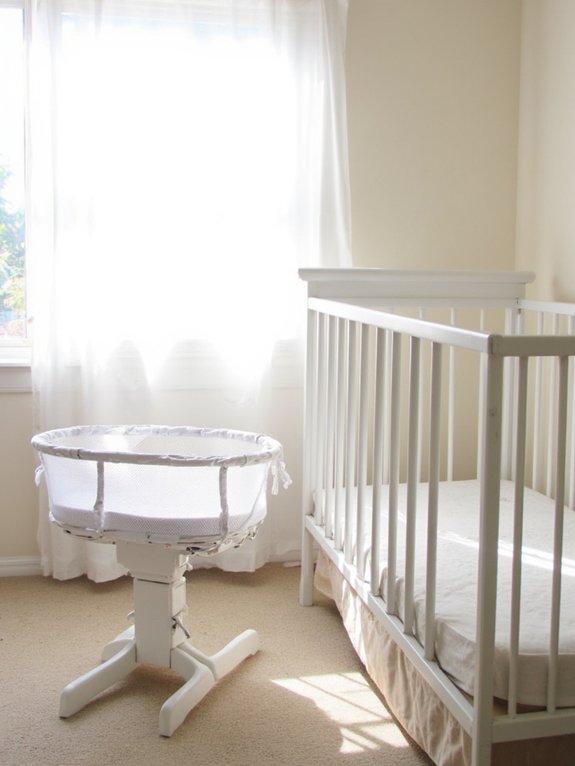
You’ll want to follow safe sleep guidelines by placing your baby on their back in a separate, firm sleep space like a bassinet or crib.
Keep the area free from loose bedding and toys to reduce risks, and make sure the crib or bassinet meets current safety standards.
Regular monitoring and proper positioning will give you peace of mind while keeping your newborn safe through the night.
When choosing a sleep space, prioritize breathable mesh sides for improved airflow and visibility, which are essential features in modern bassinets and cribs.
Safe Sleep Guidelines
Because your newborn’s safety during sleep is paramount, following established guidelines can greatly reduce risks like Sudden Infant Death Syndrome (SIDS).
The American Academy of Pediatrics (AAP) advises placing your baby on their back on a firm, flat surface with a tightly fitted mattress, free of loose bedding or soft objects. When choosing sleep products, adjustable height features can add convenience, but always verify that such mechanisms are stable and pose no safety risks.
Whether you choose a bassinet or crib, guarantee it meets Consumer Product Safety standards, including crib slats spaced no more than 2 3/8 inches apart.
Room sharing with separate sleeping arrangements beside your bed for the first 6-12 months enhances safety and convenience.
Regularly check for recalls and compliance, especially if using second-hand products, to maintain a secure environment.
Adhering to these safe sleep recommendations supports your commitment to your newborn’s well-being.
Monitoring and Positioning
Three key practices can help you guarantee your newborn’s safety during sleep: proper positioning, clear sleep spaces, and vigilant monitoring.
Always place your baby on their back in the bassinet or crib, following the American Academy of Pediatrics (AAP) guidelines to reduce Sudden Infant Death Syndrome (SIDS) risk. Considering breathable mesh siding as found in many baby playpens can further enhance airflow and safety in your baby's sleep environment.
Keep the sleeping area free of loose bedding, pillows, toys, or blankets to prevent suffocation hazards. Ascertain the mattress is firm, flat, and fits snugly without gaps.
When your newborn is in the bassinet, monitor them closely until they fall asleep, never leaving them unattended. Room-sharing with the bassinet or crib next to your bed allows easier monitoring and access.
By prioritizing these practices, you create a safe sleep environment that protects your baby’s well-being every night.
Cost and Space Factors in Choosing Sleep Options
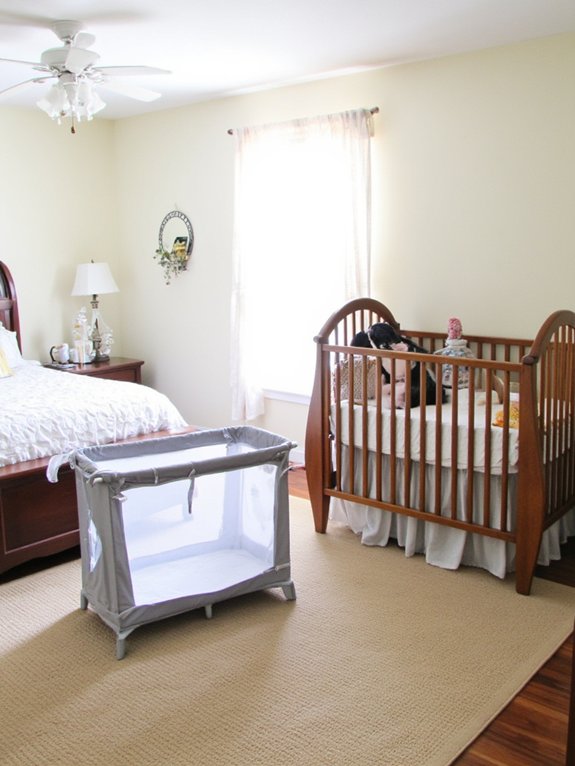
When deciding between a bassinet and a crib, understanding how cost and space impact your choice can make the process smoother.
Bassinets are typically more affordable, ranging from $50 to $500, making them a great short-term investment. Their smaller size and portability fit well in limited space, allowing you to move them easily between rooms. Some bassinets, like those with height adjustability and mobility features, are designed specifically to optimize space and convenience in smaller nurseries.
Cribs, however, require more space and a higher upfront cost—often between $150 and $800—but their sturdy construction supports longer usage, from birth to 2-3 years. This durability can save you money over time.
Both options meet safety standards, but cribs generally offer greater stability.
Considering your living space and budget helps you choose the best sleep solution that balances cost, safety, and practicality for your newborn’s needs.
Convenience and Functionality Comparison
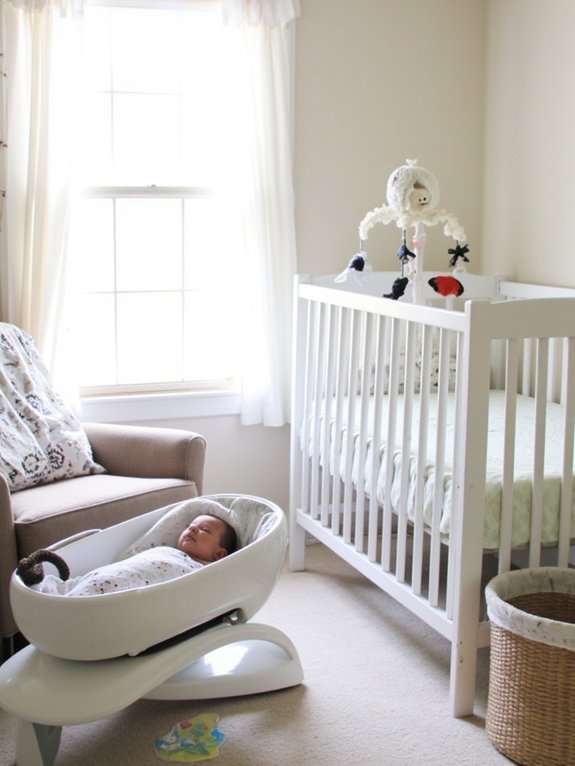
You’ll appreciate how bassinets offer unmatched portability and easy access, especially during those frequent nighttime feedings.
Cribs, while less mobile, provide valuable storage and long-term space solutions for your growing child.
Understanding these differences helps you choose the option that best fits your daily routine and living space.
For parents concerned about safety and comfort, features like breathable mesh panels in modern bassinets help promote airflow and visibility, ensuring a safer sleep environment for your newborn.
Portability and Mobility
Although both bassinets and cribs provide safe sleeping spaces for your newborn, their portability and mobility differ greatly, impacting convenience and daily use.
Bassinets excel in portability with lightweight frames and wheels, allowing you to move around easily and even travel with your baby. Their compact size and fold-flat design simplify storage and access, especially in smaller homes. Many bassinets now feature lockable wheels to ensure safe, steady movement across different floor surfaces.
Cribs, while offering robust functionality, tend to be heavier and stationary, limiting mobility.
- Bassinets feature lightweight materials and wheels for easy movement
- Compact size suits smaller living spaces and frequent travel
- Fold-flat design enhances storage convenience
- Lower height of bassinets provides better access during nighttime care
- Cribs offer sturdy, stationary setups with convertible options
Choosing based on portability guarantees you serve your newborn’s comfort and your daily rhythm effectively.
Space and Storage
Choosing between a bassinet and a crib often comes down to how much space you have and how you plan to organize your nursery.
Bassinets offer a compact design that fits well in tight living spaces, making them perfect for room-sharing and easy nighttime care. Their portable nature and ability to fold flat simplify storage when not in use. Many modern bassinets, such as those with breathable mesh sides, also promote airflow and allow easy monitoring, adding extra convenience for parents.
On the other hand, cribs take up more space but serve as a long-term investment, accommodating your child’s growth for years. Many cribs include built-in storage options for toys and changing supplies, enhancing organization in your nursery.
By weighing your available space and storage needs, you can choose the sleep option that best supports your family’s comfort and efficient living.
Ease of Access
Beyond space and storage considerations, how easily you can access your newborn during those frequent nighttime moments plays a big role in deciding between a bassinet and a crib.
Bassinets offer superior ease of access with their lower height and mesh sides, allowing you close contact for nighttime feedings and soothing without strain. Their portability adds convenience, letting you keep your baby nearby as you move around. Many modern bassinets, such as the AMKE 3 in 1, feature adjustable height settings that further enhance accessibility and bedside alignment.
Cribs, while equipped with adjustable mattress heights to grow with your child, have higher sides that can make reaching in more challenging.
Consider these points to choose what best supports your caregiving needs:
- Bassinets provide easy reach with lower, breathable sides
- Lightweight and portable for use in multiple rooms
- Some bassinets feature rocking or swivel functions for soothing
- Cribs offer adjustable mattress heights but have higher sides
- Cribs lack the immediate accessibility of bassinets for close contact
How to Choose the Right Sleep Option for Your Baby
Since your baby’s safety and comfort are paramount, you’ll want to carefully weigh factors like age, space, budget, and lifestyle when deciding between a bassinet and a crib. Consider your baby’s age and weight limits—bassinets suit newborns up to 5 months or 20 pounds, while cribs support toddlers up to 2-3 years. Assess your living space and portability needs; bassinets are compact and ideal for room-sharing, while cribs require more room but provide a sturdy sleeping environment. Budget-wise, bassinets cost less initially, but cribs offer long-term value. Always prioritize safety features to guarantee a secure sleeping area.
| Factor | Bassinet | Crib |
|---|---|---|
| Baby's Age | Up to 5 months | Up to 2-3 years |
| Weight Limits | Around 20 pounds | Higher limits |
| Living Space | Compact, portable | Requires more space |
| Budget | $50 - $500 | $150 - $800 |
| Room-Sharing | Ideal for convenience | Less portable |
Frequently Asked Questions
Should I Use a Bassinet or Crib for a Newborn?
You’ll appreciate bassinet benefits like portability and parent convenience for nighttime routine, while crib advantages support growth milestones and long-term use. Prioritize sleep safety, space considerations, baby comfort, and cost comparison to choose what suits your family best.
Should a Newborn Nap in a Crib or Bassinet?
You should choose a bassinet for naps due to its portability, comfort features, and adherence to safety guidelines. It fits smaller spaces, supports proper sleeping positions, and suits short usage duration before moving to a crib.
When Should a Baby Start Sleeping in a Crib Instead of a Bassinet?
You should start the crib change timing around four months or when your baby exceeds the bassinet age limit. Follow sleep safety guidelines, consider infant sleep patterns, room sharing benefits, and support developmental milestones for smooth baby sleep training.
Is It Safe for a Newborn to Sleep in a Bassinet?
You can safely use a bassinet for your newborn if you follow safety guidelines like weight limits and SIDS prevention. Bassinet benefits include portability, space considerations, and easier monitoring—aligning well with parental preferences and a secure sleep environment.
Final Thoughts
Choosing between a bassinet and a crib can feel like maneuvering through a maze, but understanding their pros, cons, and safety is your guiding light. Remember, your baby’s comfort and safety come first, while space and convenience shape your choice. Trust your instincts, weigh the options carefully, and pick what fits your lifestyle best. After all, the right sleep space sets the stage for peaceful nights—for both you and your little one.
If you want to know other articles similar to Bassinet Vs Crib: Best Sleep Option for Newborns you can visit the Bassinets category.
How to Choose an Organic Non-Toxic Sleep Space
What Are the Best Sleep Solutions for Twins?
What Are the Safest Sleep Practices for Infants?

5 Best Sleep Solutions for C-Section Moms

Best Portable Bassinets for Travel in 2024

How to Choose a Modern Baby Sleeper

How to Choose the Best Bassinet for Small Spaces

How to Choose Baby Sleepers for High Beds

5 Best Stroller-Compatible Sleep Solutions for Newborns
This is also interesting