














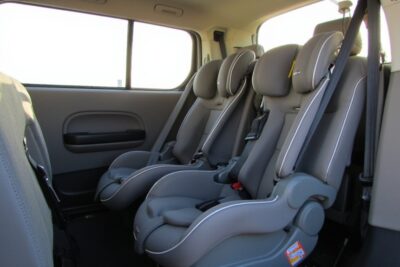
How to Use Rotating Baby Car Seats Safely

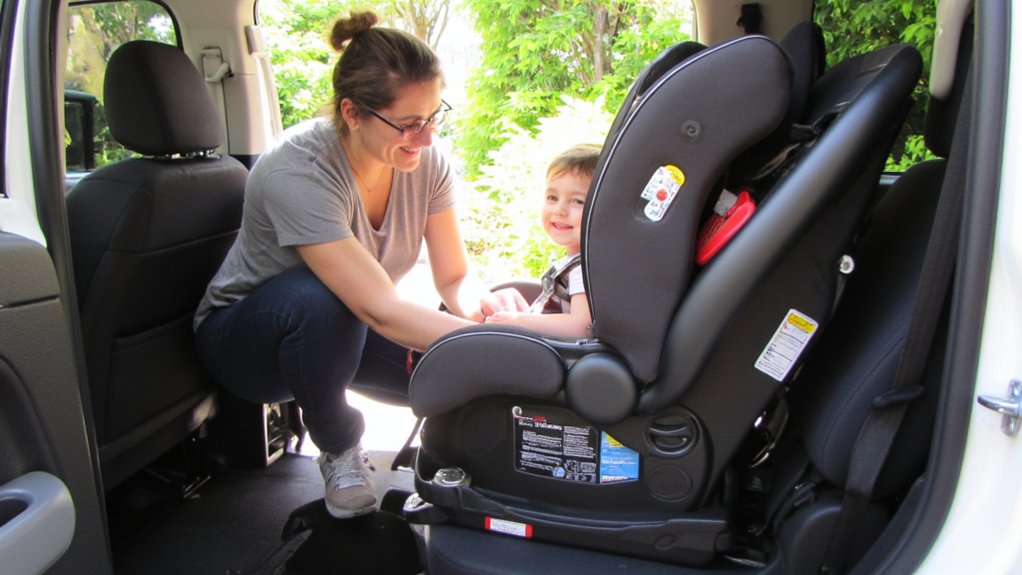
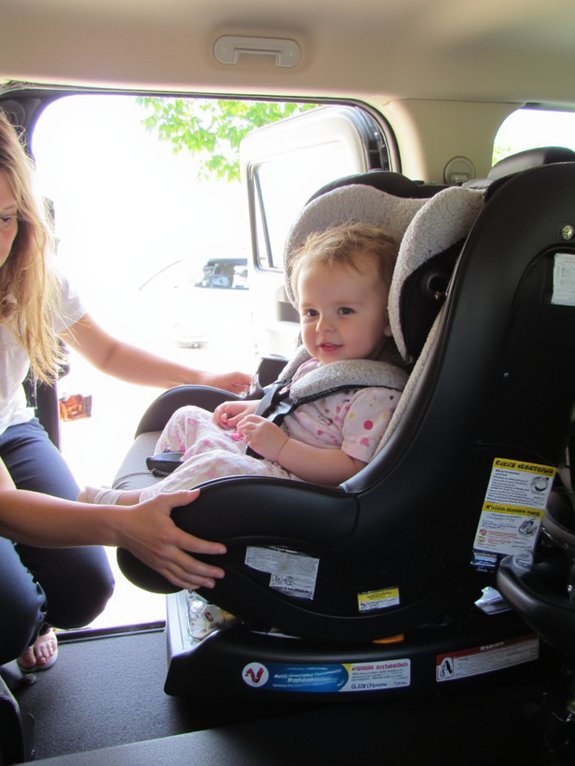
To use your rotating baby car seat safely, always verify it’s tightly installed using the seat belt or LATCH system, and lock the swivel mechanism before driving. Secure the harness snugly at shoulder level with the chest clip at armpit height, confirming the buckle clicks firmly. Keep your child rear-facing as long as possible, and regularly check for wear or damage. Proper use and maintenance maximize protection and convenience—explore detailed tips to keep your little one safest on every trip.
Table
- Main Points
- Understanding the Features of Rotating Baby Car Seats
- Proper Installation Techniques for Rotating Car Seats
- Ensuring Secure Harnessing and Buckling
- Maintaining the Rotating Mechanism for Safety
- Maximizing Rear-Facing Use With Rotating Seats
- Transitioning Safely From Rear-Facing to Forward-Facing
- Tips for Managing Space and Fit in Your Vehicle
- Common Safety Mistakes to Avoid With Swivel Seats
- Inspecting and Caring for Your Rotating Car Seat
- Selecting the Right Rotating Car Seat for Your Family
- Frequently Asked Questions
- Final Thoughts
Main Points
- Always securely install the car seat base using seat belt or LATCH and lock the rotation mechanism before driving for stability.
- Use extended rear-facing mode as long as possible, ensuring the seat is locked and harness fits snugly at shoulder level.
- Adjust harness height and strap tightness using the pinch test, keeping the chest clip at armpit level for child safety.
- Regularly inspect the rotating mechanism and harness for wear, damage, or unusual noises, and clean per manufacturer instructions.
- Confirm the car seat complies with current safety standards, is within expiration date, and is installed at the correct angle.
Understanding the Features of Rotating Baby Car Seats
Rotating baby car seats offer practical features designed to make securing your child safer and easier.
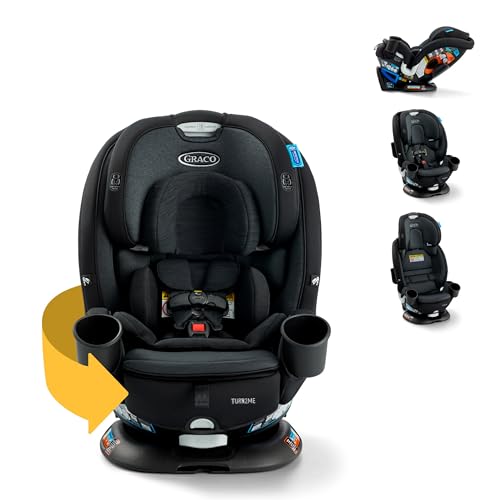
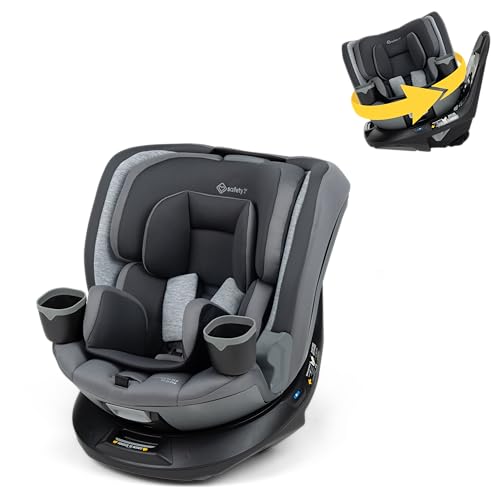
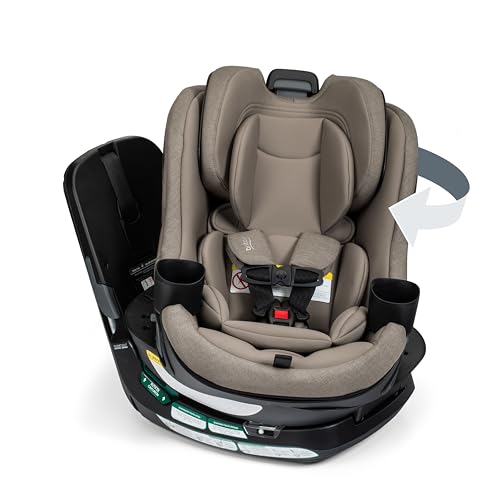
You’ll find that rotating car seats often include a rotating function with 180 or 360-degree movement, letting you access your child without struggle.
Many meet strict safety standards and federal regulations, ensuring reliable protection.
These convertible car seats often support extended rear-facing use, accommodating children up to 50 pounds to maximize safety during early years.
Look for features like steel-reinforced frames, energy-absorbing foam, and anti-rebound bars that enhance crash protection.
Some models allow seamless switching between rear- and forward-facing modes without reinstalling, adding convenience.
Understanding these features helps you serve your child’s safety needs effectively while complying with recommended guidelines.
Proper Installation Techniques for Rotating Car Seats
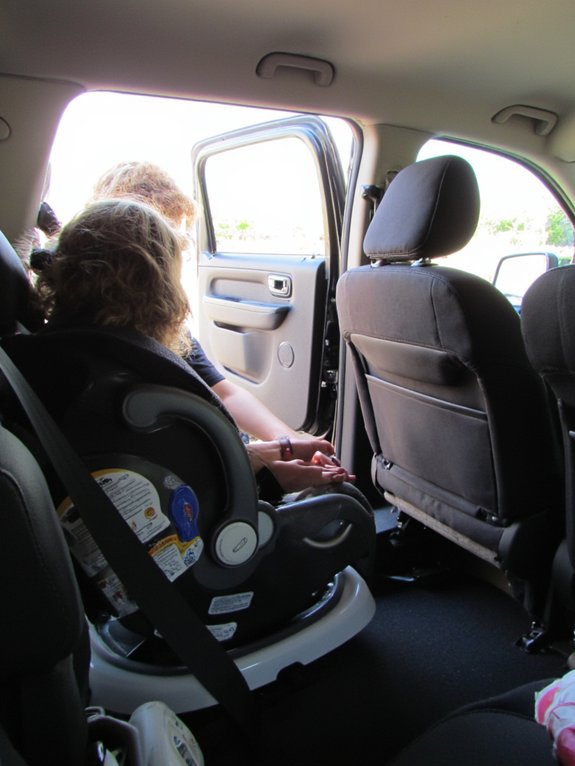
When installing your rotating car seat, make certain the base is secured tightly using the seat belt or LATCH system to prevent any movement.
Always lock the rotation mechanism before driving to keep the seat stable and safe.
Finally, check the harness alignment to confirm it fits your child correctly and provides proper protection.
Securing the Base
Although securing the base might seem straightforward, following the manufacturer's instructions carefully is essential to confirm your rotating car seat stays firmly in place. Whether using the seat belt or LATCH system, achieve a secure fit by eliminating slack—consider a LockStrong belt tensioner if possible. Check the base’s level indicator to confirm proper angle, as this affects safety. Confirm compatibility with your vehicle’s headrests to avoid interference. Many top-rated models, such as the Graco Slimfit 3-in-1 Convertible Car Seat, feature user-friendly installation systems and machine-washable covers for added convenience.
| Step | Action | Tip |
|---|---|---|
| 1. Position Base | Place base on vehicle seat | Confirm no movement |
| 2. Secure Straps | Use seat belt or LATCH | Remove slack completely |
| 3. Verify Level | Check base angle indicator | Adjust until level |
Regularly inspect your installation to maintain safety during car seat use.
Locking the Rotation
Since securing the base properly is only the first step, you’ll need to lock the rotation feature to prevent unintended movement while driving.
Start by engaging the locking mechanism—usually a lever or button—and consult your car seat manual to confirm the exact process.
Always verify the seat is in the locked position before every trip by giving it a firm tug to check stability.
This step is essential to meet safety standards and federal regulations designed to protect your child. The QuickFit harness system, found in some convertible car seats like the Safety 1st Grow and Go, also allows for easy harness adjustment, ensuring both safety and convenience during installation.
Remember, the rotation feature allows easy access, but it must remain securely locked when the vehicle is in motion.
Regularly inspect the locking function and the seat for wear or damage to maintain reliable protection and peace of mind.
Checking Harness Alignment
Proper harness alignment plays an essential role in keeping your child safe and comfortable in a rotating car seat. First, make sure the harness straps are threaded through the correct slots—at or just above the shoulders for forward-facing, and at or just below for rear-facing. Use the pinch test to confirm the harness is snug; you shouldn’t be able to pinch any excess strap at the shoulder. Position the chest clip at armpit level to keep the harness secure and prevent excessive movement. After adjusting the harness, always verify that the car seat installation is tight with no side-to-side or forward movement. Finally, check that the rotation feature operates smoothly without obstruction, ensuring your child stays both safe and comfortable during every ride.
Ensuring Secure Harnessing and Buckling
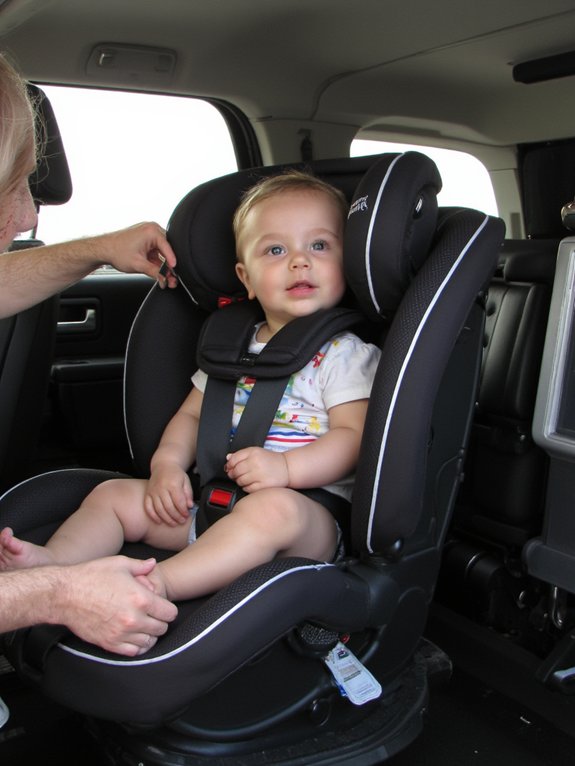
Make sure the harness straps fit snugly against your child's shoulders with just enough slack for one finger to prevent movement.
Position the chest clip at armpit level to keep the harness aligned and secure during travel.
Always double-check that the buckle is fully fastened and the seat is locked in place before each trip.
For additional peace of mind, consider choosing a car seat with a steel frame designed to absorb crash energy and enhance overall safety.
Proper Harness Adjustment
When securing your child in a rotating baby car seat, you’ll want to adjust the harness straps so they fit snugly against their shoulders without any twists.
Proper harness adjustment is key to maximizing safety and convenience. Make certain the retainer clip sits at armpit level and the straps are tight enough that you can’t pinch excess fabric at the shoulder—typically no more than one finger’s width is allowed. For additional safety and comfort, multi-position adjustable headrests allow you to precisely align the harness and headrest height as your child grows.
For convertible seats, adjust the harness height when switching from rear-facing to forward-facing, following the manufacturer’s guidelines closely.
Regularly inspect straps and buckles for wear or damage to guarantee ongoing protection.
Remember, the correct recline angle also affects how well the harness performs in a crash, so adjust your rotating car seat accordingly.
Buckle Positioning Tips
Although securing your child in a rotating baby car seat might seem straightforward, paying close attention to buckle positioning is essential for their safety.
Properly positioning the harness straps and buckles prevents injury and guarantees the harness system works as intended. Here are three key tips:
- When using forward-facing mode, place the harness straps at or just above your child's shoulders and position the chest clip at armpit level to keep them securely in place.
- Confirm the harness straps are snug against your child’s body; you shouldn’t be able to pinch any excess webbing at the shoulder.
- Always follow the installation instructions from the manufacturer to verify your buckling and harness system setup meets safety standards.
These steps help protect your child and provide peace of mind during every ride.
Double-Check Buckle Security
Always double-check the buckle security to guarantee your child stays safely restrained.
Start by ensuring the buckle clicks into place and is securely fastened without any obstructions. Tug gently to confirm it won’t pull loose.
Next, verify the harness straps fit snugly against your child's shoulders, allowing no more than one finger’s width of slack to prevent excessive movement during a crash. Graco’s ProtectPlus Engineering provides advanced crash protection, so ensuring the harness is adjusted according to these standards enhances your child’s safety.
For rotating car seats, make sure the seat locks firmly in position before buckling, as improper alignment can compromise safety.
Regularly inspect the buckle and harness system for wear or damage, replacing parts as needed.
Finally, consult your car seat’s manual for specific buckle and harness instructions to maintain ideal safety and protect your child every time you travel.
Maintaining the Rotating Mechanism for Safety
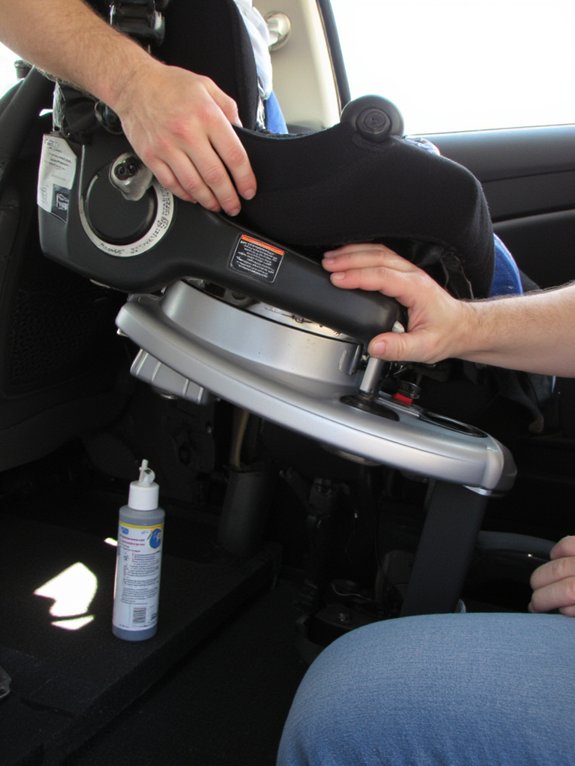
Because the rotating mechanism plays an essential role in your baby car seat’s safety, you need to maintain it regularly. Neglecting this can compromise secure installation and your child's protection.
Follow these key maintenance recommendations:
- Inspect the rotating mechanism frequently for wear, damage, or unusual noises, ensuring smooth operation without sticking.
- Clean the rotation parts according to the manufacturer’s guidelines to prevent debris buildup that could hinder function.
- Always engage the rotation lock fully when the seat is in use to avoid accidental swiveling during transit.
Additionally, periodically verify the entire seat’s secure installation.
Consult the car seat manual for specific maintenance recommendations. By staying vigilant, you serve your child’s safety with care and responsibility.
Maximizing Rear-Facing Use With Rotating Seats
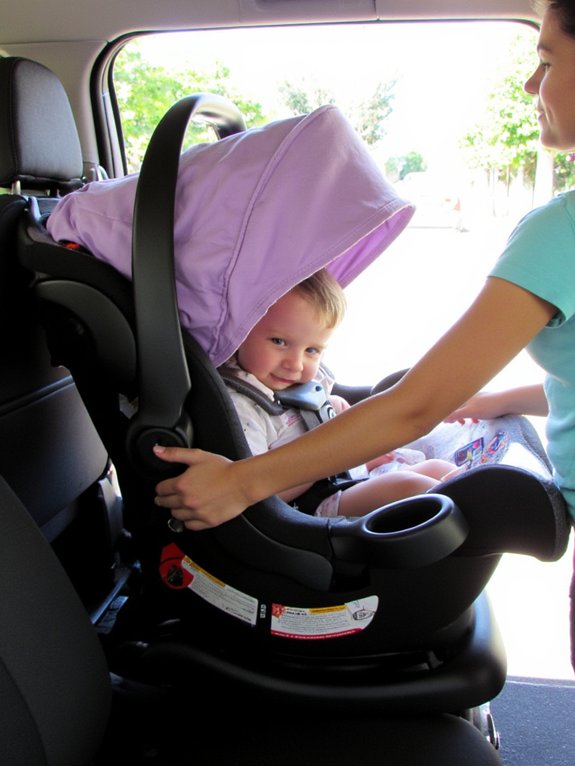
You can keep your child rear-facing longer by using a rotating seat that supports higher weight limits, which boosts their safety in the car.
Always adjust the harness snugly and correctly to fit your growing child as you maximize rear-facing use.
Make sure the seat is locked securely in the rear-facing position before every trip.
Extended Rear-Facing Benefits
Three key advantages make rotating baby car seats an excellent choice for extending rear-facing use. When you choose a rotating car seat, you’re supporting your child’s safety while simplifying daily routines.
- Enhanced Safety: Extended rear-facing up to 50 pounds reduces head and neck injury risks. Many models include anti-rebound bars and energy-absorbing foam for extra protection.
- Ease of Use: Rotating seats swivel toward the door, making it easier to buckle and check harnesses correctly, encouraging longer rear-facing use.
- Proper Harnessing: The design helps maintain correct alignment and prevents common misuse, ensuring the harness fits securely every time.
Following these safety tips, you’ll confidently promote extended rear-facing, protecting your child while making your caregiving tasks smoother and safer.
Proper Harness Adjustment
Although rotating baby car seats offer convenience and safety advantages, proper harness adjustment remains crucial to maximize rear-facing protection.
You should position the harness straps at or just above your child's shoulders when using the rear-facing position. This guarantees the proper restraint needed during a collision.
Adjust the harness snugly—so you can’t pinch any excess strap material at the shoulders—to meet safety standards. Use the seat’s built-in indicators to verify both harness height and tightness, as many rotating seats have unique adjustment features.
Regularly check and update the harness as your child grows, keeping within the recommended rear-facing weight limits, sometimes up to 50 pounds.
Always review your car seat’s manual carefully to follow specific harness adjustments and maintain compliance with safety standards, maximizing both safety and rear-facing use.
Transitioning Safely From Rear-Facing to Forward-Facing
When your child exceeds the rear-facing weight or height limits—usually around 40 to 50 pounds or 43 inches—it’s time to switch to forward-facing mode.
Prioritize safety by following these key steps during the changeover:
- Confirm your rotating car seat is locked securely in the forward-facing mode to prevent movement during travel.
- Adjust the harness fit to accommodate your growing child, ensuring snugness without discomfort.
- Keep your child rear-facing as long as the seat allows, ideally beyond age 2, to maximize protection. For added peace of mind, look for side-impact protection features in your car seat, which are crucial for safety during collisions.
Many swivel car seats simplify this changeover without full reinstallation, reducing installation errors.
Swivel car seats ease transitions by eliminating full reinstallations, minimizing errors and enhancing child safety.
By carefully managing the switch from rear-facing seat to forward-facing modes, you serve your child’s safety needs with confidence and care.
Tips for Managing Space and Fit in Your Vehicle
After switching your child to forward-facing mode, it's important to contemplate how the rotating car seat fits within your vehicle. Focus on the seat’s width and the available rear passenger space to guarantee the rotating feature works smoothly. Check your vehicle’s seat belt configuration for proper installation without obstruction. Avoid placing adjacent seats too close, as this can hinder rotation. Regularly confirm the seat locks securely to maintain safety. For a safer and more comfortable experience, consider choosing a model with comprehensive crash protection features, which can provide added peace of mind during every ride.
| Factor | Consideration | Tip |
|---|---|---|
| Width | Narrow seats fit tighter spaces | Choose slim models like Evenflo Revolve Slim (16.7") |
| Rear Passenger Space | Legroom affects rotation | Guarantee enough clearance for full swivel |
| Seat Belt | Installation complexity | Verify seat belt routing compatibility |
| Rotating Feature | Accessibility | Avoid crowding with adjacent seats |
Common Safety Mistakes to Avoid With Swivel Seats
Because safety hinges on proper use, you must avoid common mistakes with swivel seats to protect your child during every trip.
Rotating models offer convenience, but misuse can compromise Car Seat Safety. Here are key errors to avoid:
- Failing to lock the seat in place before driving—never use the swivel feature while the vehicle is moving.
- Overlooking improper installation—always follow your specific car seat’s instructions to guarantee secure attachment.
- Neglecting the harness system—regularly check that straps aren’t twisted and fit snugly to prevent injury risks.
Inspecting and Caring for Your Rotating Car Seat
Avoiding common mistakes with your rotating car seat is only part of keeping your child safe; regular inspection and proper care play a big role too.
Start by inspecting the rotating mechanism to guarantee it moves smoothly without resistance or obstructions. Regularly check the harness system for any frayed straps or malfunctioning buckles, as these are critical for your child’s safety.
Clean the seat following the manufacturer’s guidelines, typically with mild soap and water, avoiding harsh chemicals that could damage materials.
Always verify the seat is securely installed and meets current safety standards in both rear-facing and forward-facing positions.
Don’t forget to note the expiration date—using an expired seat or one involved in a crash can compromise protection.
Staying vigilant helps you serve your child’s safety with confidence.
Selecting the Right Rotating Car Seat for Your Family
How do you choose the right rotating car seat for your family’s needs? Focus on models that balance safety, ease, and longevity. Here’s how:
- Prioritize weight and height limits. The Evenflo Revolve360 Slim supports rear-facing up to 50 lbs and forward-facing up to 65 lbs, ensuring extended use and accommodating growing kids.
- Evaluate installation ease. The Cybex Sirona S offers excellent safety but can be tricky to install, so choose a seat you can secure confidently.
- Confirm compliance with safety standards. Every rotating car seat sold in the U.S. meets federal safety testing, but double-check certifications for peace of mind.
Selecting thoughtfully means you’re serving your family best by combining protection, convenience, and comfort.
Frequently Asked Questions
Are Rotating Car Seats Safe for Babies?
You’ll find rotating car seats safe for babies when you follow installation guidelines, respect age recommendations, and rely on built-in safety features. They outperform accident statistics, helping you protect your little one effectively during every trip.
What Is the Be Safe Rotating Car Seat?
Like choosing Excalibur, you want the best. The Be Safe Rotating Car Seat offers top safety ratings, easy installation tips, and excellent user reviews. Its features comparison shows it’s a reliable, secure choice for your child.
What Is the 2 Hour Car Seat Rule?
The 2 hour car seat rule guides you to limit infant time in seats for safety, travel comfort, and parent convenience. Following these car seat guidelines prevents health risks and guarantees ideal infant safety during trips.
Is It Worth Having a Swivel Car Seat?
You’ll appreciate the convenience factor and enhanced safety features, especially during installation. Though swivel seats cost more than traditional ones, their ease and improved security often justify the price, making them worth considering carefully for your family.
Final Thoughts
By understanding your rotating baby car seat’s features and committing to proper installation and harnessing, you’re taking thoughtful steps to enhance your child’s travel safety. Regular maintenance and careful use help keep the rotating mechanism functioning smoothly, minimizing any unexpected surprises. Remember, choosing the right seat and avoiding common pitfalls guarantees a secure and comfortable ride. With these mindful practices, you’re gently steering toward peace of mind on every journey.
If you want to know other articles similar to How to Use Rotating Baby Car Seats Safely you can visit the Baby Car Seats category.
What Are the Best Baby Car Seats for Small Cars?
Why Choose Baby Car Seats Under $100?
Why Choose FAA Approved Car Seats for Airplanes?
10 Tips for Choosing the Best Convertible Car Seat
10 Tips for Rear Facing Car Seat Installation
What Are the Easiest Baby Car Seat Covers to Clean?
10 Tips for Choosing High Weight Limit Car Seats
Top 3 Baby Car Seats Compatible With Strollers
What Is the Safest Infant Car Seat?
This is also interesting