
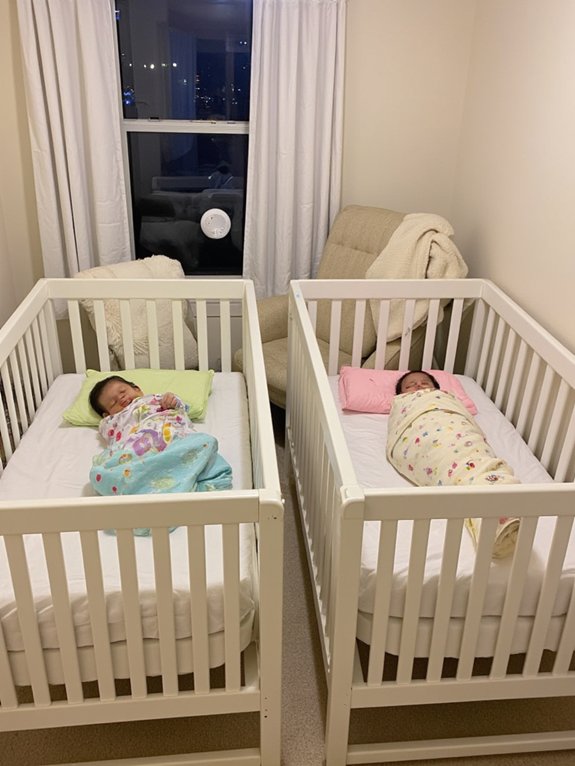

What Are the Best Sleep Solutions for Twins?

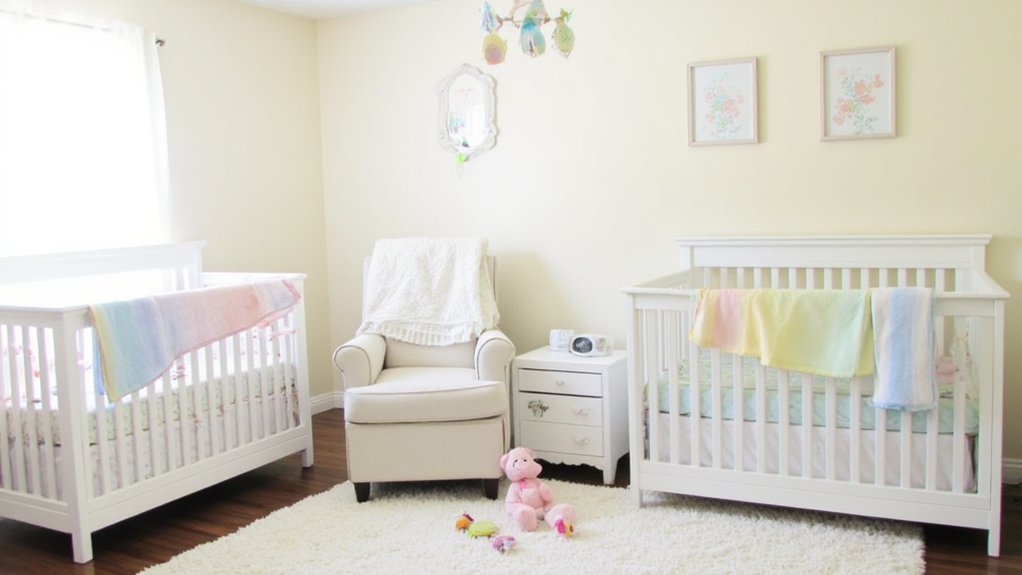
For twins, the best sleep solutions prioritize safety and individual space. Choose twin bassinets with separate, breathable sleep areas to reduce SIDS risk and allow movement freedom. Opt for models with sturdy bases, breathable mesh sides, and adjustable heights for easy access. Keeping separate sleep spaces side-by-side supports better sleep quality and development. As they grow, shifting to individual cribs around 4–6 months guarantees continued safety. You’ll find practical tips and options to support your twins’ sleep journey ahead.
Table
- Main Points
- Choosing the Right Bassinet for Twins
- Safety Considerations for Twin Bassinets
- Space-Saving Bassinet Options for Shared Nurseries
- Features to Look for in Twin Bassinets
- Setting Up Separate vs. Shared Bassinet Sleep Spaces
- Transitioning Twins From Bassinets to Cribs
- Frequently Asked Questions
- Final Thoughts
Main Points
- Choose bassinets designed specifically for twins with separate, breathable sleep spaces to reduce SIDS risk and ensure safety.
- Place twins in separate sleep areas, side-by-side, to promote individual sleep patterns and minimize disturbances.
- Use breathable mesh sides and stable, wide-based bassinets meeting safety standards to enhance airflow and prevent tipping.
- Maintain a dark, cool nursery with white noise to create a soothing sleep environment for twins.
- Transition twins to separate cribs by 4 to 6 months, keeping a consistent sleep routine and safe bedding practices.
Choosing the Right Bassinet for Twins
When you’re welcoming twins, choosing the right bassinet is vital to guarantee both safety and convenience.
Look for a bassinet designed for co-bedding that offers ample space for each baby to sleep safely on their backs, fostering a healthy sleep environment.
Prioritize models with breathable mesh sides to enhance airflow and help you keep a watchful eye on your twins. For added peace of mind, consider bassinets with 360° breathable mesh to promote exceptional visibility and reduce overheating risks.
A stable base with a wide, sturdy frame is important to prevent tipping, especially with two little ones inside.
Make sure the bassinet meets established safety standards to protect your babies from hazards.
Adjustable height features can ease nighttime care by letting you access both infants without strain, supporting your well-being as you nurture your twins.
Safety Considerations for Twin Bassinets
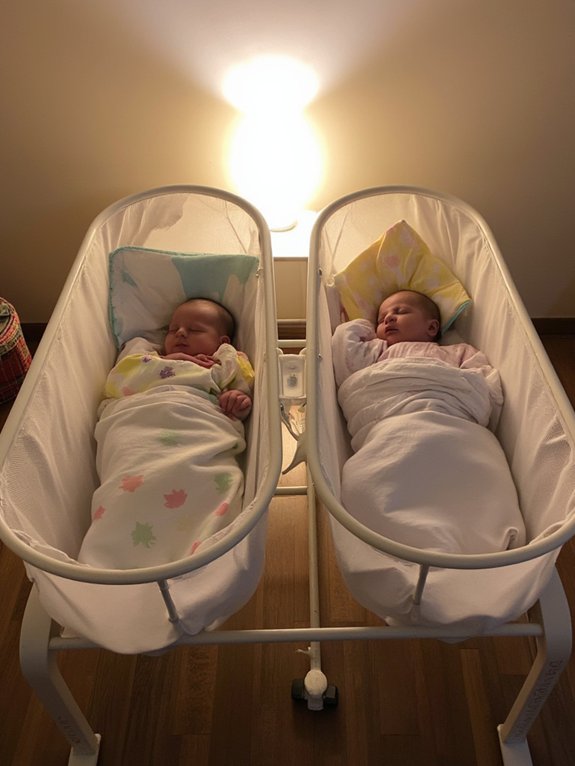
To keep your twins safe, the American Academy of Pediatrics recommends giving each baby their own separate sleep space, like individual bassinets or cribs.
If you choose a twin bassinet, make sure it meets safety standards and provides enough room to prevent crowding.
Always check that the bassinet is sturdy and designed specifically for multiple infants to reduce risks and promote safe sleep.
Some bassinets, such as those with breathable mattress technology, are specifically designed to enhance airflow and reduce suffocation risks, which is especially important when considering sleep solutions for twins.
Separate Sleep Spaces
Although sharing a sleep space might seem convenient, the American Academy of Pediatrics strongly recommends placing twins in separate cribs to lower the risk of Sudden Infant Death Syndrome (SIDS) and create safer sleep environments.
Choosing separate cribs supports safe sleep and respects each baby's unique sleep patterns, improving overall sleep quality for both twins and parents. Opting for cribs that meet CPSC and ASTM safety standards further ensures a secure sleeping environment for your twins.
Here’s why separate sleep spaces matter:
- Separate cribs reduce SIDS risk by avoiding co-bedding hazards.
- Individual cribs let twins move freely without disturbing each other’s sleep.
- They accommodate each infant’s unique sleep patterns and preferences.
- As twins grow, separate cribs prevent safety risks linked to co-bedding in shared bassinets.
Bassinet Safety Standards
Choosing separate sleep spaces for your twins sets a strong foundation for safety, especially when considering bassinets designed specifically for two infants.
You should look for bassinet safety standards set by the Consumer Product Safety Commission, which include a sturdy frame, a firm mattress, and slats no wider than 2 3/8 inches to avoid entrapment. When selecting a bassinet, prioritize options with height adjustability and stability features that ensure the bassinet remains secure and level, even with two infants.
Separate sleeping spaces reduce Sudden Infant Death Syndrome risks by preventing suffocation.
Verify the bassinet offers adequate ventilation and can support both infants without tipping.
Always place your babies on their backs to sleep, following the back to sleep guideline, and avoid soft bedding, pillows, or toys inside the bassinet.
Regularly check for recalls and updates to keep your twins’ sleep environment as safe as possible.
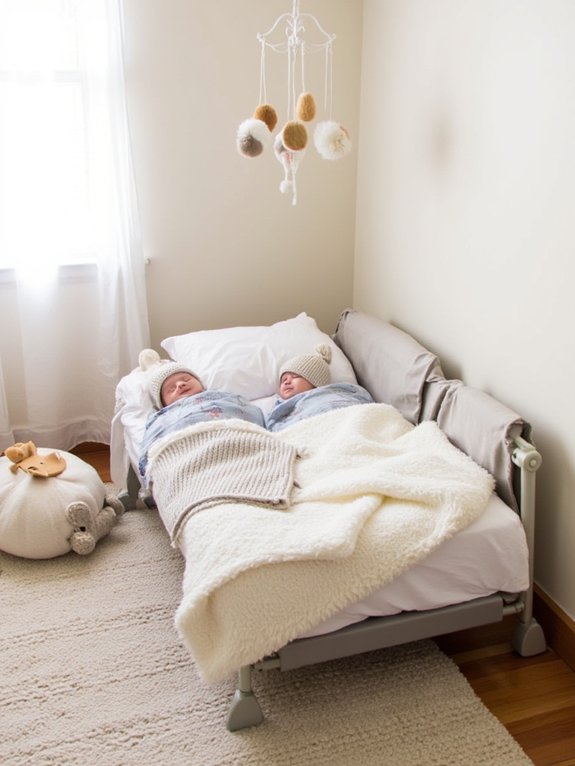
When you’re managing limited nursery space for twins, space-saving bassinets designed with side-by-side layouts offer a practical and cozy solution.
These bassinets maximize your shared nursery while ensuring a safe sleeping environment. For parents concerned about sustainability, many modern bassinets use eco-friendly materials to support a healthier environment for your twins.
Consider these key options:
- Adjustable heights let you align bassinets with your bed, easing nighttime feedings.
- Breathe mesh sides improve airflow and visibility, keeping twins comfortable and secure.
- Compact designs fit snugly in smaller rooms without sacrificing safety or comfort.
- Convertible cribs grow with your babies, transforming for long-term use and value.
Features to Look for in Twin Bassinets
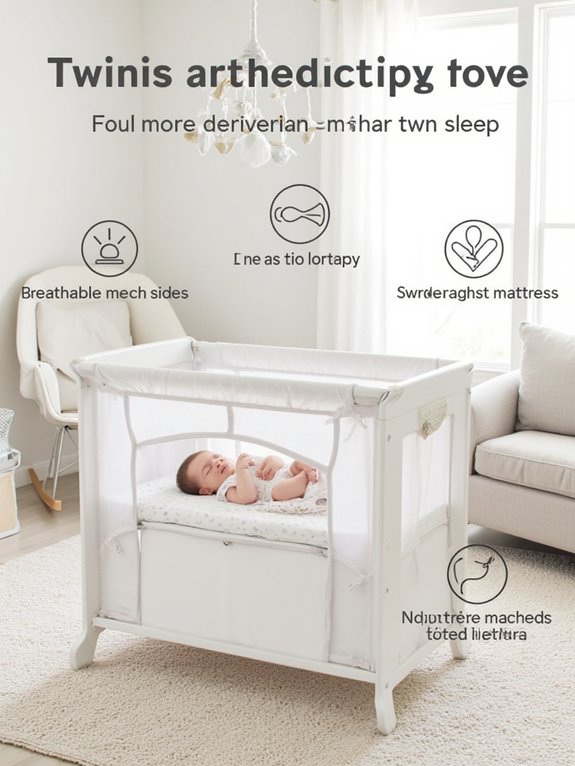
Maximizing your nursery space with the right bassinets is just the beginning of creating a safe and comfortable sleep area for your twins.
When choosing twin bassinets, look for models offering separate sleeping spaces to respect each baby's needs and reduce SIDS risk.
Prioritize bassinets that meet strict safety standards and feature breathable mesh sides for ventilation and easy monitoring. You may also want to consider bassinets with sturdy construction to prevent tipping or wobbling and enhance overall safety.
Adjustable heights help you care for your little ones comfortably without straining your back.
Consider options with calming vibrations and built-in white noise machines to soothe your twins into restful sleep.
Practical storage compartments keep essentials close at hand, while portable designs or wheels add convenience.
These thoughtful features guarantee both safety and comfort, supporting your devoted care for your twins every night.
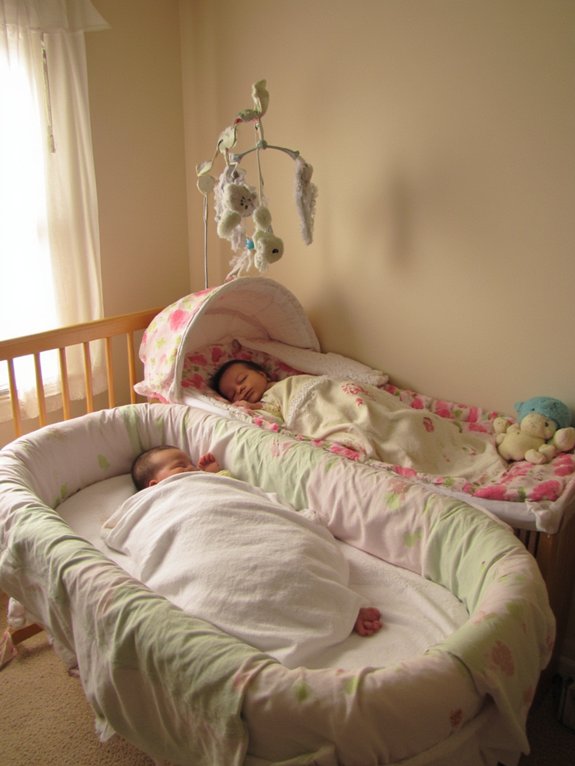
When setting up sleep spaces for your twins, choosing between separate cribs and a shared bassinet can impact their safety and comfort.
Separate cribs reduce the risk of SIDS and give each baby room to move, while shared bassinets can help regulate their temperature and sleep cycles but come with some challenges.
Understanding these benefits and risks will help you create the best environment for your little ones to sleep soundly.
Separate Cribs Safety
Although it might seem easier to share a bassinet, providing separate cribs for your twins is a safer choice that supports their individual comfort and movement.
The American Academy of Pediatrics stresses that separate cribs reduce the risk of SIDS and promote safety. For added peace of mind, choosing mattresses with breathable materials like the Newton Baby Crib Mattress can further enhance each baby's sleep environment.
Here’s why separate cribs work best:
- Each twin gets a consistent sleep space, helping develop individual sleep patterns.
- Separate cribs reduce sleep disturbances caused when twins accidentally wake each other.
- You can place cribs side by side to maintain closeness while prioritizing safety.
- Individual spaces allow better comfort and freedom of movement for each baby.
Shared Bassinet Challenges
Because twins grow and move quickly, sharing a bassinet can create challenges that disrupt their sleep and your peace of mind.
Shared bassinets often lead to sleep disturbances as one twin’s movement or noise can easily wake the other. Breathable mesh walls on some bassinets enhance airflow and baby visibility, but separating sleep spaces still provides the highest comfort and safety for twins.
The American Academy of Pediatrics recommends separate sleeping spaces, like individual cribs or bassinets, to reduce the risk of SIDS and promote safer, more comfortable rest.
Using sleep sacks instead of blankets further supports safe temperature regulation, especially in shared spaces.
To improve sleep quality for both babies, try continuous white noise to mask minor stirrings.
While it might be tempting to keep twins together, setting up separate sleeping spaces helps you serve their needs better and guarantees a safer, more restful environment for everyone.
Sleep Environment Benefits
Setting up separate sleep spaces for your twins can greatly improve their comfort and safety during the night.
The American Academy of Pediatrics recommends separate cribs to reduce SIDS risk and allow each baby individual movement. Choosing a bassinet with breathable mesh sides enhances airflow and visibility, creating a safer sleep area for each twin.
To create a favorable sleep environment, consider these key factors:
- Use continuous white noise to mask movements and soothe both babies.
- Maintain a nursery temperature between 68-72°F to promote better sleep quality.
- Guarantee a dark sleep environment to reduce early awakenings and encourage restful sleep.
- Separate cribs help prevent sleep disruptions from one twin’s movements, fostering longer, uninterrupted rest.
Transitioning Twins From Bassinets to Cribs
As your twins grow more active, moving them from bassinets to separate cribs by around 4 to 6 months can greatly reduce the risk of SIDS and give each baby their own safe sleep space. When shifting twins, keep the sleep environment consistent—maintain a nursery temperature of 68-72°F to guarantee ideal sleep conditions. Use sleep sacks instead of blankets to promote safety and regulate temperature in their individual cribs. Introducing white noise can mask sudden sounds that might wake one twin while the other sleeps, supporting restful nights. To ease the change, allow short playtime in cribs during the day, helping your babies get comfortable with their new space. For added peace of mind, choose cribs with JPMA certification to ensure you’re meeting the highest safety standards as your twins transition. These thoughtful steps make shifting twins smoother and safer for both you and your little ones.
Frequently Asked Questions
What Is the Best Sleeping Option for Twins?
You should create twin sleep environments with separate beds to reduce risks, use synchronized schedules and calming routines, manage nighttime feeding carefully, avoid sleep positioners, and rely on monitoring devices to guarantee safety and restful sleep.
How Can I Help My Twins Sleep?
You can help your twins by establishing a consistent sleep schedule and bedtime routine, using soothing techniques, arranging cribs for comfort, managing nighttime feeding, optimizing the sleep environment with noise reduction, and encouraging sibling bonding to promote calmness.
What Is the Best Sleep Training Method for Twins?
Like two dancers finding rhythm, you’ll blend synchronized sleep schedules with independent sleeping strategies. Use calming bedtime routines and optimize the twin sleep environment, balancing co-sleeping benefits and parental sleep support to ease twin sleep regression effectively.
How to Sleep Comfortably With Twins?
To sleep comfortably with twins, create calming sleep environments using separate cribs, synchronize their sleep schedules, and follow consistent nighttime routines. Explore co-sleeping benefits cautiously, apply shared bedroom tips, and adopt parental sleep strategies for restful nights.
Final Thoughts
When it comes to choosing sleep solutions for your twins, remember that what works best isn’t one-size-fits-all. Research shows twins often sleep better when they have individual spaces, reducing disturbances. Still, shared bassinets can save space and foster closeness. Trust your instincts, prioritize safety, and adapt as they grow. By balancing evidence with your unique situation, you’ll create a peaceful sleep environment that supports both your babies—and your sanity.
 Best Eco Friendly Strollers Made With Non Toxic Materials
 What Are the Best Video Baby Monitors for Large Homes?
If you want to know other articles similar to What Are the Best Sleep Solutions for Twins? you can visit the Bassinets category.
How to Choose an Organic Non-Toxic Sleep Space
What Are the Safest Sleep Practices for Infants?
5 Best Sleep Solutions for C-Section Moms

Bassinet Vs Crib: Best Sleep Option for Newborns

Best Portable Bassinets for Travel in 2024

How to Choose a Modern Baby Sleeper

How to Choose the Best Bassinet for Small Spaces

How to Choose Baby Sleepers for High Beds

5 Best Stroller-Compatible Sleep Solutions for Newborns
This is also interesting