






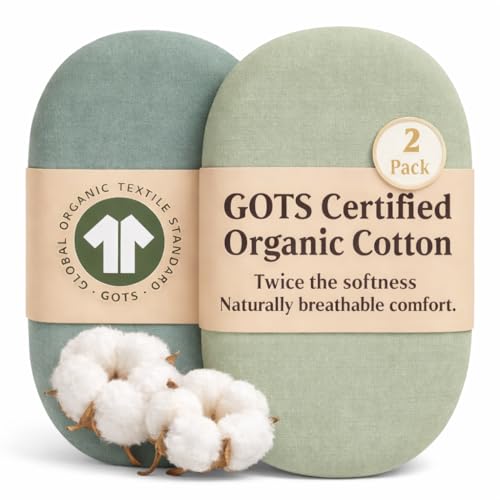




How to Choose an Organic Non-Toxic Sleep Space


To choose an organic non-toxic sleep space, prioritize bassinets with GOTS-certified organic cotton and GREENGUARD Gold certification for low chemical emissions. Ascertain natural, non-toxic materials like organic wool or GOLS-certified latex, avoiding flame retardants and VOCs. Look for sustainable wood framing and solid construction that meets safety standards. Verify authenticity to avoid greenwashing by checking third-party certifications. Caring properly with natural cleaners preserves purity. Explore these criteria to create a safe, healthy sleep environment for your baby.
Table
- Main Points
- Benefits of Choosing an Organic Non-Toxic Bassinet
- Key Organic Certifications to Look for in Baby Bassinets
- Materials Commonly Used in Organic Bassinets
- How to Identify Harmful Chemicals in Bassinet Construction
- Understanding Greenwashing in the Baby Gear Industry
- Tips for Verifying the Authenticity of Organic Bassinets
- Important Safety Features in Non-Toxic Bassinets
- Caring for Your Organic Bassinet to Maintain Purity
- Comparing Popular Organic Bassinet Brands
- Creating a Holistic Non-Toxic Sleep Environment for Your Baby
- Frequently Asked Questions
- Final Thoughts
Main Points
- Verify certifications like GOTS, GOLS, OEKO-TEX, and GREENGUARD Gold to ensure organic and low chemical emissions.
- Choose materials such as certified organic cotton, natural latex, and sustainably sourced wood for non-toxic safety.
- Avoid products with flame retardants, synthetic fabrics, or vague marketing terms like "natural" without certification proof.
- Prioritize breathable, hypoallergenic mattresses and bedding made from organic cotton or bamboo fibers.
- Maintain cleanliness using non-toxic, natural cleaning products and follow manufacturer care instructions to preserve safety.
Benefits of Choosing an Organic Non-Toxic Bassinet
When you choose an organic non-toxic bassinet, you greatly reduce your baby’s exposure to harmful chemicals and volatile organic compounds (VOCs) commonly found in conventional sleep products.
These bassinets utilize certified organic cotton and sustainably sourced wood, creating a safer sleep environment free from toxic adhesives and flame retardants. Many organic sleep spaces also meet GREENGUARD Gold standards, ensuring low chemical emissions and further protecting your child’s health.
By opting for GOTS-certified materials, you guarantee that every fiber meets strict safety and environmental standards.
Choosing GOTS-certified materials ensures every fiber adheres to rigorous safety and environmental standards.
This commitment not only protects your infant’s respiratory health and skin but also supports eco-friendly practices through sustainable manufacturing.
Additionally, organic non-toxic bassinets emphasize durability and longevity, providing a reliable, chemical-free solution that withstands wear over time.
Choosing this option means you’re actively prioritizing your baby’s well-being while honoring environmental stewardship.
Key Organic Certifications to Look for in Baby Bassinets
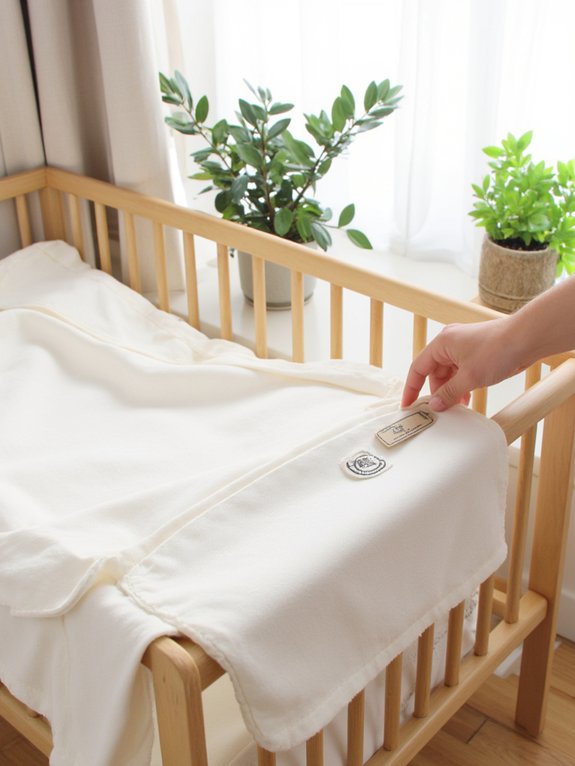
Anyone selecting a baby bassinet should prioritize certifications that verify organic and non-toxic standards. Look for GOTS-certified organic cotton, guaranteeing textiles are free from harmful chemicals and meet strict environmental criteria. If the bassinet includes latex, confirm it holds GOLS certification, verifying the organic source and absence of toxins. OEKO-TEX Standard certification further assures all fabrics are tested for safety, protecting your baby from exposure to harmful substances. GREENGUARD Gold Certification is essential; it guarantees low VOC emissions, promoting healthier indoor air quality. When researching mattresses, consider options like the breathable Wovenaire core, which enhances airflow and reduces suffocation risks, as seen in certain GREENGUARD Gold certified crib mattresses. Finally, verify that the non-toxic mattress and all organic materials avoid flame retardants and other hazardous chemicals. Prioritizing these certifications helps you provide a safer, healthier sleep space that truly serves your infant’s well-being.
Materials Commonly Used in Organic Bassinets
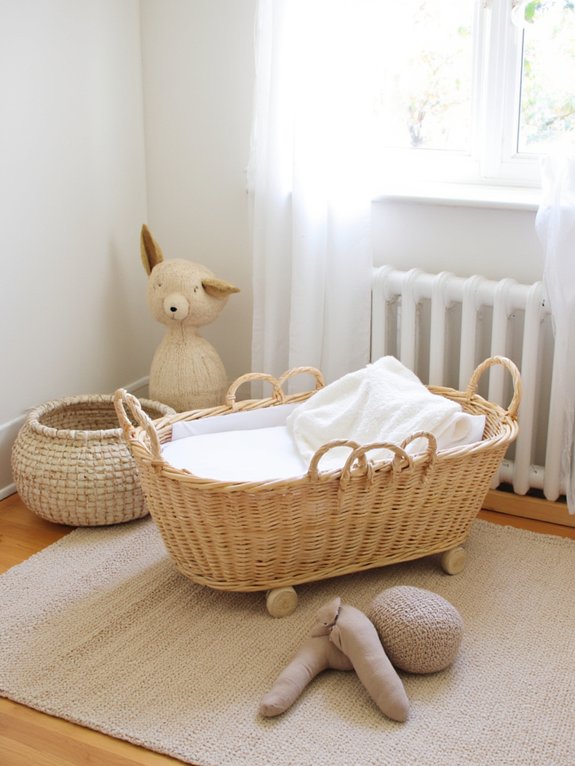
Understanding the certifications behind organic bassinets naturally leads to examining the materials that make up these products. When you choose a bassinet made from GOTS-certified organic cotton, you guarantee your baby’s fabric surroundings are free from harmful chemicals. Natural latex mattresses, certified by GOLS, offer non-toxic comfort sourced sustainably from rubber trees. Organic wool provides natural temperature regulation and moisture control without synthetic flame retardants. Additionally, Greenguard Gold certification assures low emissions, promoting a healthier sleep environment. Many modern bassinets, such as those with breathable Wovenaire mattresses, emphasize airflow and safety by using innovative non-toxic materials.
- Soft, breathable organic cotton that’s gentle on delicate skin
- Supportive, natural latex mattress certified for purity
- Warm, moisture-wicking organic wool filling for comfort
- Sustainably sourced wood and low emissions guaranteeing safe air quality
Selecting these materials reflects your commitment to a truly non-toxic, nurturing sleep space.
How to Identify Harmful Chemicals in Bassinet Construction
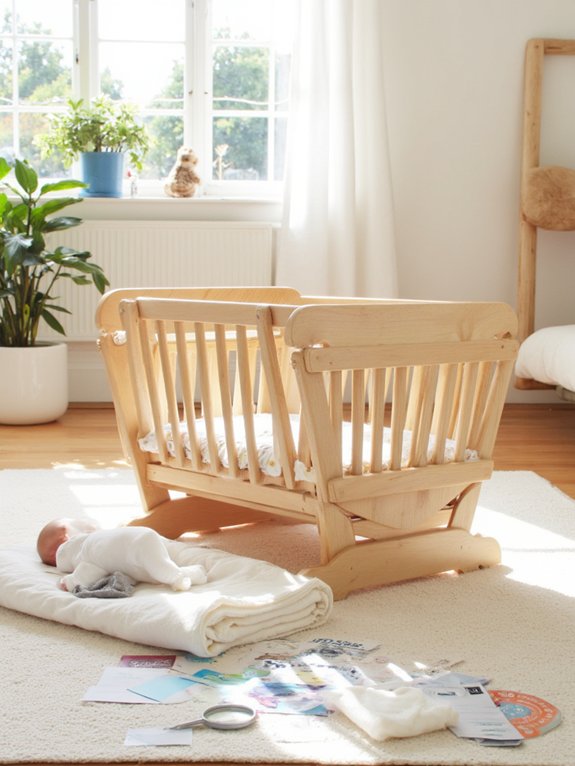
You should carefully examine bassinet materials for toxic chemicals like formaldehyde and flame retardants, which can off-gas harmful volatile organic compounds (VOCs).
Check product labels and certifications, such as Greenguard Gold, to verify low emissions and safer construction standards.
Prioritizing natural materials like solid wood and organic fabrics reduces your baby's exposure to these dangerous substances.
Additionally, choosing bassinets with breathable mesh sides can enhance airflow and reduce suffocation risks, further contributing to a safer sleep environment for your baby.
Common Toxic Chemicals
When selecting a bassinet, recognizing common toxic chemicals like volatile organic compounds (VOCs), formaldehyde, and flame retardants such as PBDEs is essential because these substances can degrade indoor air quality and harm your infant's health. Bassinets with breathable mesh panels can also help minimize the buildup of indoor air pollutants around your baby’s sleep space, further supporting a healthier environment.
To create a truly safe sleep space, avoid synthetic materials prone to off-gassing harmful substances. Instead, prioritize a certified organic mattress and organic cotton construction, ensuring the product carries credible certifications like Greenguard Gold. This guarantees rigorous testing and reduced toxic chemical presence.
Consider these points carefully:
- VOCs in synthetic foams can cause respiratory issues.
- Formaldehyde is a common irritant found in finishes.
- Flame retardants like PBDEs may disrupt neurological development.
- Certifications like Greenguard Gold confirm safer indoor air quality.
Your vigilance protects your baby’s environment and well-being.
Reading Material Labels
Although labels can sometimes be confusing or incomplete, carefully examining the law tags and material disclosures on a bassinet helps you identify potentially harmful chemicals in its construction.
Look for a mattress made from 100% organic cotton or natural latex, certified under standards like the Organic Textile Standard (GOTS), ensuring the product is free from harmful synthetic adhesives and chemicals. If the bassinet includes a memory foam mattress, make sure it meets strict safety and breathability standards, such as those outlined in well-reviewed products.
Avoid vague terms such as “eco-friendly” without certification, and steer clear of polyurethane foam, which emits volatile organic compounds (VOCs).
Check that any wool used is labeled "organic wool" rather than a blend, to prevent exposure to chemically treated fibers.
By reading labels meticulously, you’ll select a bassinet that supports healthy infant sleep environments, minimizing toxic chemical exposure and promoting well-being.
Understanding Greenwashing in the Baby Gear Industry
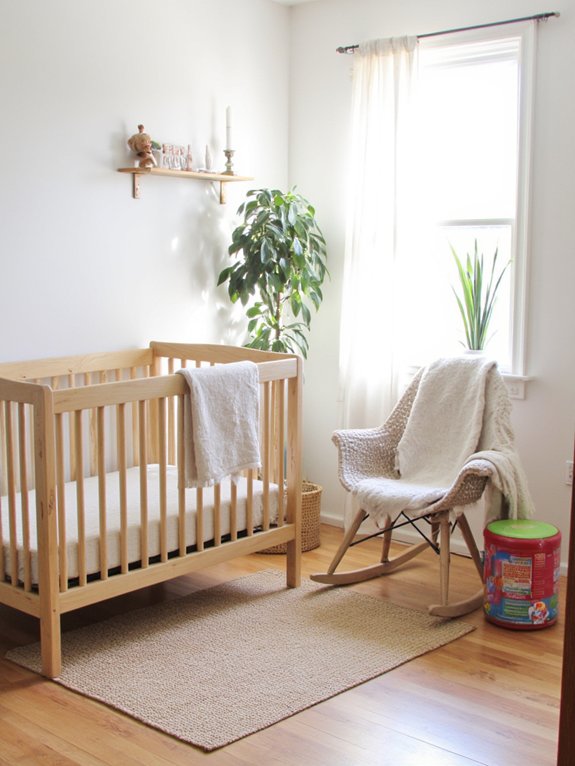
You need to watch for deceptive marketing that uses vague terms like "natural" without clear evidence of safety or sustainability.
Always verify certifications through trusted third-party organizations such as GOTS or OEKO-TEX® to guarantee authenticity.
Spotting Deceptive Marketing
How can you tell if a baby product's "eco-friendly" label is genuinely trustworthy? Deceptive marketing practices often mask synthetic materials within products claiming to be organic non-toxic mattresses.
To protect your child’s health and the environment, scrutinize product labels carefully. Beware of vague terms like “cotton blend” or “latex hybrid,” which may indicate non-organic content.
Look beyond superficial claims and watch for third-party certifications such as GOTS to verify authenticity.
- Feel confident knowing your baby rests on truly safe materials
- Avoid unknowingly exposing your child to harmful chemicals
- Support transparent brands prioritizing health and environment
- Prevent frustration from misleading eco-friendly claims
Validating Authentic Certifications
Where can you find truly reliable certifications amidst the flood of greenwashing in the baby gear industry?
Start by validating authentic certifications such as GOTS and GREENGUARD Gold, which guarantee organic materials and low emissions of harmful chemicals. When shopping for sleep products, also consider mattresses that are CertiPUR-US certified non-toxic, as this certification ensures the absence of harmful chemicals like phthalates, lead, and mercury.
These third-party certifications provide transparency about material sourcing and safety standards, essential for protecting your child’s health.
Beware of vague claims like "natural" or "eco-friendly" without clear backing, as they may mask hidden flame retardants or VOCs.
By focusing on scientifically verified labels, you make certain the sleep space is free from toxic exposures and meets rigorous safety and health criteria.
Prioritize products with detailed certification documentation to confidently serve your family’s well-being while avoiding misleading marketing.
Tips for Verifying the Authenticity of Organic Bassinets
Although many bassinets claim to be organic, verifying their authenticity requires careful examination of certifications like GOTS and GOLS, which confirm that materials meet strict organic and safety standards.
To guarantee your bassinet truly supports your baby’s health, focus on these key factors:
- Confirm certifications such as GOTS, GOLS, and OEKO-TEX to avoid harmful substances in textiles.
- Choose bassinets made from verified organic materials like cotton, wool, or untreated wood.
- Evaluate the manufacturer’s transparency about sourcing and production to guarantee genuine eco-friendly claims.
- Beware of vague “eco-friendly” labels without certification, which may indicate greenwashing. Selecting products that meet ASTM safety standards can further ensure your baby’s sleep space is both safe and supportive.
Important Safety Features in Non-Toxic Bassinets
Verifying the authenticity of organic bassinets sets a strong foundation, but ensuring your baby’s safety also means evaluating specific features that minimize exposure to harmful substances and physical hazards. Choose non-toxic bassinets crafted from certified organic materials like organic cotton or natural wood. Prioritize bassinets free from toxic flame retardants and finished with low or no VOC finishes to maintain air quality. Solid construction adhering to safety standards prevents tipping or collapse. Incorporate breathable designs such as mesh sides to reduce suffocation risks. Many mini crib safety standards also apply to bassinets, emphasizing the importance of sturdy construction, non-toxic finishes, and adjustable features for maximum safety and comfort.
| Feature | Benefit | What to Look For |
|---|---|---|
| Organic Materials | Minimizes chemical exposure | Certified organic cotton, natural wood |
| Free from Toxic Flame Retardants | Safer sleep environment | Alternatives like organic wool |
| VOC Finishes | Low off-gassing chemicals | Low/no VOC paints or finishes |
| Solid Construction | Stability and safety | Meets recognized safety standards |
| Breathable Designs | Enhances airflow, reduces suffocation | Mesh sides, ventilated panels |
Caring for Your Organic Bassinet to Maintain Purity
To maintain the purity of your organic bassinet, clean it regularly with a damp cloth and natural, non-toxic cleaners to prevent dust and allergen buildup.
Choose organic cotton or wool protectors and avoid synthetic materials to reduce chemical exposure.
Additionally, store the bassinet in a well-ventilated space and inspect it periodically for any structural wear to guarantee safety and longevity.
Cleaning Organic Bassinet Materials
When you clean your organic bassinet materials, you confirm the purity and safety of your baby's sleep environment by using gentle, eco-friendly detergents free from synthetic residues.
Prioritize non-toxic cleaning methods that protect delicate organic fabrics and prevent chemical contamination. Follow manufacturer guidelines closely to maintain material integrity and longevity.
- Use a mild, eco-friendly detergent designed for organic fabrics to avoid harsh chemicals.
- Spot clean stains with a natural water and white vinegar solution for effective, residue-free care.
- Employ a steam cleaner on organic cotton or wool to sanitize without chemicals.
- Skip fabric softeners and dryer sheets to preserve the bassinet’s non-toxic qualities.
This disciplined cleaning approach confirms your baby rests in a truly safe and healthy organic bassinet environment.
Avoiding Chemical Exposure
Although organic materials provide a safer foundation, you must actively prevent chemical exposure to maintain your bassinet’s purity.
Start by washing all bedding with unscented, biodegradable detergent to avoid allergens and guarantee a chemical-free sleep environment.
Use natural cleaning products like vinegar and baking soda for the bassinet’s surface, steering clear of harsh chemicals that contribute to indoor air pollution. It’s also important to regularly inspect the zipper and other components for wear or malfunctions, as damaged hardware could compromise safety and cleanliness.
Confirm that additional accessories, including mattress protectors and fitted sheets, are certified free from toxic substances and made from organic materials.
Position the bassinet in a well-ventilated space to reduce volatile organic compounds (VOCs) emitted from surrounding furniture or paint.
Regularly inspect the bassinet for wear or damage, which can release harmful substances, and always select non-toxic mattresses to preserve a safe, pure sleep space for your baby.
Proper Storage Techniques
Since organic materials are sensitive to environmental factors, you should store your bassinet in a cool, dry place away from direct sunlight to prevent material degradation.
Employ proper storage techniques by using breathable, non-toxic covers made from organic cotton to protect against dust and moisture without introducing chemical residues.
Avoid placing heavy objects on the bassinet to maintain its structural integrity.
Monitor humidity levels and inspect regularly for mold or pests to protect the purity of the materials.
- Use organic cotton storage bags for safe, breathable protection
- Clean gently with mild, non-toxic cleaners to avoid chemical residues
- Store in a stable environment to maintain shape and comfort
- Act promptly if mold or pests appear to preserve integrity
These steps help you maintain a safe, pure sleep space for your child.
Comparing Popular Organic Bassinet Brands
How do you identify the best organic bassinet for your infant’s safety and comfort?
Start by examining certifications like GOTS and GREENGUARD Gold, which verify non-toxic materials and strict safety standards. Brands such as Naturepedic and My Green Mattress use organic cotton and natural latex, ensuring a truly organic sleep space.
Look for certifications like GOTS and GREENGUARD Gold and brands using organic cotton and natural latex for a safe, organic bassinet.
Prioritize breathable, temperature-regulating designs to reduce overheating risks. Sustainable manufacturing practices also matter—they minimize environmental impact through renewable resources and waste reduction.
Expect to invest between $500 and $1,000 for premium quality. By choosing a certified, organic bassinet with breathable fabric and sustainable features, you create a safer, healthier sleep environment that supports your infant’s well-being and respects the planet.
This scientific, detail-oriented approach helps you serve your baby with the best non-toxic sleep space available.
Creating a Holistic Non-Toxic Sleep Environment for Your Baby
When you create a holistic non-toxic sleep environment for your baby, every element—from the mattress to the bedding—must meet strict safety and chemical-free standards.
Choose a crib mattress made from organic materials like certified organic cotton or natural latex, ensuring low VOC emissions and verified by certifications such as GOTS and GREENGUARD Gold.
Use bedding crafted from organic cotton or bamboo fibers to provide a safe environment free from pesticides and synthetic treatments.
Incorporate non-toxic, hypoallergenic pillows and blankets to minimize allergen exposure.
Maintain cleanliness with natural, non-toxic products to protect your baby’s health.
- Rest assured knowing your baby sleeps on certified organic cotton
- Provide comfort with hypoallergenic, chemical-free bedding
- Protect your infant from harmful VOCs and allergens
- Foster a nurturing, safe environment for restful sleep
Frequently Asked Questions
How Do I Choose a Non-Toxic Mattress?
You should evaluate mattress materials, check certification standards, and compare comfort levels. Consider durability factors, price comparisons, and brand reputation, ensuring ecological impact aligns with your values to enhance sleep quality while serving others’ health and well-being effectively.
What Is the Healthiest Bed to Sleep On?
You should choose a bed made from organic materials and natural fibers, verified by mattress certifications. Prioritize eco-friendly brands offering excellent pressure relief, durability factors, and reduced chemical emissions to enhance sleep quality while supporting health and sustainability.
How to Make Your Bedroom Non-Toxic?
You can’t afford toxins invading your sanctuary! Choose natural materials, hypoallergenic fabrics, and chemical-free décor. Add indoor plants, air purifiers, non-toxic paint, sustainable furnishings, and bedding choices to create a scientifically sound, non-toxic bedroom haven.
Is It Worth Buying an Organic Mattress?
You’ll find organic mattress benefits include improved sleep quality and reduced health risks due to certifications explained like GOTS. Considering durability factors, environmental impact, price comparison, and consumer reviews helps you make an informed, health-conscious choice.
Final Thoughts
Choosing an organic non-toxic bassinet guarantees your baby sleeps in a safe, chemical-free environment, promoting healthier development. Remember, "an ounce of prevention is worth a pound of cure"—investing time to verify certifications, materials, and safety features helps you avoid harmful exposures. Stay vigilant against greenwashing by researching brands thoroughly. By maintaining and caring for your bassinet properly, you create a truly holistic, non-toxic sleep space that supports your baby’s well-being from day one.
If you want to know other articles similar to How to Choose an Organic Non-Toxic Sleep Space you can visit the Bassinets category.
What Are the Best Sleep Solutions for Twins?

What Are the Safest Sleep Practices for Infants?

5 Best Sleep Solutions for C-Section Moms

Bassinet Vs Crib: Best Sleep Option for Newborns

Best Portable Bassinets for Travel in 2024

How to Choose a Modern Baby Sleeper

How to Choose the Best Bassinet for Small Spaces

How to Choose Baby Sleepers for High Beds

5 Best Stroller-Compatible Sleep Solutions for Newborns
This is also interesting