



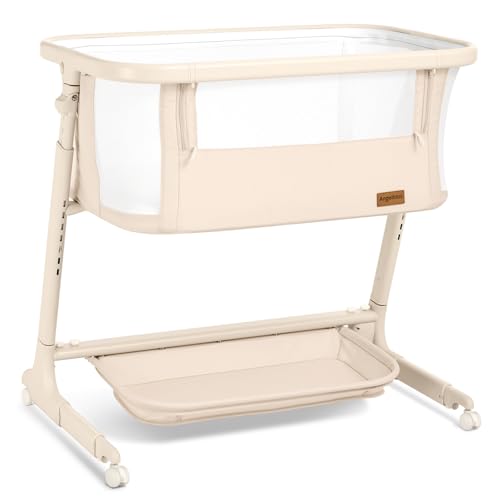



Why Choose a Rocking Sleeper for Your Baby?

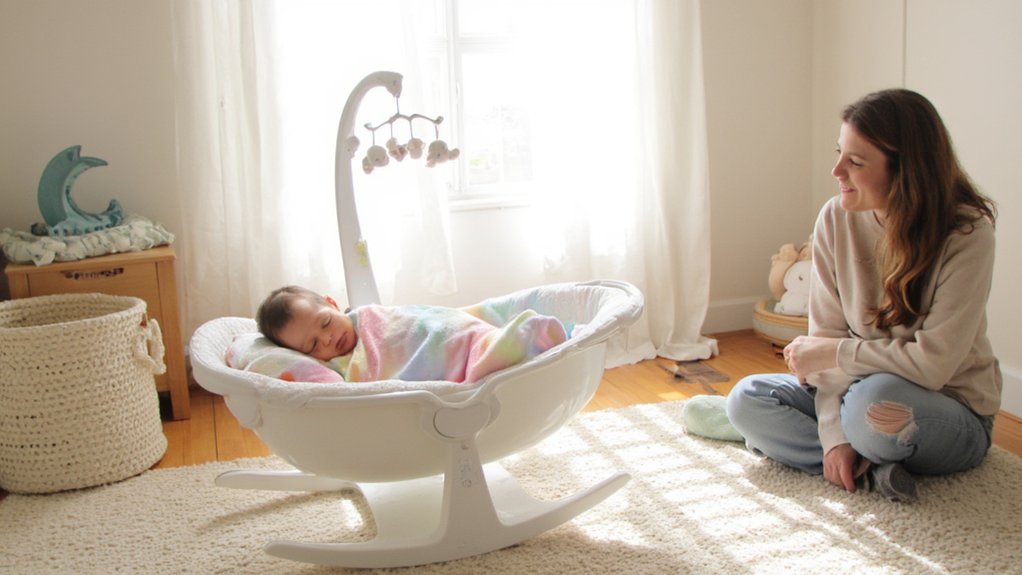
You’ll want a rocking sleeper because it gently mimics the comforting motion of the womb, helping your baby fall asleep faster and stay asleep longer. Its firm, breathable surface with secure swaddling aligns with expert safety guidelines, reducing fussiness and providing peace of mind. Rocking sleepers support healthy sleep habits early on while creating a calming bedtime routine for your family. Explore how this soothing sleep option compares to others and when to shift for your baby’s best rest.
Table
- Main Points
- How Rocking Sleepers Mimic the Womb to Soothe Babies
- Safety Features to Look for in a Rocking Sleeper
- Benefits of Using a Rocking Sleeper for Newborns
- When and How to Transition Away From Rocking Sleepers
- Comparing Rocking Sleepers to Baby Swings and Other Sleep Options
- Enhancing Sleep With Smart Rocking Bassinet Technologies
- Frequently Asked Questions
- Final Thoughts
Main Points
- Rocking sleepers mimic womb-like gentle motion, helping babies fall asleep faster and sleep more soundly.
- They provide a safe, flat, and breathable sleep surface adhering to AAP guidelines.
- Controlled rocking reduces fussiness and crying, soothing both baby and parents effectively.
- Adjustable rocking speeds and white noise options customize comfort to baby’s preferences.
- Gradual transition support fosters healthy sleep habits and smoother crib adaptation.
How Rocking Sleepers Mimic the Womb to Soothe Babies
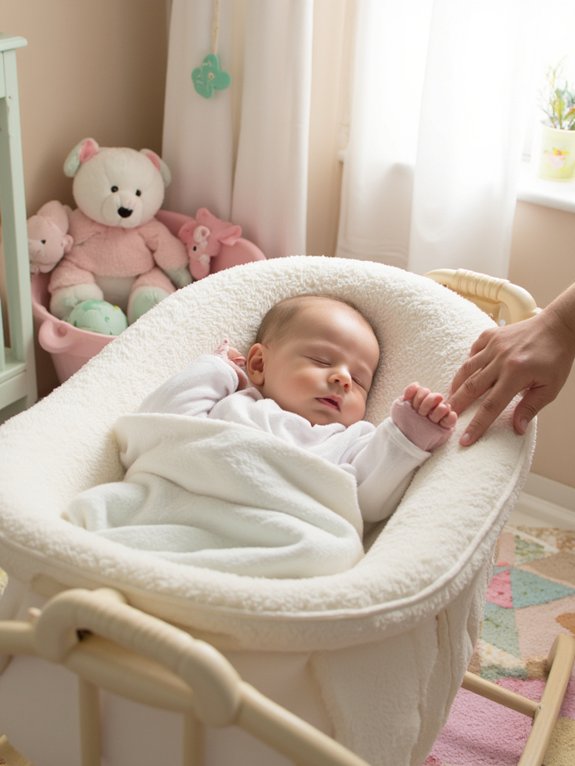
Because babies spend nine months surrounded by gentle motion in the womb, rocking sleepers replicate this familiar experience to soothe them effectively.
When you use rocking sleepers, you tap into the calming reflex triggered by rhythmic motion, helping infants feel secure and relaxed. This womb experience provides comfort that eases sleep initiation, allowing babies to fall asleep faster and stay asleep longer.
For parents, this means less fussiness and crying, making soothing a more manageable task. By mimicking the natural motions babies have known since before birth, rocking sleepers enhance sleep quality and promote restful, uninterrupted sleep.
Choosing this method shows your commitment to nurturing your baby’s well-being with proven, empathetic care tailored to their unique needs.
Safety Features to Look for in a Rocking Sleeper
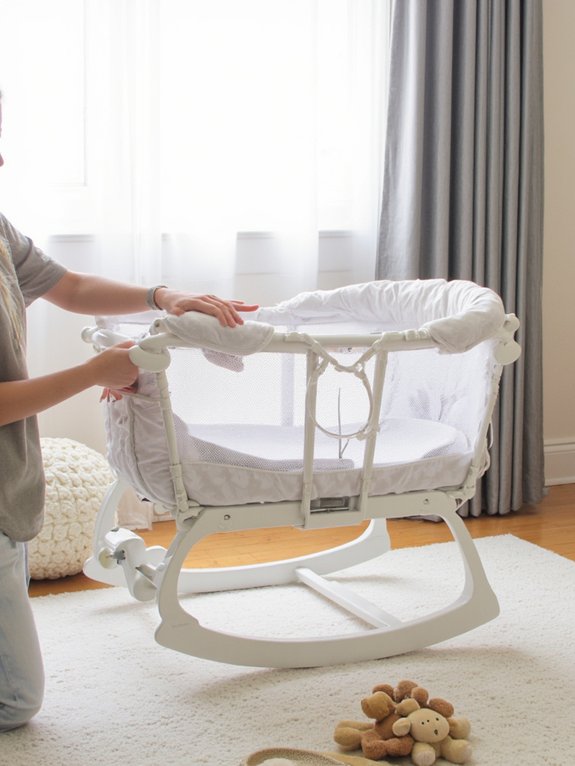
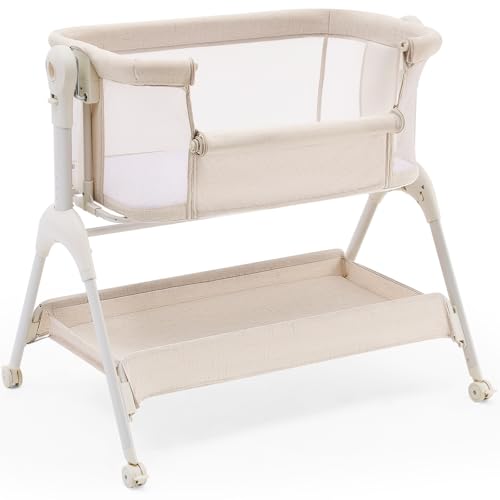
When choosing a rocking sleeper, prioritizing safety features is crucial to protect your baby during sleep. Look for models that meet AAP guidelines, offering a flat, firm sleep surface and breathable mesh sides to reduce suffocation risks. Secure locking mechanisms and stability features prevent tipping or unwanted movement. A snug swaddling system keeps your baby safely on their back, aligning with safety standards to minimize sleep-related incidents. Controlled motion guarantees gentle rocking without jarring your little one. For example, breathable mesh sides not only help with airflow but also let you keep an eye on your baby, supporting both comfort and safety.
| Safety Feature | Importance | What to Check |
|---|---|---|
| Sleep Surface | Flat, firm, breathable mesh sides | Meets AAP guidelines |
| Locking Mechanisms | Prevents tipping | Secure and easy to engage |
| Swaddling System | Keeps baby on back safely | Snug, comfortable fit |
| Controlled Motion | Gentle, consistent rocking | Avoids sudden or harsh movements |
Benefits of Using a Rocking Sleeper for Newborns
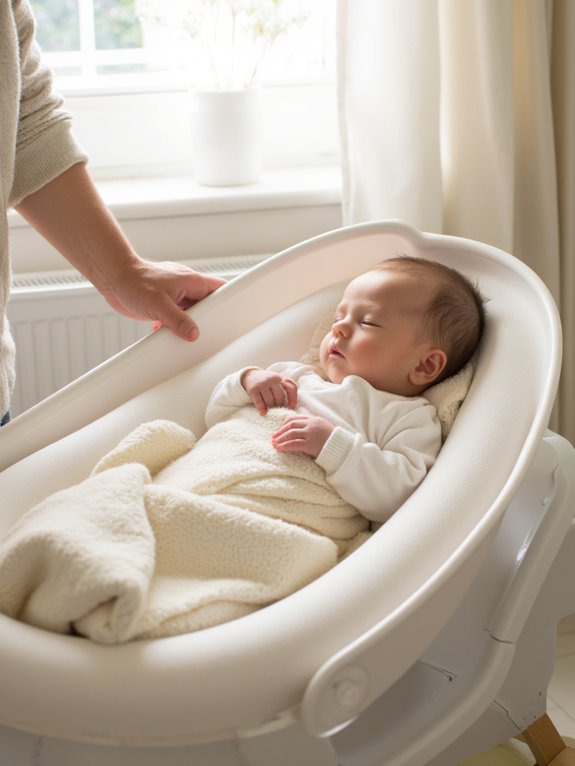
Though newborns can't tell you what they need, a rocking sleeper provides soothing motion that mimics the womb, helping your baby fall asleep faster and enjoy deeper, more restorative sleep cycles.
This calming effect reduces fussiness and crying, making it easier for your little one to self-soothe. Many modern rocking sleepers, like the MamaRoo, offer adaptive motions that closely replicate a parent’s natural comforting movements.
By creating a safe sleep environment with features like breathable mesh and secure swaddling, rocking sleepers support both comfort and safety.
Rocking sleepers combine breathable mesh and secure swaddling to ensure comfort and safety for your newborn.
They also minimize the need for manual rocking, giving you more rest and free time.
Using a rocking sleeper can improve overall sleep quality and help establish healthy sleep habits early on.
As babies grow, these benefits set the stage for a smooth shift to cribs, ensuring continued restful nights for your family.
When and How to Transition Away From Rocking Sleepers
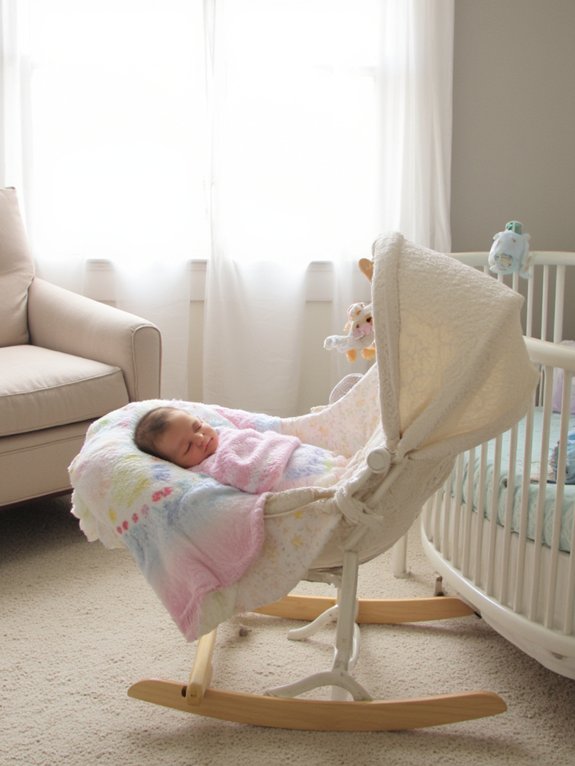
You'll know it's time to shift away from the rocking sleeper when your baby starts rolling over, becomes more mobile, or reaches the bassinet's weight limit.
Gradually reducing rocking sessions helps your little one adjust to sleeping without motion, building essential self-soothing skills.
For maximum safety, always check that your baby does not exceed the weight limit of up to 20 lbs specified by the manufacturer before continuing to use the sleeper.
Signs Baby Is Ready
As your baby grows and gains new skills, you may notice signs that it's time to shift away from the rocking sleeper. Watching for these signs helps you support your baby’s change to independent sleep and self-soothing, essential for healthy sleep routines. Many parents find that hands-free convenience provided by modern swings can make this transition period easier, as it allows for gentle soothing while the baby develops their ability to sleep independently.
| Sign | What It Means | Action to Take |
|---|---|---|
| Rolling Over | Increased mobility | Stop rocking; encourage flat sleep |
| Weight/Height Limits | Bassinet safety threshold | Move to crib or firm surface |
| Self-Soothing | Falling asleep without rocking | Gradually reduce rocking time |
| Sleep Pattern Change | Longer awake periods at night | Introduce consistent routines |
Recognizing these signs guarantees a smooth weaning from rocking, fostering your baby’s growth and restful sleep.
Gradual Weaning Techniques
When your baby approaches six months, it's an ideal time to start gradually weaning them from the rocking sleeper. This gradual weaning supports their growing self-soothing skills, essential for independent sleep. Begin by reducing frequency and duration of rocking sessions, allowing your baby to adjust naturally. Implementing Dr. Harvey Karp’s Wake-and-Sleep method can ease the shift by gently rousing your baby after they fall asleep, encouraging them to settle without motion. Consistently placing your baby in a crib or bassinet, rather than the rocking sleeper, helps build familiarity with their new sleep environment. Watching for readiness signs like rolling over and outgrowing the bassinet is key, and choosing a lightweight and portable design can make the transition easier for both home and travel sleep routines. With patience and consistency, you’ll guide your baby smoothly from rocking sleepers to confident, independent sleep.
Comparing Rocking Sleepers to Baby Swings and Other Sleep Options
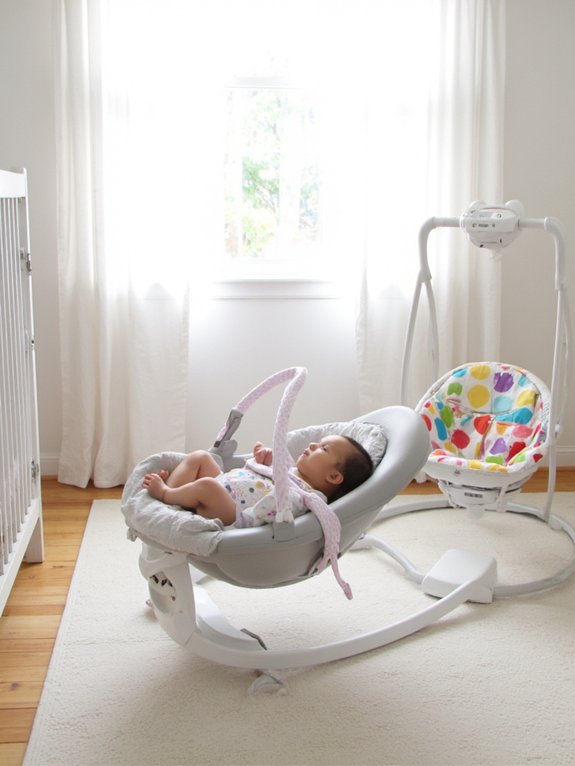
Although baby swings offer soothing motion, they don't provide the safe, flat sleeping surface that rocking sleepers like the SNOO do.
Baby swings pose risks such as airway obstruction when babies sleep in an inclined position, increasing suffocation danger. Many swings, while equipped with secure harnesses and sturdy frames, are not intended for unsupervised or overnight sleep, emphasizing the importance of always supervising your baby while using these devices.
In contrast, rocking sleepers promote safe sleep with firm surfaces and secure swaddling while mimicking natural womb-like motion, enhancing the soothing effect and helping babies fall asleep faster.
Rocking sleepers also support your baby’s development by incorporating Weaning Modes that encourage self-soothing skills and a smooth shift away from motion.
With adjustable rocking settings and additional calming features, rocking sleepers offer more versatility than baby swings or traditional cradles, making them a safer, more effective choice to nurture your baby’s sleep and wellbeing.
Enhancing Sleep With Smart Rocking Bassinet Technologies
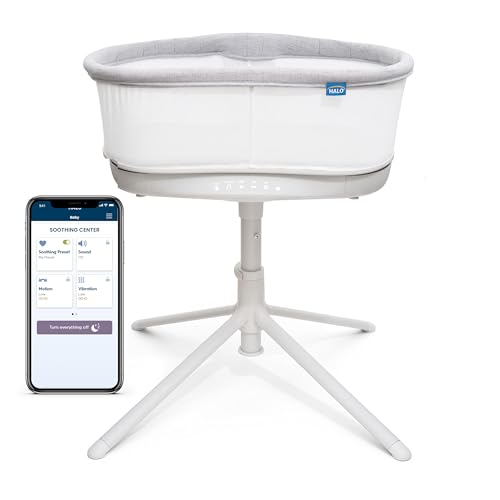
Because smart rocking bassinets like the SNOO adjust their motion and sounds based on your baby’s cues, they create a more personalized and soothing sleep environment.
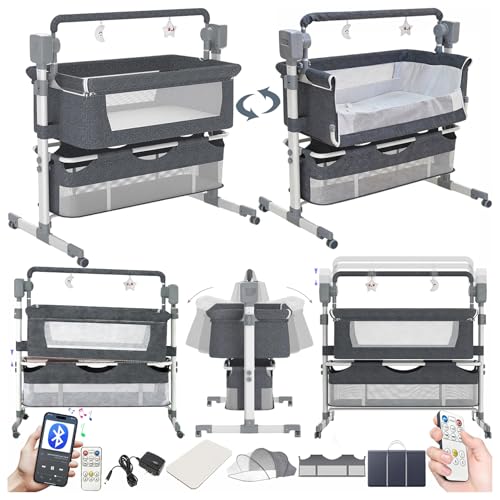
These bassinets use responsive rocking and gentle rocking motions combined with white noise to deliver calming sensations that promote better sleep quality. With adjustable rocking speeds, you can tailor the experience to your baby’s preferences, ensuring comfort while meeting AAP guidelines for a safe sleep environment.
Additionally, smart rocking bassinets track sleep patterns, giving you valuable insights to refine enhanced sleep routines. By integrating secure swaddling and firm surfaces, they support both safety and longer, deeper sleep.
Using these technologies, you not only help your baby rest more peacefully but also foster a more restful family experience overall.
Frequently Asked Questions
Why Does Rocking Help a Baby Sleep?
You’ll find rocking benefits your baby by using soothing motions and rhythmic patterns that calm and comfort. These gentle rocking techniques create positive sleep associations, support healthy sleep cycles, and enhance parental bonding during your nighttime routine.
Do You Really Need a Rocking Bassinet?
Think of a rocking bassinet as a gentle river guiding your baby’s sleep journey. Its soothing techniques, safety features, and parent convenience enhance sleep cycles, but weigh budget, nursery design, and product reviews to fit your unique sleep training needs.
Is It Okay for a Baby to Sleep in a Rocker All Night?
You shouldn’t let your baby sleep in a rocker all night due to rocking safety and developmental concerns. While rockers aid baby comfort and soothing, prioritize firm surfaces for better sleep quality, healthy sleep patterns, and consistent nighttime routines.
What Is the 5 8 5 Rule for Babies?
The 5 8 5 benefits your infant’s development by balancing sleep patterns—5 hours night, 8 hours naps, 5 hours awake. Use soothing techniques and calming methods to create a safe sleep environment and bedtime routines with parental guidance.
Final Thoughts
Choosing a rocking sleeper for your baby isn't just about comfort—it’s a gentle echo of the womb’s rhythm, calming your little one when they need it most. You might find that, coincidentally, the same soothing motion that helped them drift off in utero now eases their shift to sleep. By prioritizing safety and knowing when to move on, you’re giving your newborn the best start while embracing technology that supports both of you through those precious early nights.
 Step-by-Step Guide to Cleaning Bottle Sterilizers
 Why Choose a Crib Mattress With Cooling Technology?
If you want to know other articles similar to Why Choose a Rocking Sleeper for Your Baby? you can visit the Bassinets category.
How to Choose an Organic Non-Toxic Sleep Space

What Are the Best Sleep Solutions for Twins?

What Are the Safest Sleep Practices for Infants?

5 Best Sleep Solutions for C-Section Moms

Bassinet Vs Crib: Best Sleep Option for Newborns

Best Portable Bassinets for Travel in 2024

How to Choose a Modern Baby Sleeper

How to Choose the Best Bassinet for Small Spaces

How to Choose Baby Sleepers for High Beds
This is also interesting